
High-quality songwriting makes quietly expressive, personal record.
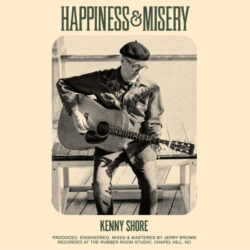 Kenny Shore is not the kind of artist you stumble across via hype. He doesn’t have the infrastructure, profile, or touring machine that typically drives attention; he doesn’t even have a Wikipedia page. But that absence of noise is part of what makes Happiness & Misery such a great discovery.
Shore’s path into music is as unvarnished as the album itself. For years, songwriting sat alongside a career as a clinical social worker, before personal tragedy, the death of his wife from cancer in 2017, pulled it closer to the centre. Add in a previous divorce and a preacher father, and you have the foundations for a catalogue rooted in lived experience rather than observation. Now you can see why the album is called Happiness & Misery.
The songs often deal plainly with difficult subjects: divorce in Far Away, grief in Haunted, mental fragility in album opener What’s the Difference? and the brutal realities of addiction and illness in Hard to Be Somebody. What’s striking is the lack of distance between Shore and his material. His years as a social worker aren’t just backstory, but actively shape the writing and the experiences behind them.
Musically, the record sits comfortably in the lineage Shore himself nods to; he notes Townes Van Zandt and John Prine, but then, who doesn’t? There’s a looseness in spirit to the arrangements that keeps things grounded, similar to those legends: nothing overworked, nothing chasing grandeur.
An experienced group of musicians elevates the material throughout. Will MacFarlane’s guitar work, most notably on What’s the Difference? threads through the record with quiet authority, while Robert Sledge’s bass (last heard fuzzing up Ben Folds Five records) brings a welcome elasticity, particularly on the loose, bluesy I’ll Take Off My Hat. It’s one of the album’s lighter moments, a welcome reminder that Shore isn’t solely preoccupied with hardship. Roller Coaster Ride leans further into that ease, channelling a relaxed, old-time blues feel that gives the record breathing room.
Even in its softer moments, though, there’s an undercurrent of hesitation and vulnerability. If I Ever Needed Someone captures two people circling each other after loss, never quite settling into certainty. The title track, meanwhile, acts as a kind of thesis; an attempt to wrestle with negative thought patterns using the very tools Shore once applied professionally.
This is not a record that will dominate playlists or festival line-ups. But it’s one that lingers. Quietly, persistently, and with more weight than its modest framing suggests.

