

Craft Recordings re-release two remastered ground-breaking bluegrass albums, one long out of print, and both on CD for the first time
In the mid-1970s, bluegrass music was evolving from the traditional ensemble acoustic playing of artists such as Bill Monroe, Ralph Stanley and Flatt and Scruggs, and it was ripe for a step forward into the future. Two albums released at the time stepped up to the plate and essentially changed the way bluegrass music was played, laying the groundwork for the bluegrass superstars that followed and continued to develop the genre, about which more later.
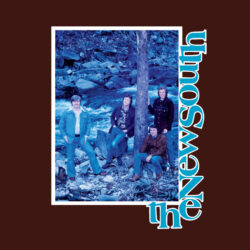 JD Crowe was one of the traditional bluegrass players, a superb banjo player, who played with Jimmy Martin (a former member of Ralph Stanley’s band) and he assembled a group together that included three of the most exciting new talents in bluegrass music, namely Tony Rice, aged 23, flatpick guitarist, Ricky Skaggs, 20, mandolin and fiddle, and the dobro maestro Jerry Douglas, 18. The 5-strong band was rounded off by the more experienced bass player Bobby Slone. Crowe intended to take bluegrass in a slightly different direction, incorporating traditional instrumentation on traditional bluegrass tunes but adding to the mix songs that came from a different genre, such as folk (Gordon Lightfoot and Ian Tyson), country (Rodney Crowell), and blues (Fats Domino). The self-titled album (but normally known only as Rounder 0044, its Rounder Records catalogue number) also introduced the idea of using flatpicked guitar, typically a rhythm instrument, as a lead instrument, together with dobro, also known as a rhythm provider. In Rice and Douglas, Crowe had found two of the most prodious young exponents of their respective instruments, who would go on, in the case of Douglas, to develop and dominate their instruments to such an extent that Douglas has made more than a dozen solo albums, completely changed the sound of Alison Krauss and Union Station, co-led the Transatlantic Sessions series, appeared as session musician on more than 1700 albums, and won many Grammys and other awards; Rice(also a Grammy and award winner) was the main inspiration for a succession of acoustic and flatpicking guitarists, leading most notably and recently to multi Grammy winner Molly Tuttle, who acknowledges him as her inspiration. The third of the subsequent superstars, Ricky Skaggs, used his talent as mandolinist and fiddle player on any number of bluegrass and country albums, becoming part of Emmylou Harris’s Nash Ramblers from 1977 – he had the added talent as a lead, and especially, harmony singer, bringing a high tenor to proceedings and creating blocks of superb harmony vocals on many tracks. His name on the production credits alongside Crowe is largely because of his expertise with harmony singing.
The effect of this new direction was apparent in the lead-off track Old Home Place, which has short but sweet instrumental breaks, great harmonies and a real driving rhythm that old-time bluegrass music did not have to the same effect. But the first track that really differentiates the album is the famous Utah Phillips’s contemporary folk classic Rock Salt and Nails (covered stunningly by Steve Young, as well as by Bob Dylan, Joan Baez, John Martyn and Waylon Jennings). Two tracks further on, you have Gordon Lightfoot’s lovely folk song Ten Degrees, followed by a scorching version of Earl Scruggs instrumental Nashville Blues, taken at a very fast lick and profiling the special skills of Rice, Douglas and Skaggs as they solo around Crowe’s scintillating banjo verses.
There’s a quite glorious version of Ian Tyson’s famous Summer Wages and a short but scintillating gospel take on Fats Domino’s I’m Walkin’, before hitting a very high spot with a version of one of Rodney Crowell’s early masterpieces Home Sweet Home Revisited, one of the more contemporary takes on the album.
The 50th Anniversary Edition has two added tracks, most interestingly on an alternate take of the last track on the original release, the traditional Cryin’ Holy, with the addition of harmony vocalist Emmylou Harris and members of her Angel Band, who happened to be recording in the same studio at the time.
The album is a classic, described at the time as the ‘second coming’ of bluegrass ensembles and immediately creating an impact that drove the then recent concept of NewGrass further, as it was being developed, and for decades to come acting as a benchmark and an inspiration for making bluegrass albums with country and blues and folk, and even pop, interpretations (take a listen , for example, to Dale Ann Bradley’s version of U2’s I Still Haven’t Found What I’m Looking For on her album East Kentucky Morning – and other bluegrass versions).
Later in the year Ricky Skaggs left The New South and started a new band called Boone Creek, with Jerry Douglas, a young up-and-coming banjo player, Terry Baucom (aged 24), and the even younger acoustic guitarist and budding songwriter Wes Golding (21). Skaggs was interested in seeing how far the genre could move while retaining the core elements of traditional bluegrass music, and in exploring the possibilities, introduced drums, electric bass, steel guitar, and even horns into the mix. Until now, this album has not been available since its original release.
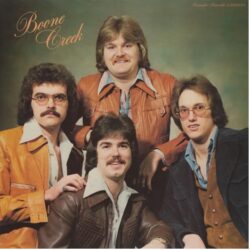 The effect is equally as revolutionary as Rounder 0044. It kicks off with Golding’s new song Dixieland, and the first impression is a different vocal sound as Golding takes the lead, and the addition of the drums of Karl Himmel. Bill Monroe’s Dark as the Night, Blue as the Day sounds completely different from the original, as Douglas’ s sweeping dobro wails in the background before a solo which is more exploratory than any on the New South album. The same could be said of the traditional gospel song Walkin’ in Jerusalem, where Skaggs creates some more inventive harmony vocals and the instrumentation is equally imaginative. The traditional White House Blues, covered at speed by Bill Monroe, is taken at super-breakneck speed on a simple bluegrass interpretation, whereas the following track, written by Golding, which gives its name to the group, is a much more countryfied affair with drums (Himmel) and electric bass and steel guitar (both by full time session player Fred Wooten). As the album moves on we have the addition of Joel Degregorio on piano (particularly on the gorgeous Golding instrumental Intro, plus the harmony vocals of Cheryl and Sharon White (soon to be Mrs Skaggs). Horns come into play on another Golding song, the bluesy Sugar Daddy, which has a 30’s flavour to it. The final track on the original album is a typical bluegrass song written by Harry McAuliffe (There Ain’t Nobody Gonna Miss Me) which underscores how Douglas’ playing had expanded since his New South days – still relatively short but highly inventive playing.
For this reissue some extra tracks were found in the vaults (all Golding writes), which go to highlight how far Boone Creek were prepared to go with their boundary-breaking of traditional bluegrass ensembles. Hitchhiking to California is really underscored by the drums of Himmel, Misty Wind introduces a very young Vince Gill as harmony vocalist, with Cheryl White’s very high vocal over the top of Gill and Skaggs high tenor. Georgia Sunrise uses electric guitar for the first time, which takes the track into country rock territory, while Dream Song is essentially not unlike a 70s AOR track, and, good though it is with beautiful harmonies, it feels out of place on this collection with its synth horns, electric piano and synthesiser.
Nevertheless, it is a wonderful album and walks hand in hand with 0044 as companion pieces in the development of bluegrass music. And you can see, in the careers of each of the leading musicians, how much they came to influence the sound of roots music in the lead up and into americana as a genre in its own right. As Ricky Skaggs has said “It’s been over 50 years since Boone Creek made these recordings and it’s great to hear them remastered,” And reissued on vinyl with CD release for the first time.
Much kudos to Craft Recordings (and HighTone Records in the case of Boone Creek) for searching the vaults and remastering these important recordings for their 50th Anniversary (give or take a month or three) and for delivering a superb couple of albums for listeners to explore part of the origins of contemporary bluegrass.



Thank you. Marvellous piece about two marvellous albums.