
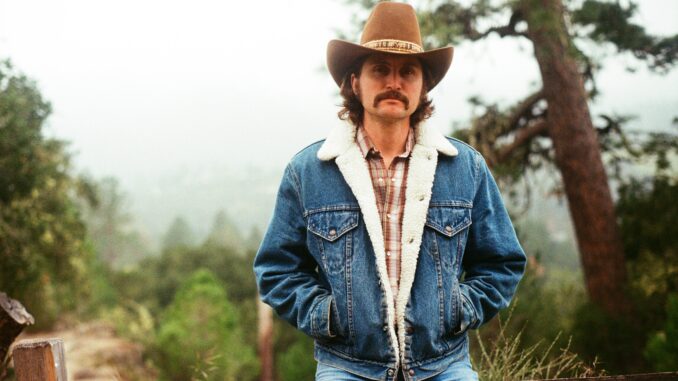
It’s both a blessing and a curse, the interconnected, on-demand nature of the modern world. It gives us contacts on the other side of the planet, the ability to share interests and loves, and to dig into the past just by pressing play on a stream link. But it comes with an abundance of opinions and influences that can overtake an identity; a view of one part of the world can be dominated by the thoughts spread from the outside. When the world gets bigger, locality can get smaller if it’s not treasured, but no one knows the sound, feel and spirit of a place better than those that call it home.
Luckily, for the Golden State of California, Jesse Daniel is pioneering the music of the West Coast in a way that could only be comparable to the ’70s culture he finds his inspiration in. After seeing and playing in so many corners of the world, taking his country music to crowds miles away from where it was written and recorded, it’s home that Daniel has returned to on his latest record, “Son of the San Lorenzo”, and it’s the place that he plans to keep championing. After diving headfirst into the Bakersfield Sound on previous releases, the Californian felt a pull to go heart-first this time straight into the old records that sparked and emblazoned his love for music.
If you were to map the United States by music, some states would be overflowing with both classic and contemporary artists confidently planting their flags in their home turf: from Texan bars, to cowboys in the West, to red-dirt bands in Oklahoma, their sounds are definite and they’re distinctly present now. When it comes to California, the sound jumps back to the Bakersfield of the ’50s or the country-rock of the ’70s, the Eagles representing the scene and finding a place in countless vinyl collections – but in a contemporary sense, the sound of the rolling hills, the rivers and the mountains has been a little lost in the discussion of a modern pop-central Los Angeles and Hollywood.
From his first country release back in 2018 with an impressive self-titled album, to 2024’s “Countin’ The Miles”, Daniel has pulled his Telecaster strings straight from Bakersfield and tied them across his own work. In a move to create an album that encapsulated his own sound and story, the musician turned to the talents of people like Chris Hillman and Gram Parsons and their knack for storytelling through music, all along not forgetting those Merle Haggard-inspired roots.
There’s a golden thread running through the Golden State; it ties artists together and securely stitches musical moments into time. On occasion, it’s been pulled in different directions, wearing thin and forgetting its origins, with an artist like Daniel, though the needle is being threaded again, and those golden stitches will keep on coming.
On “Son of the San Lorenzo”, all outside discussion has been put aside, and Daniel is digging into what he knows. The week of his birthday, at a natural ease and relaxed comfort at home in Northern California, Daniel made good use of that modern interconnectivity and spoke to Americana UK about his new album, his California heroes, and the profoundly personal stories he wove with a deeply locational sound.
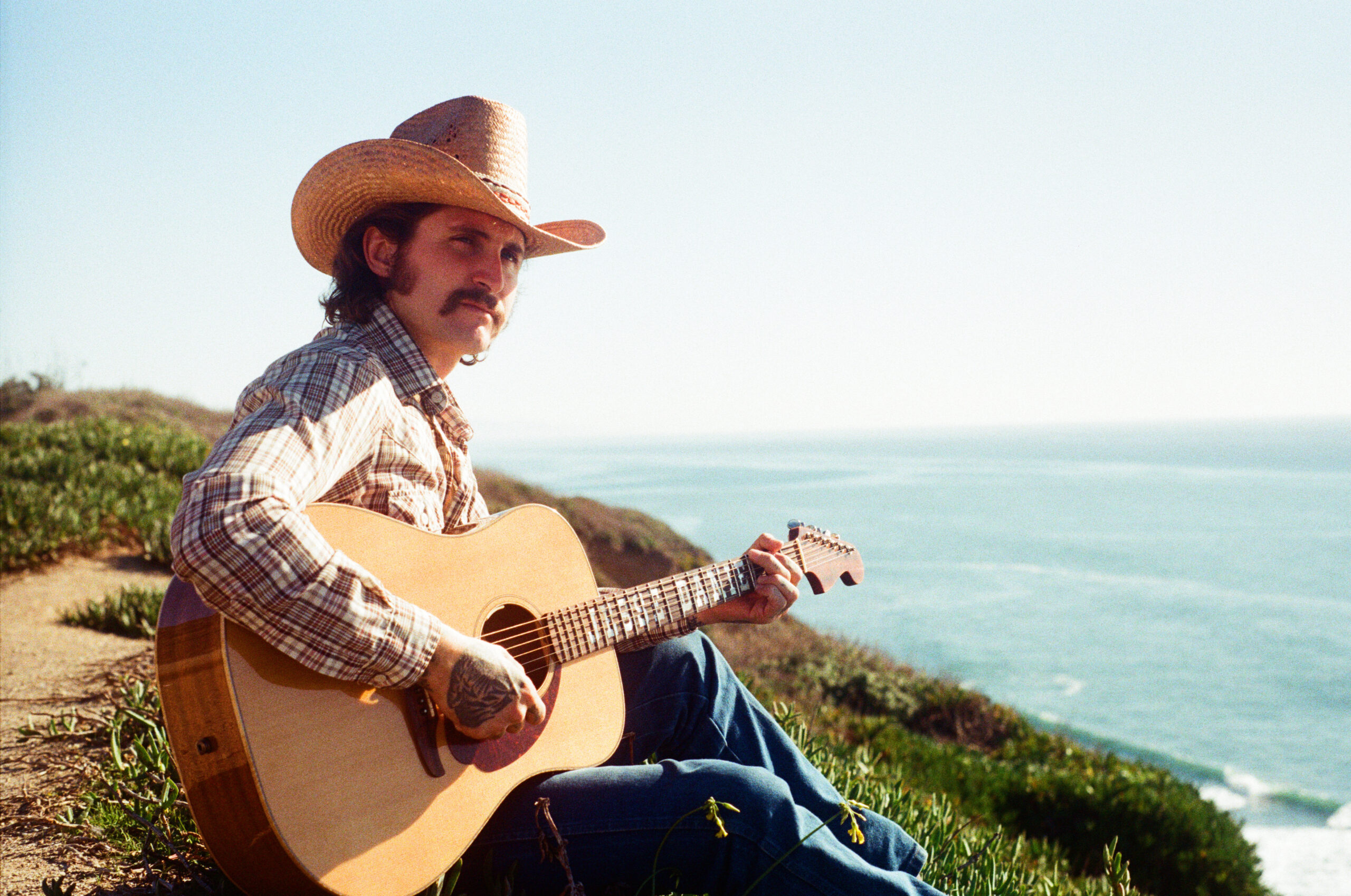
Americana UK: Hey Jesse! How’s it going? Where are you right now?
Jesse Daniel: Everything’s good, I’m home right now up in Northern California. I just got back from a camping trip for my birthday, actually.
AUK: Well, I know that you’ve been over in the UK and Europe recently, touring through the summer. How was it? Did you have a good time at the shows?
JD: We only did one show in the UK. We got to do it in London, but it was great. We had announced that show later than all the others, so I was surprised to see that it was a good full show. I haven’t been let down by London yet, and I hope next time we get to see a little bit more of the UK. I’d like to get out to Ireland, Scotland and see a little bit more of the British Isles too – that would be wonderful.
AUK: What are the audiences like when you come over here in comparison to shows in the US? Do you find different reactions or responses?
JD: A little bit. I’d say they can be a little more reserved in Europe than the US, but I think then it’s on the performer to bring that out of them and remind them that you’re at a country show. You can let loose and get rowdy or dance or do whatever you want to do, so we kind of brought that out of them.
AUK: You were doing a few tracks from the new album, “Son of the San Lorenzo”?
JD: We played a few songs from the new record, and we’re about to do the West Coast, so we’re going to be doing a lot more songs from the new record then. We’re just kind of cycling them in and starting to play those new tunes.
AUK: I would really love to talk to you about the new album. So, being from California – you’re in California right now – did you feel like you wanted to go for that Californian sound to match “Son of the San Lorenzo” being so personal?
JD: Definitely, this record was kind of a homecoming, really. As far as sonically and the production, I wanted it to reflect a lot of that California country music, and also kind of some of the country rock stuff too – the ’70s that I kind of grew up on, like The Eagles and the early Doobie Brothers stuff. I wanted it to reflect that ’70s sound, how personal the songs were, this whole record was about my story in one shape or another, so it was important to me to have it reflect where I’m from. That little part of the world.
AUK: If it’s the music that you grew up listening to as well, it makes sense. It’s part of your story. Part of your soundtrack. So what did you do differently this time, as opposed to “Rollin’ On” or “Countin’ The Miles” to make sure you got that California sound in there?
JD: Well, for the previous records “Countin’ the Miles” and “Rollin’ On”, for example, those ones have a lot of Bakersfield influence, they’re much more honky tonk and Bakersfield country. That’s kind of what I’ve always done a good amount of in my music, and it’s been a recurring theme because it’s probably my favourite form of country music. Being from here, that’s our thing to be proud of and hold on to in the country music world, so I’ve always been really drawn to the Bakersfield stuff.
But with this one, I really wanted to steer away from that a little bit and go more in the direction of ’70s California country rock – a little bit less twang and a little bit more focus on the songwriting. Some of the songs are more subdued because of that; they’re not as high-energy, but I think it was a necessary change for me. Some people have asked, “Are you never going to make another Bakersfield country record again?” and I would love to in the future. But this record needed to be made, I needed to go in that different direction and just explore that for my own artistic journey… and kind of my own sanity too.
AUK: Well, the California country rock sound really grew out of Bakersfield; there’s no saying that you can’t keep crossing over between the two – keep stitching them together.
JD: That’s true, I love that.
AUK: I saw you said online recently that Chris Hillman is the king of California country rock. I agree.
JD: Oh, that’s so cool. I’m glad you’re into Chris Hillman. I feel like so few people know about him. They know the Byrds, and they’ll know the Flying Burrito Brothers, but they don’t know his role in all that music. He’s just the best. He’s my favourite.
AUK: When you look at everything that he’s done, it’s overwhelming to think all that talent comes from one man. I wanted to ask what Chris’ influence or inspiration on you has been.
JD: His influence in particular has been huge on me. I’ve been listening to country music – really, really listening as a country fan – since I was in high school, and I just listened to what was on the radio at that time, Alan Jackson and guys like that. Then I got into Merle Haggard and more of the Bakersfield stuff as I got a little older. Partially from some of the stuff I grew up on and then getting into different forms and subsections of country, it’s been this evolving journey that just came from my love of that music.
But I found out about Chris Hillman because I started listening to the Flying Burrito Brothers, got really into Gram Parsons, and then I realised that Chris Hillman was also one of the founding members of the Byrds. Hillman was this name that kept coming up, and then I found his solo record, “Desert Rose”, from before The Desert Rose Band. After that, it was “Slippin’ Away”, and that’s probably my favourite record.
I just really dug into his music after that, loved his voice, his mandolin playing, his songwriting. I think he embodies the California sound, as far as what you said, taking the Bakersfield Sound and evolving with it into something else. He carried it into a whole new place. So, yeah, he’s my all-time favourite California guy for sure.
AUK: He’s a huge talent. I remember reading a story about when Chris Hillman and Gram Parsons first met; the connection that they made was because they were both singing a Buck Owens song. Chris heard Gram singing, and he just started adding harmonies, they found a connection in each other, and the rest is history.
JD: That’s awesome! I don’t know if I knew that, but it totally makes sense. Chris Hillman’s autobiography has so many cool little stories like that one about how he got his start in music. That record of his, “Slippin Away”, is pretty much what I modelled “Son of the San Lorenzo” after; if you listen to those two albums, there’s a lot of similarity that I tried to do and strive for. Obviously, I don’t think I reached the quality of that album, to me, that record is such a masterpiece, but that’s what I was striving for with the tones and the production and some of the writing. It was directly inspired by that album.
AUK: And were you listening to all this music alongside recording for “Son of the San Lorenzo”? Just constantly immersed in it?
JD: Yeah, definitely. Especially touring over the last few years. That’s when most of the listening would be, in the van or travelling or flying or wherever we were going. They become the soundtracks of our lives, as you’re going about your days and you’re doing your things and you have these pivotal life moments, these songs kind of find their way into your heart and they become these soundtracks for whole movements and sections of your life. And so that’s kind of what Hillman’s music has become.
AUK: Absolutely, it’s so great to talk to somebody that loves this Californian music so deeply, and you can hear that love in “Son of the San Lorenzo”. It’s so clearly there.
JD: I really appreciate that.
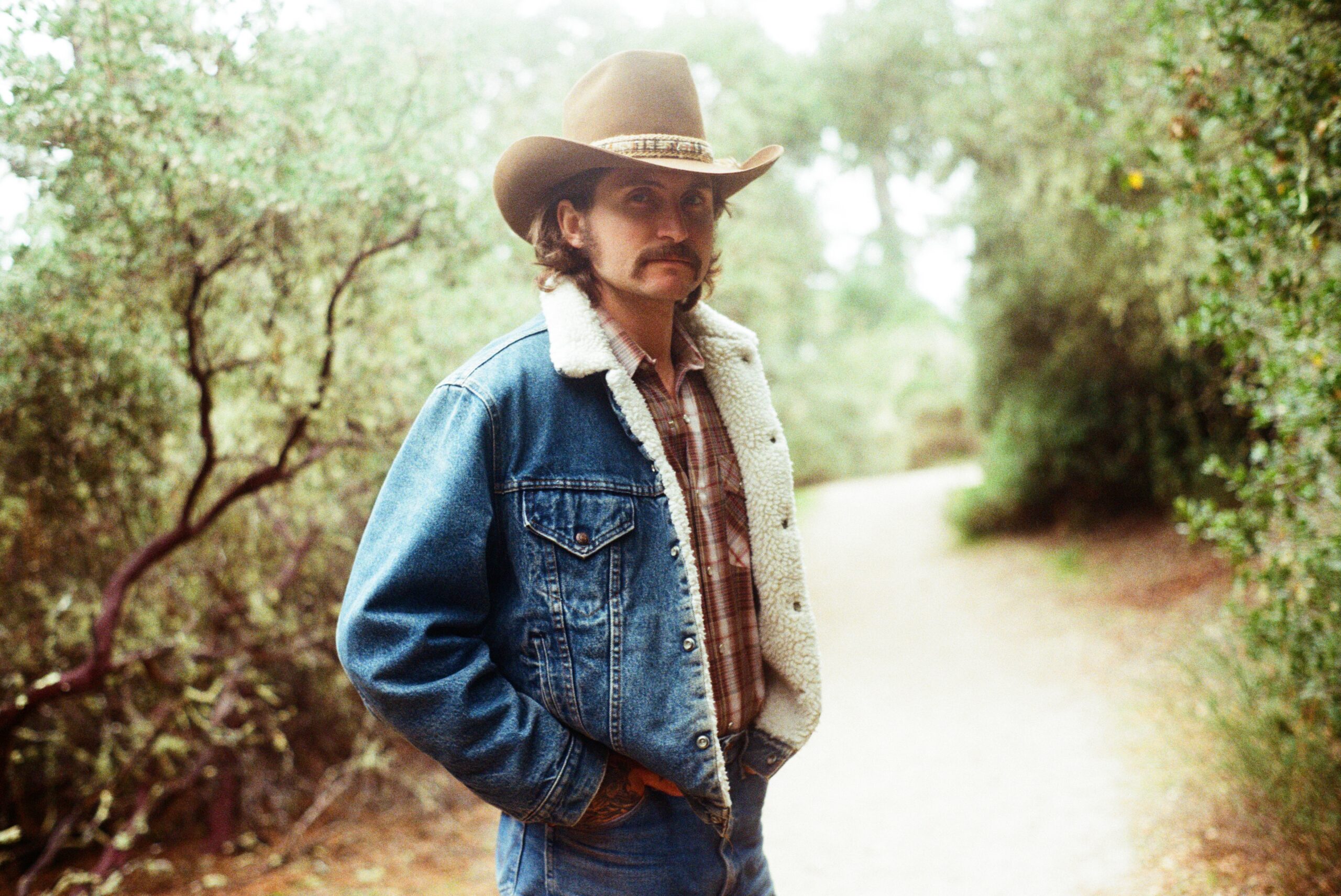
AUK: So one of my favourite things to ask when I do meet somebody who is deeply immersed in the California country rock world: Do you think the Byrds’ “Sweetheart of the Rodeo” is the quintessential country rock album?
JD: You know, I love that album – I do love it. I think that it probably would be just because it started everything, it really did lay the foundation. That’s like the birth of California country rock music, and then everybody took off from there, whether it was Gram Parsons or later with guys like the Eagles, who were doing their own thing with it. There are other albums that I like more, but I love “Sweetheart of the Rodeo”; I listen to that all the time.
AUK: Do you think locationality has an indirect influence on sound as well? California is where you’ve grown up, and it’s the music that you listen to, but does it feel like it’s part of your identity in a way that felt like you had to get it into the record?
JD: Definitely, it plays a huge part. Back to my first record, I put out in 2018, I have a song called ‘California Highway’. Everything I’ve done since the beginning has been really shaped by either Bakersfield sound or the California country rock music.
If you’re an artist from Texas, a lot of those guys are singing about Texas because that’s the filter they see life through. It’s the lifestyle they’re proud of. The same with the cowboy music up in Wyoming or Montana, guys like Chris Ledoux singing about the rodeo and cowboy lifestyle.
So California has always been part of my identity. Couple that with the fact that the state is so misunderstood, so many people in the music world and in the political world misunderstand California. They just want to chalk it up to one big L.A., or Hollywood or one big San Francisco. They think that it’s just people burning cars everywhere, a crazy hellscape or something, but it couldn’t be farther from the truth.
So I see that as a huge part of my own identity: musically, how it shaped me growing up, the landscape. But it’s also this cross to bear of something to prove to the world, to stake my claim and want to bring California back on the map for contemporary music. Texas, Kentucky, Tennessee; they all have great representation for what they’re doing, and they have enormous contributions, but so does California. That’s kind of why I do what I do.
AUK: Do you think the Californian sound has been lost or forgotten since the ’70s, when it was so prominent?
JD: Yeah, it has, I think the pop music that was coming out of Los Angeles in the ’80s and ’90s took more of the focus, so for a while that’s what the state became known for. People forget a lot of those great bands came out of California and were created there.
But I think there is a shift back. Things always come back into popularity, and it’s a cyclical nature of trends. Country in general is experiencing a huge resurgence in popularity, so California country is this novel thing to a lot of people that they’re just now discovering or they didn’t know existed. It’s this new thing for the kids to get into, so I think it’s a good time for it.
AUK: For people now just discovering the sound, they’ve got the transition from Bakersfield to country rock to artists like yourself that have found inspiration in the past – it’s a nice sonic journey to see for the state. So with the new album being so deeply personal and having a lot of your own stories on there, how did you approach a story-based song like ‘Ballad of Love Creek’ as opposed to ‘My Time is Gonna Come’ that’s very personal? Does the process differ?
JD: Oh, yeah, I’d say so. The story songs like ‘Ballad of Love Creek’ are something I’ve been doing forever, I’ve always written songs that are about a historical happening or some part of my life that didn’t directly happen to me. I grew up on Love Creek Road, and that was the creek that we played in as kids. So I wanted to tell this story of how many crazy things had happened in that area with the mudslide. There had been a lot of murders that had happened up there from the ’70s to when I was growing up there. There was always weird folklore about those mountains, too, so I wanted to basically tell that story and add in a little bit of fiction.
But not everything in the song is true; that’s a tradition in my music. Other people’s stories or things that I’m interested in are easy and fun for me to write about, too. ‘Clayton Was a Cowboy’ or ‘Champion’, for instance, they’re partly truth and partly fiction. It’s a pretty natural place for me to go in writing. So I wanted to include at least one of those story songs in there, give a little break from the personal stuff.
AUK: Do you find it more difficult to get started on a song if it’s more personal?
JD: Definitely, that’s why this record was so difficult to write. There’s a lot of soul searching and turning over stones, and looking at myself, I had to be digging into my past. I wanted to tell my story and have it be documented in a way that the story deserved. I wanted people to be able to listen to this record and understand where I’m from and what my story was. Also, so in the future I could go on and leave those life moments in the past. It’s in that record, and that’s where it can stay.
It was definitely more difficult to write those songs than about somebody else, though. I even say in ‘Jodi’, “to write a love song for you is not an easy thing to do”. It’s true, those songs are so personal that it takes a little bit more to pull it out of yourself and be vulnerable, as they say.
AUK: So with those personal songs, is it a bigger decision to choose who you want to work with? You had Charles Wesley Godwin featured on “Son of the San Lorenzo”; did that decision come from finding a connection in him?
JD: Yeah, he was a natural choice for ‘Time Well Spent For a Man’. I first heard that song from my buddy, Nick Foster, he’s a great songwriter from Northern California, and he played in my band back in the day. We’ve been really great friends for years. Every now and then, he’ll just text me a song. One morning, I was drinking my coffee, got a voice memo from him, and it was ‘Time Well Spent For a Man’.
I’d been writing for “Son of the San Lorenzo” and really immersed in that process, and he sent it at the right time – I needed to record it because it was such a perfect fit with the themes of the record, of focusing on what’s important in life. Then, when we got in the studio, I felt like it needed to be a duet because it sounds like two people having a conversation.
Charles was the first person that came to mind. I’d done some touring with him last year, and he’s just a great guy, a really talented musician and songwriter. Not to sound too “hippy dippy” or mystical with it, but his whole energy, his outlook on life, what he puts out into the world is really positive. He’s a good, good person; cares a lot about his family, always tries to be good to people, kind to his fans, so he really fit that song. He’d be meaning the words as he’s saying them, and I’m honoured that he was willing to sing on it with me.
AUK: People find that “hippy dippy” connection to music, though, so it makes sense if you’re the artist that you want to work with somebody you feel that same connection with.
JD: I agree for sure, I say it jokingly, but there’s so much in that “hippy dippy” era of music with the Grateful Dead stuff. It’s just incredible music, but there’s a connection in it, a cosmic crossover.
AUK: So, is it a similar connection with Benjamin Tod? Not just a good match in music, but in story and life experience too? You guys seem to work together so well.
JD: Benjamin’s another one of those guys where we’d known of each other for a long time and then finally met in 2021 or 2022 and have been friends since then. Benjamin’s a really real guy, for better or worse, he is who he is, and that’s something I really admired about him. From the first meeting, he wasn’t afraid to say if he didn’t like something; he’s not afraid to tell that person. He’s just very straight up.
I think that comes from his background, with being a travelling hobo musician essentially, riding the rails and stuff. He really lived the lifestyle that he sings about, and that was something I appreciated. I have my own authenticity of having lived the stuff I sing about, and I try to portray who I am. I felt like Ben was also who he said he was, and that’s an important thing to me, in friendship and also in artistry and songwriting.
So we collaborated, wrote a song together called ‘Turn The Devil Away’, and it just felt like a really good pairing. We’ve worked well together since, so we’re overdue to write another song together for sure.
AUK: Is there anybody else that you would like to work with in the future?
JD: Oh yeah, there’s so many people. I’ve emailed with Chris Hillman’s management to talk about working with him, but unfortunately, he’s not taking on any projects. But I would love to work with Chris Hillman, Dwight Yoakam, and Marty Stuart – all those guys, that would be a dream.
As far as more contemporary artists, I really like Jake Worthington; he’s a great one as far as straight-up country music, does such a good job with writing. Sierra Ferrell’s awesome. I’d love to either write or sing with her.
I always thought it would be cool to do something with Jon Pardi. He’s a little bit more on the Nashville track, but he’s held onto his California roots. He’s got that record, “California Sunshine,” and he’s always held onto that piece of where he’s from, I like his music. That would be a cool one.
AUK: I wasn’t expecting that answer!
JD: Yeah, I know! He’s like a major star. He’s been up at the top for a long time, so it’s different to guys like myself who are in this more independent realm, but Jon and I have been friends for a while. He’s reached out and said he loves what I do. He’s been really supportive, and I know he also loves Bakersfield country music, so something cool could come out of that.
AUK: And if you could go back in time to the ’70s or ’80s and play with one of these California country rock bands, who would it be?
JD: Oh man, I would probably say the Eagles, but I don’t know if I’d be good enough to play with those guys – they were just crazy good. If we’re talking Bakersfield music, to do something with Merle Haggard would be incredible; he’s probably my all-time favourite. Out of the country rock stuff, I would say to work with Chris Hillman in his heyday, when he was making those later Burrito Brothers records, or his solo stuff would have been incredible to be around for. See how he plays bass and mandolin, and how he produces.
AUK: I don’t want to be that person that asks what’s next when you’ve released such wonderful work recently, but do you have any ideas? Any directions?
JD: Well, I’ve got a couple of projects that are already wrapped up. I can’t really say anything about them, but they’re definitely in the direction of a lot of stuff we’ve been talking about. I think that, as far as Bakersfield, I do feel very inspired to continue representing California in sound. I lived in Austin, Texas, for about six years, and I’m always in Nashville, but I moved back to Northern California to be closer to family, but also to be immersed in the place that inspired me.
It’s where my heart’s at, so whatever I do moving forward, it’ll be representative of that.


