
Vintage country music at its very best.
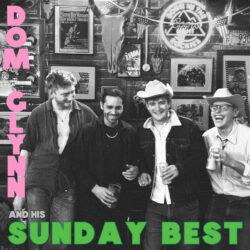 One of the joys of good music of any genre is its ability to transport you to another time and another place. The new album by Dom Glynn and His Sunday Best, This Fast Life Is Killing Me, immediately sends the listener back to the days of Hank Williams and early Johnny Cash. It is a very simple, high-energy honky-tonk album that does ‘what it says on the tin’. At only twenty-three minutes long, it certainly doesn’t outwear its welcome, but all ten tracks are punchy, well-produced and extremely enjoyable.
Glynn, originally from Birmingham (UK), is a singer-songwriter steeped in the traditions and songs of early country music. His relationships with cigarettes and alcohol are themes that weave throughout. I Loved You, Cigarettes explores the difficulties of quitting tobacco almost as if it’s an affair that he needs to stop but somehow can’t.
“I’ve gotta let you go, I’ll miss your pretty red-haired glow. Your perfume staying on my clothes. But I’ll still see you in my dreams. My sweet lady nicotine. Eternal burning beauty queen.”
He seems to have the same issues with alcohol, finding the allure far too much on numerous occasions. Songs like I Just Can’t Seem to Stay Sober highlight this. “Well, I just can’t seem to stay sober. No matter how hard I try. Before each day is over, Lord, I’ve failed to stay dry” No matter how hard he tries, alcohol and other substances just seem to follow him around as he laments in the opening title song. “I can’t keep on living like I do. Drinking like prohibition’s coming soon. Little white pills. Rolled up dollar bills. I can’t keep on living like I do.” Sadly, he is no luckier in love either. Never Smile Again investigates his mental situation following a breakup. “Ever since the day you left me. All I do is sit and cry. I think back on the memory. Of the night you said goodbye”.
Readers so far could be forgiven for thinking this is going to be a depressing listen; however, nothing could be further from the truth. This is a joyous, uplifting album which, to paraphrase the MC in the Johnny Cash song The Night Hank Williams Came to Town, “Tickets are just a dollar fifty. You get your money’s worth in the first fifteen minutes, and the rest is free”. It puts difficult personal subjects to a rockabilly beat and invites you to dance your blues away. The juxtaposition of the music and words is what makes this album worth checking out, as it almost challenges the senses.
These are certainly ten songs that many will be able to relate to with both affection and anxiety in equal measure. It is the work of a very talented observational songwriter bringing traditional country music to today’s discerning audience. And very welcome it is, too.
