

One thing everyone quickly learns as they get older is that time waits for no one, and that life continues its unstoppable flow forward. Americana UK has followed Ferris & Sylvester’s career since their first album, as they built steadily into award-winning independent artists who draw inspiration from the 70s to write songs based on their own experiences for the 21st Century. Americana UK’s Martin Johnson caught up with Issy Ferris and Archie Sylvester to discuss their all-important third album, It’s A Joy To Be Alive. For those who have followed their career to date, the title of the new album may be a bit surprising, given that they have been known for some dark songs in the past. They explain that for their third album, they wanted to celebrate the more positive aspects of their lives; now they have established their family and developed their home studio as the hub of their musical activities. Having decided they wanted to write more positive songs, they decided to use Burt Bacharach as a model, and Archie then spent time examining his songwriting techniques, and Issy took inspiration from the timeless quality of Bacharach interpretations by the Carpenters. As is to be expected, they include some blues on the new record, and this time it describes the trouble they had with their insurance company when their first child was born under difficult circumstances in America. Finally, it seems fairly certain that Ferris & Sylvester may develop into a family concern as their young daughter, who was asleep in their studio, briefly shared her vocal chops on a rendition of Baby Beluga.
It’s been over two years since we last had a chat. How’s the family?
Ferris & Sylvester (F&S) Family are good. We’ve actually got our daughter sleeping in the corner of the studio right now, so she might make an appearance; who knows? She won’t sleep in a cot, so she sleeps in the pram. It’s alright, anything to survive.
You are truly independent artists who are winning acclaim across genres. Are you happy with how things are working out from both a business and an artistic perspective?
F&S: We always feel like we’re kicking extremely hard under the water, just to keep our heads almost afloat, and we learn stuff every day. Quite often, we’ll launch into something and go, “Hang on, we don’t know anything about this”. But slowly, over the years of doing it, we have, I guess, reluctantly, or accidentally at least, started to realise there are things that we’ve learned along the way. It’s still very stressful, you know; for example, we were doing some filming yesterday, and we’ve got the album coming out in just over a week, and so things are ramping up. Then, we were supposed to have a babysitter today, and she called in sick. Actually, there’s really quite a lot to get done, and it all falls on us, so there’s a lot of juggling. We haven’t really learned how to deal with it when nobody is looking after our children. They just come; we’ve learned lots of other things, but things sometimes get a little bit confusing. We were going to film a music video the other day, and they were just there, so they had to be in it, but it works.
You have a new album out on 14th August, “It’s A Joy To Be Alive”. That’s an intriguing title.
 F&S: Well, we decided that we wanted that title and that song to sort of be the lasting message of the record. From the first time we wrote for this album, we had this idea of what we wanted it to be, and then we wrote a whole bunch of stuff within that for months and months and months, but really the shortest sort of writing period that we’ve ever done. Normally, we sort of spread it out over a long period of time, and we’re touring, and we’re doing all of this. This was just right; we’re going to be here, and we’re going to write this record, and this song sort of came nearer to the end of the writing process, but it felt like it was what we wanted to say, sort of, 16 songs ago. And what that is, we wanted to write a record that was joyful and hopeful, but the reality is that comes personally for us from a place of struggle, and, you know, we had a hard couple of years. Also, we wanted our message to be one of hope. So, that just felt like that song, the way that we wrote it, but also that title, that just sort of seemed to sum up what we were trying to say across that whole writing period. Not only does it sort of sum up the record, but it sums up who we are, where we are right now, this chapter of our life, and so it felt, yeah, it felt the most true, really.
I don’t want to put words in your mouth, but that’s maybe getting close to a bit of a concept, isn’t it?
F&S: A concept album. Well, yeah, I mean, we’ve never done that before. As I said, for our first record we had done singles and EPs, a lot of writing, a lot of touring, and we wanted to put out the best songs that we had, and that felt like a real chapter. Then our second record, Otherness, was a result of, again, a lot of writing, and we sort of did know the sort of thematic element of what we wanted to do with it, but that sort of came after the writing. We sort of didn’t know what we were writing, and then we went, okay, this is it.
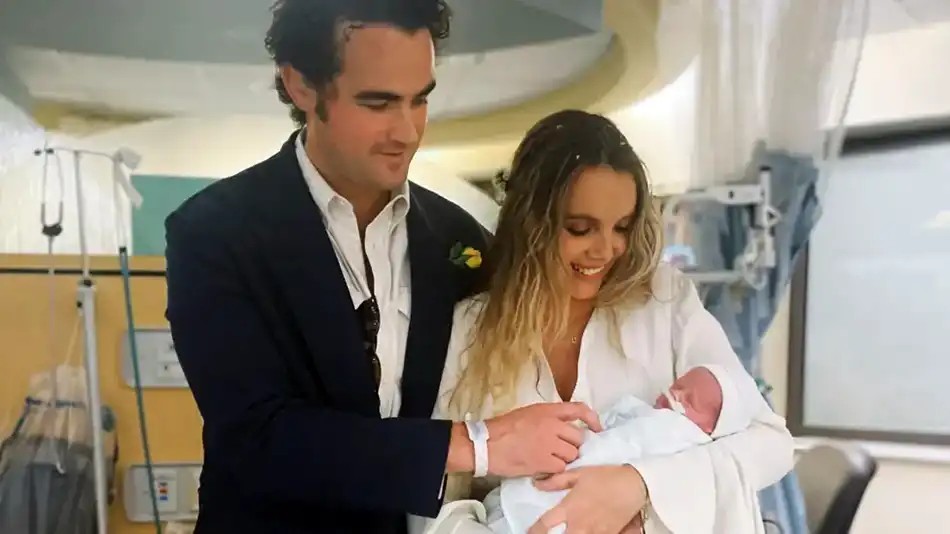
This happened the other way around. We needed to write optimistic songs, I didn’t want to write Dark songs about things going wrong, whereas we’d always leaned into that in the past, and we’d written songs on our first album, like Sickness, and then we had The Dark Side on our second album, and even before that, we had a song called I Dare You, and we were always leaning into that sort of darkness. It’s not all we’ve ever done, obviously; we’ve had songs like Flying Visit, which are really lovely and sweet and sentimental, but I wanted the title for this new album whilst we’re writing it. The working title should be I Just Really Fucking Love You. That was the title until we wrote the song, It’s a Joy to Be Alive. And I still wanted to call the album I Just Really Fucking Love You, but Issy convinced me that It’s A Joy To Be Alive was actually a better title. So the album, in my head, is still kind of called I Just Really Fucking Love You. So, that was where we wanted to come at it from. It didn’t feel good to be writing dark songs. I remember when our son was born in Nashville in 2022; he was born prematurely, and he wasn’t supposed to be born there. It was a really scary time, and magically, mercifully, our son, Lucky, and Issy were both very poorly, and they both came through. When we were in hospital with both of them, we rented a small flat above somebody’s garage in Nashville, and we had to stay there for another month or so until everybody was fit enough to fly back home, and I had a guitar with me, and I started writing.
I’d actually started playing some really dark chords; that was sort of the first thing that came out. Really wonky, just jarring sort of chords, and I was starting to just hum along and maybe piece together something. Issy said, “Please don’t play that. I hate it; I really don’t want to listen to those horrible, jarring chords”. I didn’t really want to play them either; I didn’t know why, and then I realised this wasn’t good. This wasn’t making me feel good playing these chords, and it’s obvious Issy’s not enjoying listening to them. So then I had a complete sort of reset. I was like, yeah, no, you’re right, we should be writing happy songs. Maybe it would make us feel a bit happier. A couple of the songs from this album came in that flap. Fishing, which is one of the songs from the album, I was whistling to our little boy who was 2 weeks old on my lap, and I was just whistling to him, and it was supposed to be a nursery rhyme for him, and that felt nice. It felt fun; it felt like what I wanted the noise to be, and Issy, as he was feeding or getting ready or something, said something like that’s great; that’s a song. We should write that into a song from the whistling motif. So, we turned it into a fishing song. The same happened with a song called Peachtree Street. I had a nursery rhyme thing for Lucky, and now I was sort of like, this is a joke; it was telling a story of a trip I had to take to Atlanta to get an emergency passport for him. It was just telling him about the day, and it was set to sort of this sort of New Orleans-type feel; we’d been to see a gig just before that, by John Cleary & The Absolute Monster Gentleman. I love the grooves that they do, and I said, we don’t really do that in our music; I would really like to do something like that. So I started playing the John Cleary-type, New Orleans-type thing as a sort of nursery rhyme, and I went we should make this into a song; this is what we should be doing. That’s where the album came from; we just wanted to be writing joyous songs that made us feel happy, so that’s what we did.
Your ability to mix country rock, blues rock and americana reflects the melting pot that was the 70s before genres and radio formats started to restrict music. How do you blend genres across your songs to create a cohesive album?
F&S: That’s a good question, a really good question, and for this album, we had a really clear idea of what we wanted to do. I mean, you just mentioned the 70s. We wanted to write an album of pop songs with that sort of 70s style of pop music. We were listening a lot, and Archie was really getting into the theory, the musical theory of Burt Bacharach and that sort of style. Again, because we wanted to write love songs, and so we went, okay, love songs, great pop songs, where do we start? And obviously Bacharach, Carpenters, you know, all of this music that has really sort of transcended, as you say, genre and time, that’s what we wanted to do. Not necessarily write like a super stylised record that sounds like it was from the 70s; we just wondered if Ferris & Sylvester and Bert were in the room, what would come out? As I said, Archie had done all of this sort of research and learning about the richness of these chords; I mean, you know, anything from that sort of period and anything in this sort of world is just so, like, harmonically dense. It’s not that we hadn’t done that before, but it was a really different, a different league. You sort of go to try and find the harmony, and it’s actually a diminished 7th, 9th, and I’m like, oh god, I’m just quite out of my comfort zone, but then when you actually put it all together, it’s this super romantic sound. That’s sort of what we wanted to do.
We wanted it to sound like us, because obviously you can’t escape from who you are as an artist, nor would we want to, but we wanted that romance to be a big part of it. What if we could write an album with Burt Bacharach? Or what if Burt Bacharach could write an album for Ferris & Sylvester? What would it sound like? That was what we were trying to do. We realised a few things about those songs; one thing was why these songs are so timeless. We would go back and listen to the Carpenters and go, you know, there’s something magical about it; what is it, is it the chords? At least our take on it, the way that we started to work within that sort of framework in our heads, you do need the richness of the chords and the complex harmony, but the melody has to be simple. You have to have a sing-along-able melody. And lyrically, you have to be singing; if you’re singing about joy and happiness, it must be from a place of having been through darkness if it’s going to be okay. Nobody actually wants to hear, and we didn’t want to hear it either, just saying, everything’s great, and la-da-da, la-di-da, and look at us, and aren’t we all wonderful, and everybody’s just, you know, high on life. It’s actually that we’re all aiming to be somewhere. We believe that we can get there; maybe we’re not there yet, but we believe that we can strive to be there. So that’s what it was. Simple melodies on a complex bed of harmony, good grooves, and lyrics coming from a place of darkness, striving to be in the happy place. That was our formula for this record.
What is it like singing ‘Tiny Little Love’?
F&S: Yeah, that first sort of came about just before our son was born, which then we sort of didn’t look at for a really long time, and then came back at it when we knew that we were making this record, and it just felt right to put that in there. It does tell a story, and I think that, just back to your first question about the title, I think that it’s important that the album has the message that it has but then it also has the story that it has, which is that life is really messy and really hard, and human beings are really resilient, and there’s a real beauty to that, and Tiny Little Love is one of those moments in the album of complete surrendering to the situation that we found ourselves in, which was one of a completely unknown future. As I said, we sort of needed to know how that story ended before we could finish writing that song. So, even in the recording process, we kept trying that song, didn’t we? It was hard, and you couldn’t sing it all the way through. Yeah, I was pregnant with our daughter at the time as well, and just the whole, it was kind of wonderful, really, because we were making this when we were making this record and recording it. We were pregnant with our second child, and that pregnancy and that story was completely different, and it had a completely different ending.
I mean, we argued about that song, I remember, because Issy had this idea, and she kept showing it to me: the basic idea, and I think, the first verse, and fragments of the second verse, and a sort of chorus, though there isn’t really a chorus in that song, but there kind of is. I kept saying, no, no, no, I don’t like that idea, but what I meant was, I can’t handle that. Issy was so offended that I didn’t like it, but after a while, I realised I couldn’t hear the lyrics. I wasn’t capable of listening to what Issy was saying, and then formulating it into an idea that we could turn into a Ferris & Sylvester song. That took months of Lzzy saying let’s try this, and me going, no, I can’t, I won’t, I don’t want to, I don’t like it, until eventually, we sat down and went, okay, come on, let’s do this. We didn’t have any chords, and so it was just, like, your vocal, wasn’t it? Yeah, just the melody. And then the chords came. I sat down with the guitar, and Issy sang the melody, and then the chords came, and then suddenly it was like, oh, okay, this feels quite powerful to us. We need to keep going with this one, even if it makes us cry every time we listen to it, or play it.
So, we owe it to ourselves to keep going with it. If it means something to us, we’ve learned there’s a chance it might mean something to somebody else, and it probably won’t mean the same thing. That’s the magic of songs: once you release them, what meant something to you and the reason why you wrote it is not relevant anymore, but people will listen to the song, and they won’t know why you wrote it, and it will say something else to them. If it means something else to them, but makes them feel something, that’s why we do it; that’s why we make music, because you can’t control what they’re going to feel. We’ve had a few messages about Tiny Little Love saying how much it meant to people, and they’ve interpreted it in a different way to how we imagined it would be interpreted, and that’s just amazing! You can’t predict that; you can’t control it. We get that still now from our first album with a song called Flying Visit, everyone thinks it’s a love song, and quite a lot of people have it as their first wedding dance, which, I mean, what an honour, but it’s actually a song written from the perspective of a four-year-old boy who doesn’t want to leave. Issy used to be a nanny, and he came to see us, and he didn’t want to leave. He was saying to his mummy, “I hate these flying visits; I don’t want to go home”. Now it’s a love song played at weddings, so that’s cool. We think that’s cool about music.
‘54321’ is on the album, a blues rock track, or something close to that.
F&S: Oh yeah, that’s a good one. You’d better explain what that one’s about. Yeah, and this is the thing, in a way that none of our albums has maybe done in the past, every song has such a distinct story. Also, with this one, we’d sort of written this romantic album, and we know lots of people who enjoy our music will want to hear some blues, and we are more than happy to oblige; that’s a part of who we are. 54321 was, I think, the last song we wrote. We wrote it with the band in the studio. It got together really organically; it was so much fun to write. Just the whole feel of it when it came together, the thing that sort of inspired this song was a really bad phone call between an insurance guy and me. We had an unfortunate experience with our travel insurance due to the birth of our son. It all worked out; they did the right thing and upheld their policy in the end, but they tried very hard not to for quite a while, and I had this phone call with this guy, and it stuck with me for so long.
It was such a hard thing to go through; we very much felt belittled and gaslighted with what we’ve been through, and I always wanted to write about it. It came at it from a place of power that felt right because I just felt bullied, and then this song sort of came about. We were playing the blues in the studio with all of our friends, and I was like, right, here we go. I’ve got some ideas, I’ve got some lyrics, there’s a drum, we’re in our studio, we have a one-year-old on the drums. So, that’s what inspired that song. The thing about music, and Archie was just talking about when it’s out in the world, which is, of course, actually the most important thing, is that if it can better help people, and better people’s lives. The other part of it is that it can better your own life. That was a wonderful experience for me to go through about it. It’s an angry song about the arsehole from the insurance company, and it’s two fingers up to him, and the insurance company in general, and it’s, you know, it’s supposed to feel angry and up yours, basically. So, yeah, have some of that. I’m sure they felt extremely threatened by it, obviously. Yeah, singing the blues is very powerful, for sure.
What are your next plans, family permitting, of course?
F&S: We’re playing Jazz Cafe, end of the year, which will be really exciting. So we’re coming to you from our studio that we are renovating, and your first question at the beginning was sort of that we’re fully independent. We always have been, really, but we have decided this past year to really go there. And so, we’re slowly but surely sort of building the label that we’ve had for 10 years, Archtop Records. This is the sort of hub for Archtop Records, and as you can see, it’s very much a family-run affair. We’ve got quite a lot of writing projects coming up, which is really exciting, and a lot of music to come. So there’s actually a lot. And a tour, we’re touring, and dates are being finalised, and we’ll let you know. This album that’s coming out next week is sort of the beginning of this chapter, which feels quite exciting. Normally, for us, an album feels like the end of the chapter, because you, like, tour, and this was our last experience: you tour it, you promote it, big pre-order campaign, and then that’s when the album comes out, and that’s like, wow, what a great chapter that was. Whereas this feels like this is the beginning of this chapter. So, yeah, lots going on. It’s exciting. Days are busy. Sleep is optional. We would have some sleep, a bit more sleep. Definitely have sleep. But the lifestyle, I mean, this is what we imagined when we met 10 years ago, sort of creating a life and a world with music at the centre, and yeah, I imagined a bit more sleep. Maybe a bit more sleep.
Right, guys, I’m about done. Is there anything you want to say to Americana UK readers?
F&S: We would just say thank you for having us and supporting us for all these years, and there’s lots more to come, and we’ll apologise on behalf of our daughter for making an appearance, but she’s very sweet in small doses. We’re out and about, we’re back on the horse, we’re touring, we’re playing, we’re writing. Ferris & Sylvester and Archtop Records are in business. We’ll see you on the road soon.
Thanks Guys.
F&S: That’s perfect, thank you so, so much. Appreciate your time.


