
Quietly adventurous songs that reward patient listening with emotional depth and subtle musical invention.
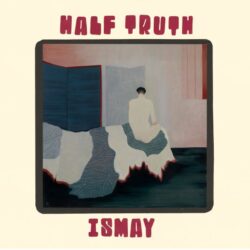 For listeners drawn to the quietly adventurous music of Aldous Harding, Cate Le Bon or Jessica Pratt, Half Truth, by California songwriter Avery Hellman, who performs as Ismay, will feel like a welcome discovery. Folk, americana and indie influences intertwine throughout the album, producing songs that are musically understated yet emotionally rich. These are not songs that announce themselves immediately. Instead, Half Truth rewards patience, revealing carefully observed lyrics and subtle arrangements that slowly gather emotional weight.
The title track introduces one of the album’s central concerns: the difficulty of honest communication. “Half truth I’d like to disappear” becomes both confession and defence, as Hellman explores the instinct to conceal thoughts rather than risk rejection. The arrangement mirrors this emotional restraint. Soft vocals sit alongside country-leaning guitar, creating an intimacy that allows the vulnerability of the lyric to emerge naturally. It is an opening that establishes the album’s quiet confidence.
That interest in the stories we tell ourselves runs throughout the record. The Let Down charts the changing ambitions of different stages of life, each vision pursued with certainty before reality inevitably intrudes. Rather than mourning lost dreams, Hellman gently questions whether fixed ideals are ever helpful, concluding that “the vision was too rigid”. Problems Galore reaches a similar destination from another direction, examining the temptation to believe that fulfilment lies in the next relationship, the next town or the next project. Even Miracle Cure, which closes the album with a beautifully restrained piano-led arrangement that gradually blossoms into an emotional crescendo, warns against placing faith in easy solutions and impossible promises.
Elsewhere, Hellman turns outward without abandoning the intensely personal perspective that defines the record. American Flag employs the image of a wild horse resisting domestication to explore expectation, projection and identity. Musically, it is among the album’s most adventurous moments. Unusual rhythms, rumbling percussion and guitars that rub against synthesisers create a subtle tension that never overwhelms the song’s central metaphor. Similarly, Shy Anne returns to the rodeo setting, transforming what initially appears to be a charming vignette into an affirmation of quiet self-worth. The childlike quality of the arrangement only heightens the emotional payoff when the overlooked horse finally “shines like Shy Anne”.
One of the album’s greatest strengths is the way its understated arrangements continually serve the songs rather than distract from them. It would be easy to describe many of these performances as sparse, but they are more carefully judged than that. On Torture Either Way, a modest combination of drums, bass, and guitar perfectly complements the lyric about the impossible balance between artistic integrity and external success. Jesus Sign unfolds with an equally gentle touch, allowing reflections on faith, compassion and human kindness to breathe without ever becoming didactic. Throughout the album, Hellman trusts the songs enough not to overwork them.
There are also moments where subtle musical details become quietly transformative. I Don’t Look at You is perhaps the album’s musical highlight, opening with an elegant guitar figure before gradually introducing piano and, later, a beautifully judged oboe. As the arrangement expands, so too does the emotional scope of a song that contrasts political anxiety with the fear of failing those closest to us. The repeated admission, “I’ve been worried way too much on politics”, gradually gives way to something more intimate, suggesting that genuine connection requires attention as much as conviction.
The same sensitivity characterises Wildfire and On the Honest Edge of Being. The former recounts the simultaneous arrival of new life and natural disaster with remarkable restraint, its mournful acoustic setting allowing the emotional complexity of the narrative to speak for itself. The latter addresses depression with extraordinary compassion, finding hope not in dramatic revelation but in the simple act of stepping outside together. Even the quieter moments, such as Jesus Sign and Shy Anne, contribute to the album’s broader meditation on empathy, identity and the ways people seek meaning in uncertain circumstances.
Half Truth is an album built on nuance. Hellman rarely reaches for grand emotional gestures, preferring careful observation and understated musical textures that encourage close listening. The result is a collection of songs that lingers long after it ends, not because it demands attention but because it quietly earns it. Like the half-truths its songs seek to unravel, this is an album less concerned with certainty than with the courage required to face uncomfortable realities. In doing so, Hellman has produced a thoughtful and deeply rewarding record whose emotional resonance grows stronger with every listen.