
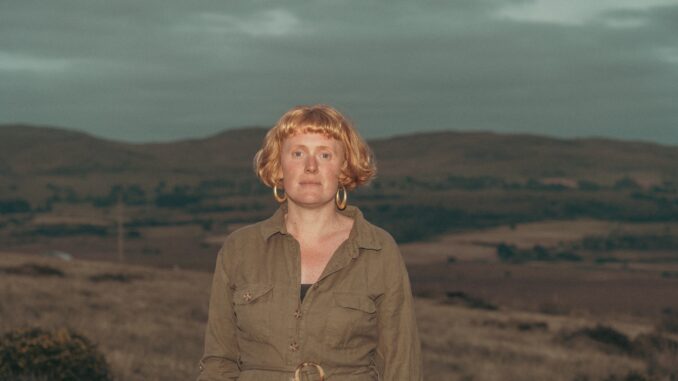
The second Folk Round Up of the year, and we are blessed with six amazing albums to review. There is something for everyone here, from traditional folk to innovative music and a collection of songs from Cambridge (the UK one) that could be straight out of the Appalachian mountains. There is a lot to take in, so please settle in as each of these is a class act.
 The wonderful Maz O’Connor is back with her fifth album, Love Is A Killing Thing. Recorded at Yellow Arch Studios in Sheffield, this collection of traditional folk tunes highlights everything O’Connor is renowned and revered for. You may recall the iconic moment in the movie Jerry Maguire when Renee Zellweger’s character utters the line “You had me at hello”; O’Connor will have you as soon as you hear the ethereal phrasing of the word “Sweetheart” in the opening track and single Once I Had A Sweetheart. It is beautiful, especially over the brooding beat. The sessions were recorded in the studio, straight to tape without editing or overdubs, and there is definitely that live feeling to the proceedings. The second single A Man Like You is such an intimate performance that you feel as if you are eavesdropping on a couple’s private conversation. The traditional Hares On The Mountain is sung beautifully, and the violin, which strikes up halfway through, has a wonderful, haunting sound and may remind our americana friends of an Amanda Shires performance. O’Connor reworks the song, reversing the genders, giving it such a powerful message. Look out for the ending, which is genius. There is a striking version of Jenny Put The Kettle On which O’Connor sings with joy and the excitement of impending nuptials. There seems to be more than a little crossover between American folk and other genres. Silver Dagger includes gorgeous banjo playing. The instrumentation throughout is a joy, and O’Connor has found a formula that really works, and with that haunting vocal delivery, it sets her apart from others. (8/10)
 Luke Giles brings us a collection called There Were Fiddles Going And Houses Rocking. Essentially instrumental fiddle and banjo tunes interspersed with old-time talking, which may sound odd on paper but works extremely well. Giles is based in Cambridge, UK. His father is from the southern United States, and his love of traditional music stems from that. The set is all self-played and produced. The archival voice recordings add to the music’s ambience. The album is strewn with beautiful moments, none more so than the blues guitar on Tishomingo Blues. Making a Cane Lost Girl Sheep Shell Corn feels like a concert about to start before morphing into a hip-hop type number. The voiceover says, “It was just for the fun,” and this is exactly how the suite feels throughout. It is clear that Giles enjoys playing with traditional folk music of the South and taking it somewhere new. He has produced an impressive array of tunes well worth a listen. (6/10)
 The press release for the next set describes the songs as “quirky”. Amy Hopwood, a folk songwriter, musician, and animation artist, releases her new album of songs, Gone To Flowers. Death and ageing are covered in a way you never thought possible. A Nice Wooden Bench opens the set and describes different ways people want to be remembered, from the traditional headstone to lavish mausoleums. Hopwood prefers a nice wooden bench with a view of the sea. Think of all the people who will enjoy that bench with a view; it would be fitting for anyone. There is nothing traditional about the music, as Hopwood uses different genres to deliver her message. It Doesn’t Matter Now sounds like a country song. There is one that springs straight to mind as the music begins, before moving to the sad yet liberating chorus as Hopwood relates the story of a failed marriage. Sherida Katerina plays the violin, and it works flawlessly. The extremely clever Breadcrumbs looks at how old sayings have been handed down from generation to generation throughout history. The voices in the background whisper sayings such as “You can lead a horse to water, but you can’t make it drink”. It’s spooky and gorgeous all at the same time. I’d Rather Be Older Than Dead covers the subject of ageing. This will no doubt become a sing-along favourite and reads like a nursery rhyme with an adult slant. “It’s a complex manoeuvre just to get off the floor / A military operation” is a magnificent line. There is a song about a magical Bayun cat that serves as a cautionary tale for Igor Potemkin, with Maisie the real cat providing purring. Never Said uses natural sounds of children playing, and River And Fish is a fabulous canon over rushing water and bird sounds. Hopwood’s voice carries Whistling of the Wind beautifully before completing the record with the stunning East Of The Sun And West Of The Moon. Gone To Flowers is a splendid set of songs. All bound together, it is a sonic adventure playground of modern folk. (8/10)
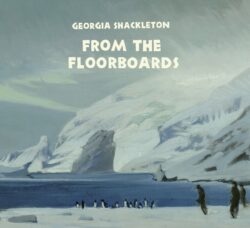 Georgia Shackleton is a distant cousin of Sir Ernest Shackleton. To mark the 125th Anniversary since he set sail on the Discovery with Captain Scott, Georgia Shackleton has released From The Floorboards. An interesting title and behind it a further tie-in to her ancestor. The violin used throughout the recordings was made from the floorboards of Ernest Shackleton’s Edinburgh home. Conservationist luthier Steve Burnett fashioned the instrument, as well as the Il Mare Violin and the Orca Viola. The last two were made from driftwood, and Shackleton uses all three throughout. You will not be surprised to hear that the sea plays an important part in the piece. Shackleton’s violin playing is excellent throughout, and she uses different techniques to achieve wonderful effects. The simple plucking of the strings on Sea Legs is impressive. The song was written for Sir Ernest, who could never shake off the call of the sea. The last entry in his diary, the night he died, read “A wonderful evening. In the darkening twilight I saw a lone star hover: gem-like above the bay”. Shackleton beautifully paraphrases these words in the song. Shackleton has the chance to let loose on the magnificent Oystercatchers/Down to the Rockpool. This one came to her, sat outside her little fisherman’s cottage, watching the dramatic waves at rising tide and seeing those exquisite oystercatchers squabbling to claim the submerging rocks. Ice King was written by John Morrison and his crewmates a week after their relief vessel left The Discovery in the ice on the orders of Captain Scott. The music ebbs and flows like the tide as The Discovery waits for spring. “Waiting returning sunshine / Waiting the help we’ll bring / wearily watching the hours go by / Til the morning comes with spring”. Band of Mothers picks up the story from 2016, when stranded sperm whales were washed up at Hunstanton on the Norfolk coast. The lines “People flock to see them bleeding, stranded on the sand / Dying mothers and their sons photographed for Instagram” are so moving, sad and hopeless. There is much to admire here, and Shackleton’s voice is striking, and the choice of material is a wonderful celebration of her cousin and an ode to the sea. (7/10)
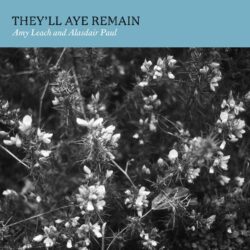 A further debut self-released album, this time steeped in the highlands. Amy Leach & Alasdair Paul recorded the songs for There’ll Aye Remain back in September 2025 in the tranquil setting of South Lanarkshire. It is a collection of tunes that they love singing, and that is evident on first listen. The arrangements are beautiful and the guitar playing stunning. Leach’s phrasing hangs in the air, inviting the listener to lean closer. For example, on the mesmeric Mirk Mirk, as the narrative develops, you feel yourself hanging on every line, capturing each nuance and the story’s conspiratorial nature. There is minimalist accompaniment throughout the recordings, which leaves the words alone to take centre stage. Leach and Paul have been singing together for years, and their love of the traditional songs is evident. Paul’s guitar playing is splendid, none more so than on To A Meeting, the duo themselves describe as “A bonnie and strange song found in the Greig-Duncan Collection”. You will love the imagery of the cuckoo waiting until summer to sing. Paul takes over vocal duties on The Carter, a song they learnt after hearing Dave Webber and Anni Freeman perform it at the Bromyard Folk Festival. In the background, an understated piano fits the mood perfectly as Leach joins in on vocals. The piano is back on the final track, Be Kind tae Yer Nainsel, which completes a very fine bunch of songs. (7/10)
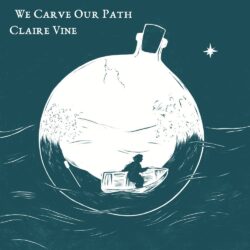 Finally, another debut album on Cuculi Records. Claire Vine found her way back into music after spending time in Greece and Calais working with people seeking refuge and asylum. We Carve Our Path follows up on the EP Tunnel, released back in 2020. Vine completed a music degree but found that the precise teaching took away the joy and spontaneity of making music. She has an incredible voice and is able to impart her ideas in a thoughtful and meaningful way. The suite includes new songs and older traditional ones, and all sit side by side perfectly. Not afraid to tackle a song a cappella or with minimal backing and to rework traditional material, it is a terrific journey of discovery. The opening track is a haunting retelling of the traditional The Maid On The Shore. The impressive and swirling backing vocals work so well as the sea captain is once again obsessed with the maid and loses all. In the ballad Fanny Blair traditionally sung by men, it implies that Henry Higgins was innocent and that 11-year-old Fanny Blair was lying. Vine adds a harrowing last verse to ask the question “Remember her story, ask why would she feign this lie / She was but a young girl who bore victim to a crime”. Vine covers ecological issues on Eyes Wide Open, which implores that “We can take back the land and then replant the trees”. Melancholy is the overall feeling with Lost At Sea, which laments the plight of refugees fleeing dangerously across the sea. Written in 2021, when Boris Johnson and Priti Patel were leading the rhetoric, Vine has an exquisite snipe at those in power. “While Boris sits and drinks his wine and eats his cheese / And Priti sits all safe and warm and pushes back those fleeing harm”. Ceasefire covers the conflict in Palestine and is simple and beautiful. Vine’s vocals are soft and warm over a wonderful harp played by Tamsin Elliott. It is a poignant and much-needed reminder of the suffering the people are enduring, and even more so given recent events elsewhere. Even with the dark subjects Vine has chosen overall, the collection leaves you with hope and a sense that together we can change things. A fine debut, and we hope to hear more from Claire Vine very soon. (8/10)


