
The sophomore album from New Haven, Connecticut’s indie-sleaze-inspired quartet.
 Early 2021, studio footage reveals a minimalist performance, little physical expression, three of the band members partly masked, as befits COVID times. The music is economical: a clicky, picked, precision bass, reserved and deliberate guitar flourishes, and a soft, understated vocal, low in the mix. All of this sets the tone in the early, formative days, The Tines perhaps still finding their direction.
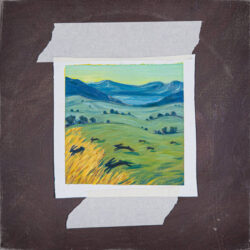
Five years, one full album, and several singles later, the sophomore, or as we Brits like to say, the second record, Barrows, will hit the street on March 20th. Sam Carlson, writer, guitarist and vocalist, explained in an earlier interview that their self-titled first album (2022) was a collection of largely unconnected songs. The new album aims to be more coherent, more cohesive. “A barrow is a burial ground…and the album’s title is intended to evoke the bucolic mystery of the songs within”, explains Carlson. It is thematic, elemental, and often visceral.
The music swings from dreamy melodic to gentle, yet insistently rhythmic. Often, but not always diatonic, it flows smoothly, not afraid of some creative and deliberate chordology. Carlson describes the band as being inspired by indie sleaze and acknowledged that the band embrace a “you are what you eat element”, perhaps drawing from what happens to be on the record deck at the time of writing. Carlson is mainly responsible for the lyrics, although writing credits are given to the whole band. The highly professional quality of the recording, often associated with bigger bands with larger studio budgets, is apparent, right from the first listen. That Carlson’s day job is as a recording engineer at San Serif Recording, where this album was recorded, is evident.
All the tracks are short, and the band like to make their point briefly, and then move on. No languid overstatement here. The natural, elemental world is a constant, powerful driving theme. “A lot of the record deals with the sense of being small inside of a larger thing”, says Carlson. His words paint pictures rather than tell stories, and occasionally you actually feel that you know what he’s talking about, only for the next line to snatch that comprehension away. Carlson’s touch appears ethereal, and in common with some of the best lyricists, the meaning is often deliberately obscure.
Cul de sac is the first track, its pacey 6/8 time signature giving the album a lively, infectious start. “You won’t know the new age until it arrives, and when you see it, you won’t believe it”, it prophetically announces. It’s finished after less than 2 minutes, and Seawall’s evocative acoustic guitar introduction quickly follows “Air like nickel and salt, hang like a pickle in brine”, means that you taste this song as much as hear it. Ozone, released as a single, evokes the duality of elemental freshness and toxicity, adding in the Ballardian horrors of death on the road. A heady mix indeed, Sam.
Holy Motors starts with a “plinky” piano followed by a soulman-like guitar slide, courtesy of the economical, yet rangy guitarist, Ilya Gitelman. This song is 2 minutes 49 seconds of pop heaven. It cleverly descends in pitch and disorients, as it switches between major and minor chords. The closing guitar solo with the sighing harmonies is beautifully executed. Among the Copper, described as the album’s centre on the official press release, alludes to the meaninglessness of physical possessions. Opening with an off the beat bass, its light bounciness supports a clever vocal which raises the dubious benefit of carbon offsets in a highly musical way. Centuries Long starts with an uncancelled run-out track, spinning on a turntable, emphasising the analogue feel. It features the clicky, organic bass of Sean Koravo, whilst Chris Mala on drums provides a solid rhythmic feel throughout. Out on The Wind makes you want to run to the top of the nearest mountain and just let the wind take you somewhere, anywhere. White Birds channels the band’s inner Nick Drake, and the lyricism of Ben Gibbard, with some Tweedy-like obscurity, is apparent on Death is a Door. “Death is a door, and maybe there is more” is the closing refrain, and then, appropriately and abruptly, the song ends. Forgetfulness and bliss round out the album, with Lotus Eater, never a bad place to finish. Also a single, it is an insistent melodic earworm of a song with a rich Jeff Buckley vibe.
Asking Carlson about the band’s name, he explained that it was suggested to him by the parts of a Fender Rhodes that are responsible for that unique sound. The name also implies some spikiness, some sharpness, and although the impression from the record is that the band are too chilled to get angry about anything, don’t be fooled. There is an intensity of purpose both in the messages and in the delivery.
There is a lot to like about this album. The album themes are well-defined, the songs beautifully crafted, the economical instrumentation exquisitely executed. The songs appear to have a magical quality which take control of your chosen listening device, directing it to play these songs on repeat. You are drawn into Carlson’s elemental world, and repeated listening, as with all good quality work, enhances rather than diminishes the experience.


