
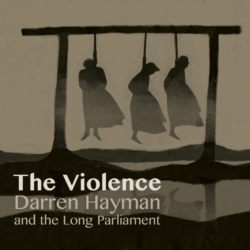
English folk chronicler re-releases his finest achievement, remastered and with extra tracks and a bonus EP re-release.
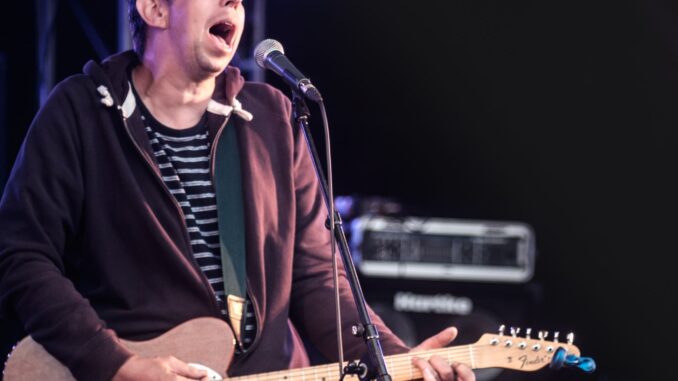
Darren Hayman is an Essex boy, born in Brentwood in 1970. Although he was influenced by the emergence of punk during his days at college this singer-songwriter (and pretty decent guitarist) formed a band in the mid-1990s that took on an American indie-rock sound, which found favour with John Peel over their lifetime (1995-2002). Although he collaborated with other bands and artists, Hayman became predominantly a solo artist, where his English-centric lyrics matched the indie-folk sound that evolved over time. Hayman has been a particularly prolific artist (as well as being a creative visual artist) and has released more than 20 solo albums this century.
His songs have been predominantly about storytelling and, with a fascination for history, were often about historical events that happened throughout (particularly English) history. These projects were highly original as the folksiness of the songs was interpreted with contemporary musical stylings that made for a bold juxtaposition. One of the most inventive bodies of work was The Essex Trilogy, made up of Pram Town, an album about Harlow New Town, Essex Arms, about rural life from an English perspective, and The Violence, a 20-song modern historical interpretation of the Essex Witch Trials in the 17th century, during the English Civil Wars. Hayman does incredible research for his albums. Lido, for example, was about unused outdoor swimming pools in Britain, and the trio of albums called Thankful Villages was about the 54 villages where every soldier returned from WWI. His albums were often long and could often be interpreted as reflections of modern life even as they addressed historical events.
Which brings us to celebrating the significant reissue of The Violence, one of a series of albums that Hayman plans to reissue as an exercise in filling in the blanks on various recordings where necessary for digital consumption. When it was released in 2012, The Violence was praised very highly by critics. Already regarded by The Guardian as a writer the equal of Ray Davies of the Kinks, reviewers lined up to applaud its Englishness, its contemporary lyricism linking historical fact with modern parallels, and the emergence of a ‘national treasure’ (Sunday Times). Hayman stated that the album was “about how violence frightens us and how fear just leads to greater violence.” Things don’t change much, which is why this can be seen as an important re-release.
It comes with a further 8 tracks added to the original, a few demos, a couple of outtakes and a couple of new related tracks.
Hayman is probably lyrically at his ‘folkiest’ for this album, but the sound of English folk music is embellished with contemporary arrangements from a large ensemble of multi-instrumentalists and vocalists (known as The Long Parliament), providing some lovely texture behind the acoustic guitars. The opening title track is a slow waltz with dreamy horns in the background, which describes the fear prevalent during the Civil War in 1645, where politics and religion clashed. The lilting tune belies the violent narrative: “The wood splits and gives you splinters, bark tears the tissue, The bones crack, crumble and fracture, over and over again / And captures the fear / Run from the violence, / The swords on the hill. / Pretend that you’re dead, / Keep perfectly still“.
The scene is now set for the whole album and the songs, lyrically poetic and some quite complex, are made accessible by Hayman’s songwriting skills and, for the most part, deceptively simple arrangements. The dreamy horns referred to earlier are accompanied at time by soft woodwinds and /or strings or organ, creating a tone for the album which is at odds with the oftentimes darkness of the lyrics.
The overriding success of the album is the innate Englishness of the subject matter, the minimal but empathetic arrangements and Hayman’s no-nonsense singing. He succeeds in retaining the listener’s interest over 28 tracks by writing about real people. There is Rebecca West, one of the first to be accused of witchcraft, though no record of what happened to her survives: You sent the witches to the gallows / Your mother to the grave, / you told a lie so you could be saved / But you can’t be saved“. This track is laced with gorgeous trumpet accompaniment.
Henrietta Maria was the love of King Charles II’s life, after he was persuaded to marry her to help Anglo-French relations, Elizabeth Clarke was one of the first to be hanged for being a witch – “Who’s going to dig my grave? / Who’s going to wash the dirt away? / Who’s going to spend the winter days, singing? / Who’s going to feed my dog? / Who’s going to pray the rain away? / Who’s going to pull on my ankles when I’m swinging?”.
Arthur Wilson’s Reveries describes the dreams of a steward of the Earl of Warwick, and he was one of the major sceptics of the witch trials. This lovely track sees Wilson describing only beauty when others saw violence and dirt- “You were beautiful when I met you / You were beautiful in jail / You were beautiful in tatters / You are still beautiful now / You were beautiful when bloody / And covered head to toe in dirt / You were beautiful at the gallows / More beautiful then I deserve”. It’s unnerving stuff, but so fascinating when hitched to some lovely, albeit slow, tunes.
The additional tracks add context and the outtake Lamenting Lady’s Last Farewell to the World is a gorgeous hymn-like ballad, while the four demos, sung with just solo guitar or piano, are intriguing as scene- setters for the later fuller sound.
It is/was a bold album to make, epic in concept though not in execution, as Hayman keeps the songs melodic (some of the tunes are beautiful), minimally arranged (no big epic orchestrations) and relatable throughout as he switches from first person to third person narratives, and back again. It may have the listener seeking more information about those times (who was Vinegar Tom or Parliament Joan?) and there will be some who will see the relevance of much of the storytelling to modern times.
It is a fascinating and indeed an important album, undoubtedly the culmination of Hayman’s talent, and worthy of its reissue, so hats off to Hayman for bringing this back to the market. It comes with a related remastered bonus EP ‘Four Queens’, stories about Henriette Maria (which made it on to The Violence), Nine Day Queen (Lady Jane Grey), Elizabeth The First, and Eleanor of Aquitaine.


