
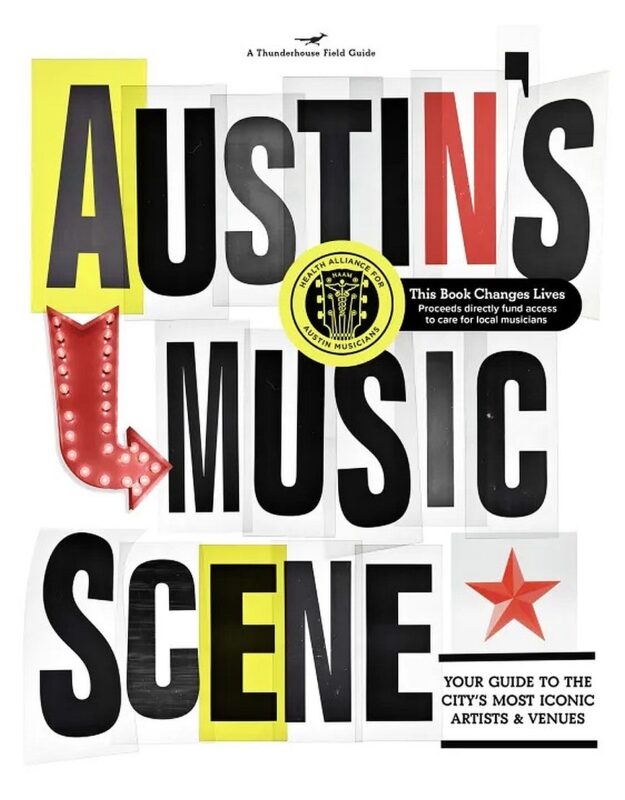
 In 1991 Austin City Council declared the city the Live Music Capital of the World. The live music and festival scene has grown over the years, including internationally recognised events like South by Southwest and Sutin City Limits. But Austin is also about the venues and artists which contribute all year round to what must be one of the most vibrant music environments in the USA.
Austin’s Music Scene: Your Guide to the City’s Most Iconic Artists & Venues is a comprehensive manual for anyone looking to make the most of a visit. Created in collaboration with the Health Alliance for Austin Musicians (HAAM), helping to celebrate their 20th anniversary, the guide captures the range of Austin’s current music scene through artist profiles across seven genres, venue spotlights and festival listings. Founder of HAAM and Editor of this book, Mitch Baranowski, calls the book “a real love letter to the sounds that are defining Austin today.” 50% of all net proceeds will benefit HAAM, helping ensure access to affordable healthcare for local working musicians. As well as covering some well-known artists and venues who built the city’s reputation, it also covers the grassroots stages that continue to host emerging talent every night of the week.
The book is structured to give some historical context and be a practical guide to getting about. It highlights the evolution of Sixth Street and the Red River Cultural District, making sure that readers can appreciate the heritage of venues like Antone’s or the Continental Club.
As the city prepares for the visitors during SXSW 2026, this book is an ideal companion to get off the beaten track. While the festival often focuses on the more corporate side of music, this guide looks at the more authentic Austin identity. For those visiting in March 2026, the guide provides the necessary background to appreciate the local stages that serve as the backbone for the festival’s most memorable showcases.
The guide is divided up by musical genre, with the country/americana and rock sections including plenty of names who feature in AUK, but also some who were certainly new to me. There are also sections on Jazz, Soul, Hip Hop, Latin, and The Blues, which is the mainstay of the music of Austin. With half-page bios and full pages on the bigger names, it is easy to quickly work out who is playing while you are visiting the city. The venue section is structured similarly, and all through the book, there is some great photography capturing the grit and glamour of the live music experience, showing the energy of a crowded Saturday night at a local dive bar. All this makes it a good browsing book, even if you have no plans to visit Austin. Where books on other towns just list addresses, here we get an explanation of why a particular room sounds a certain way or why a specific mural on the side of a building holds significance for the neighbourhood.
Austin’s Music Scene is a celebration of a city that identifies itself through music. By highlighting the meeting points of art and community support, the guide encourages a more conscious form of cultural tourism, and has, for me at least, added Austin to the places on my “must visit” list.



Hi Tim,
Thanks for your article and bringing this book to our attantion. I have to admit to having been somewhat sceptical about Austin’s claim to be the ”Live Music Capital of the World”…………until I first visited, and became an instant convert. I feel sure this book would’ve almost certainly proved to have been a helpful companion then.
I’d wholeheartedly encourage you to tick that “must visit” off your list at the earliest opportunity.
Notes to oneself: Must purchase this book, and, it’s about time for another visit!
Regards, David
Thanks David, even my friend from Dallas owns up to liking the Austin scene. This book put it on my places to visit list