
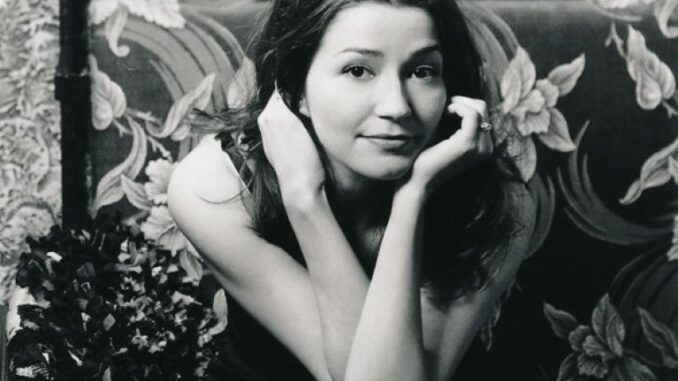
Yes I know I am picking two albums from a catalogue of only 8, two of which are compilations and one that was never released. For some reason the label didn’t like it, though two of the songs went on to be big chart hits for mainstream country artists. And there’s the rub – Matraca Berg was originally promoted as a mainstream country artist – hardly surprising as she was born in Nashville to a family of musicians – but partly due to her record label, the mainstream RCA Nashville label that she was contracted to at the time, and which was leading the commercial country charge, especially with their ‘hat acts’ etc, at the beginning of the 1990s.
The issue was that she was never a commercial country artist; she may have been able to write songs that resonated with country music buying listenership in the hands of the likes of Trisha Yearwood, Patty L:oveless, Martina McBride, Reba McEntire and Deana Carter. The latter recorded a song that was regarded as a pinnacle of country music songwriting in the 90s though Berg never recorded it herself (Strawberry Wine), but her songs were rooted in a mix of folk and blues and country music, a fact that became increasingly apparent towards the end of her recording career (so far). In the meantime and during the long periods between albums, she became one of Nashville’s best singer-songwriters and one of its most successful. Several years ago, our colleague Rick Bayles wrote an excellent article about Berg for a Features series that was running at the time – I Write The Songs – which can be found here. This article credits her with that but puts a focus on her recorded songs as well. She was a very fine musical stylist, capable of turning her hand to various styles, but she suffered from stage fright, which meant it was difficult to promote her albums with live performances or tours, so she tended to focus on writing, where her real commercial success came from.
Her first album release was Lying to The Moon in 1990. Of course it was not actually her debut album, which had been rejected by RCA , so it was no surprise that it sounded mature, a largely folk -oriented collection of songs that had something of a country pop feel to reflect the wishes of the record label. It was not a commercial success, as, despite the pop infusions, it still did not meet the ‘sound’ of the then current trend for mass-produced and higher profile acts. It contained a collection of lovely acoustic offerings, including Calico Plains and The Things You Left Undone, and the mild single hit Baby Walk On. But Berg did not want the high profile, and she was not happy to be shoehorned into the musical style that RCA Nashville required. RCA ‘polished up’ her second release to try and capture the market with country-pop, even blues arrangements, often hiding the sophistication of her writing, the quality of which was never in doubt.
Can’t Live With It: The Speed of Grace (1993)
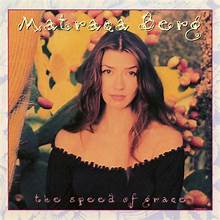 The album was the second and last with RCA, but she had been dropped by ‘Nashville’ due to lack of sales success of Lying to the Moon and was sent to RCA in New York. And using their LA sound studios, her sound was beefed up and electrified using a producer, Stewart Levine, who was used to producing soundtracks, fusion music and r’n’b. There was little acoustic instrumentation. Fusion musician Neal Larsen was on keys and piano, Michael Landau on electric guitars and the rhythm section featured rock drummer Jim Keltner and jazz/fusion bassist Freddie Washington. All great players but not suited to her folksy songs, so little surprise to find her recording Willie Mitchell’s blues classic Come to Momma at the behest of RCA or Paul Buchanan’s Let’s Face It. More surprising was a dark and moody cover of the evergreen Jolene, which was the only track with acoustic instruments on it, but you can’t help thinking it was recorded to capitalise on Dolly Parton’s popularity, good though Berg’s version is. Her own songs were, as usual, very high quality, with standouts like Tall Drink of Water and Slow Poison. She even recorded a new version of Lying to the Moon, that was converted from a masterful acoustic folk song into a power ballad. Outside the US, the album added two bonus tracks from the Lying to the Moon album to try and appeal to European markets, where her debut was better received by the record-buying public. Despite the quality of the songs it was a considerable misstep and totally misinterpreted the subtlety of her writing.
After an attempt, two years later, at a third album tentatively known as Wild Angels, got canned, Berg was left without a contract so she pitched all of her songs onto the market and lo and behold, she was in almost immediate demand as a songwriter again. She found a home at Rising Tide and released the excellent Sunday Morning to Saturday Night in 1997, with co-writes with Gary Harrison and Randy Scruggs and a selection of top quality acoustically-minded session players (eg Dan Dugmore on steel, Tammy Rogers on fiddle, and Jeff Hanna from The Nitty Gritty Dirt Band, who became her husband). Despite a slew of great songs including Back When We Were Beautiful and the very John Prine-inspired If I Were An Angel, the album was not a commercial success , and this despite continued critical acclaim.
As a highly in demand songwriter and with much less interest in recording, especially where it involved marketing her albums with live performances or touring, Berg laid low from the recording studio until the release of yet another wonderful album, the self-produced The Dreaming Fields (2011), thought by many critics to be her best album, and appearing on Dualtone Records. It kicks off with the stunning If I Had Wings, a dark song about the potentially fatal effects of domestic abuse, which, with Richard Bennett’s low tremolo guitar rumbling behind Berg’s vivid storyline, sets the tone for an album that addresses loss and desolation.
A year later there followed another stunner, on Proper Records
Can’t Live Without It: Love’s Truck Stop (2012)
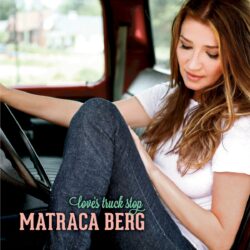 Following on The Dreaming Fields, Berg delivers a brilliant roots-based album, more eclectic than any before, though perhaps less immediate upon first hearing. The songs take a while, they are literate, and explore, in great character-driven detail, broken relationships, social outcasts, restlessness and disenfranchised women. In many ways she inhabits some of the literary territory of Gretchen Peters (troubled women and abuse), and she often sounds like Kim Richey. Once again in the producer’s chair, alongside David Henry, multi-instrumentalist on cello, violin, bass and baritone guitar, and organ, this is an even more acoustic album than any predecessor, with Jason Goforth on lap steel and harmonica, and Berg herslf on acoustic guitar, piano and harmonica.
Believe me, there is not a dud track on view (or the aural equivalent) and it gets its Can’t Live Without It title because of the consistent artistic writing in the songs, albeit that they are not the radio-friendly tracks that RCA Nashville wanted her to record, and, consequently it was, again, a commercial failure – though by this time commercial failure was not an issue for Berg, as her songwriting skills have basically underpinned her recording career, and these were songs that Berg considered important enough to get out into the world.
The literary nature of the songs is evident in the first two lines of the title track that opens the album: “Saw Gandhi written on the bathroom wall at Love’s Truck Stop / Nashville, exit 87 / “Be the change you wish to see in the world”” . Most likely put there by a vulnerable young woman: “Some hungry runaway tired and scared / Some diesel hooker without a prayer / Or a jaded writer looking for a song on her way home again” It’s a brilliant start and benefits from killer steel guitar playing keeningly in the background (and pretty much throughout the album).
Her Name is Mary is about a young waitress who has lived a hell of a life, and then there is the exquisitely sad song about the young prostitute Magdalene: “you have no voice, you have no choice, no one saved you, no one heard you cry”, with Henry’s cello and organ sighing in the background with Goforth’s steel. The gently lilting We’re Already Gone is another beauty about saying goodbye “Winter’s been hanging around too long”.
Moaning harmonica is the backdrop to the sad love song My heart will never break this way again – utterly engrossing! “In every life there comes a love like this / To blind with trust to know the Judas kiss / And as sure as your love changes with the wind / My heart will never break this way again”. But the real killer track is the closer Fistful of Roses (a metaphor for death) that explores the broken relationship between a young girl and her alcoholic mother at her life’s end, sung largely to Berg’s piano accompaniment with drifting strings in the background.
Berg’s albums seem relatively easy to get hold of, though not all have full credits and lyrics. It’s a small but wonderful body of work. She is a multi-award-winning songwriter with a beautiful and adaptable voice, and a member of the Nashville Songwriters’ Hall of Fame. Sadly there has been no album since 2012, nor any sign of one, but keep looking at album credits and her name will surely appear as songwriter on more than just a few.
Americana UK has ongoing running costs. If you have enjoyed reading this post, please consider supporting us for £2.99 a month.



I notice that she has a couple of co-write credits on the excellent new Waylon Payne album Wayward. Worth checking out..