
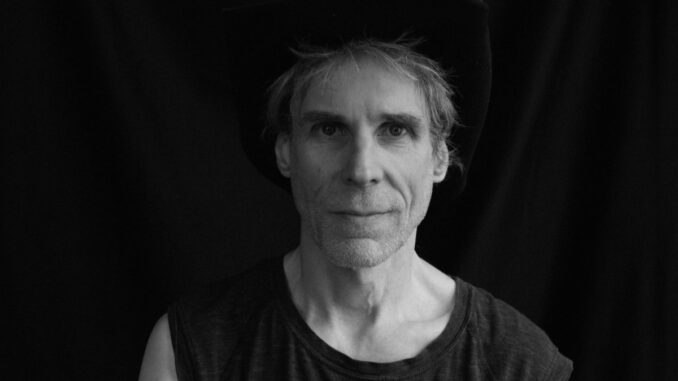
Pat Carter is the singer and principal songwriter for the Berlin-based americana band Rodeo-FM. Their albums are highly recommended as both musically and lyrically outstanding. As Carter has mused, “I guess every songwriter wants to write that memorable hook that will resonate with others. And that, of course, includes a catchy line or two. Personally, I use way too many words way too often, because usually I have a lot to say, considering that the topics of my songs deserve elaborating so their complexity can be done justice. So, I got quite some criticism for that, and I am trying to get better.”
Noted, but to quote Queen Gertrude, perhaps he “doth protest too much.” Carter and the band have performed in dingy cellars and at vernissages, at weddings and funerals, in beer tents and nightclubs, at jazz festivals, tenant movement symposiums and demonstrations across Europe. Along the way, Carter has established his own niche genre: left-wing country. In other words, his songs are typically classic country tunes that have evolved from masters such as Hank Williams and George Strait, seasoned with some rock.
You could make the case his world views are reflected in the following release information for his 2025 release, “Love in the Time of Capitalism.” To hear the record, he suggests “you have three options (like in a fairytale). 1) Listen to the album on Spotify (and be consciously complicit in pushing the military industrial complex, just like me and them and everyone else). 2) Stream or even better download the album on Bandcamp (which has also gone full corporate following its acquisition by Epic and Songtradr). 3) Or, the most PC thing to do, buy a physical CD.”
1. ‘Kitchen Door‘ – This is a song about coming of age in these trying and difficult times from a perspective of someone who has long come of age in a different era, when things were also fucked up but maybe not as complex and deceiving. Coming of age seems like a complex and demanding enterprise these days. While consumer culture has hit an all-time high, at the same time, it sort of fades as a means of social control and loses its integrative role in (capitalist) society. People, and especially young people, know this and sense that consumerism is just vain and saturated and senseless, which paradoxically doesn’t prevent them from broadcasting this on TikTok, the ultimate consumerist platform. But there are other means of control emerging, monsters that have long been at the fringes of Western, middle-class society, like poverty, war and most recently genocide. Realities are shifting, the brutality of capitalism, the echoes of Charles Dickens and Joseph Conrad are getting louder – Are these echoes at all? – whereas the shiny surface is seen for what it is, a shiny surface. A scam. This does not bode well for love and compassion as the pressure builds, as structural crisis seems to imply that everybody is their own best friend. Not a great time for growing up. But then, the young also know this, and they can read the signs and feel the toxicity like no one before them. Let’s hope they use it for the best. Fast. While sometimes it feels that the old, the Gen Xers, sit in their kitchen waiting for the night to pass.
2. ‘Love in the time of Capitalism‘ – This is a very personal song about a cathartic crisis. Some say trauma is stronger than love. In any case, the social framework we live in doesn’t encourage support and resolution. Most everything, including mental health, caring and even the time to tend to these things, is commodified and rationed, packaged in a way that someone makes a profit. Capitalism hates people opening up and taking steps towards each other. It divides before it conquers. Elbows are the default built-in feature. Coming out of coerced necessities, like work, rent, time, mental and physical health, capitalism lets people rot in the gutter once all the surplus value is extracted, which is now and always. And capitalism forces everybody to comply, so that love, help, affection, compassion, all the things that intrinsically can’t be bought and sold (you would think) are in short supply. This makes a crisis, a trauma, the healing quite an affair, an uphill battle against the noise the system makes to keep us sedated and the pressure it applies to keep us afraid.
3. ‘Miranda‘ – This song is a bit Dylanesque insofar as it takes seemingly unconnected phenomena like the breakdown of a relationship, the breakdown of community and inner city structures or the genocide itself and binds them together. Again, the implied common theme is the social frame, aka capitalism. Sometimes when I don’t know how to start a song, I take a quote. So, this one started with a quote from Gillian Welch’s ‘The Way It Goes,’ where Miranda ran away, took her cat and left LA. Well, Miranda was in trouble, apparently, and eventually she even had to sell her pussy cat. Miranda also left someone behind, and maybe that wasn’t so smart a decision. Who knows? The last verse of this song I wrote in early 2024, when there wasn’t yet the famine in Gaza and when it wasn’t as easy to speak out about Gaza – in Germany especially – however small the platform. The bottom line then and now, however, was and is that there are children being killed, thousands. back then, under the rubble. There ain’t no argument, no framing, no angle and historical dimension that can ever justify this. The colour of debris is always grey.
4. ‘Both Sides Now‘ (Joni Mitchell Cover) – I never liked Joni Mitchell too much when I was younger. Only in recent years I “discovered” her, which is nice, of course, makes you think. There’s always more great stuff out there. Anyway, the degree of sophistication and empathy and perception in her writing is just so much better than that of most of her male peers; it is amazing. Lightyears ahead. So is her guitar playing. Her use of open D tuning is so casual and still so poignant, it makes Keith Richards look like a schoolboy, really. And the singing, of course, it is no surprise Prince was a huge Joni fan.

