
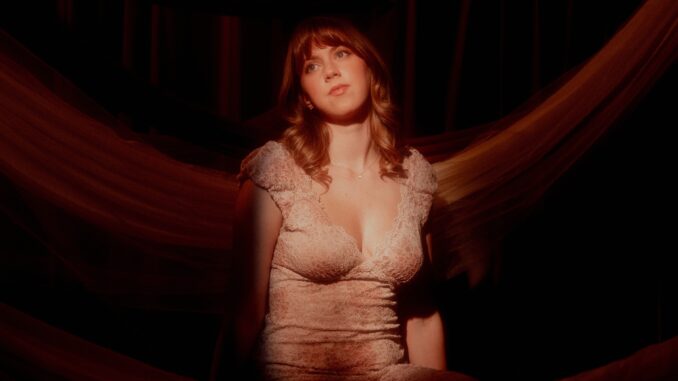
Nothing I Can’t Undo is such a deeply earnest, empathetic and personal album that captures exactly what a solo debut is supposed to be by introducing us, in full, to Taylor Bickett, a 20-something singer/songwriter from Carmel, Indiana, a midwestern girl who has transplanted to Nashville like so many others before her. It has been said you have your entire life to write your first record, and Bickett certainly took full advantage of that, laying the groundwork for a career in her pre-teen years. The ten songs on her album are ambivalent, toeing a blurred line between joy and melancholy.
The title song will endure as its anchor of clarity, one that tends to the comforts, mundanity and disappointments of age-old love in its many guises. “When writing the song, I came to the realization that I live my life in a very open-ended way,” she related. “I run from security and attachment but crave it at the same time, and that conflict lies at the center of a lot of the songs on the project.”
Bickett portrays herself and young people in her age group as complex people growing into full adulthood. There is so much intimacy on a record like Nothing I Can’t Undo (In Then Records, 2026). It’s a contagious, honest reflection of the songwriter’s interior life, especially details delivered through such graceful reckoning.
Writing about Joan Baez in 1968, Joan Didion referred to the folk singer as “a personality before she was entirely a person.” The classic truism about art is that it is the medium through which people come to best understand themselves, especially amidst the confusion of adolescence. They don’t tell you about the elation of finally meeting those people who see you as you really are. Bickett goes on to say that she’s noticed a lot of her listeners are people like her, who deal with, “perfectionism, overachieving, and being Type A.”
Whimsically catchy yet deeply vulnerable, the album explores the 26-year-old’s psyche during a tumultuous time, still giving us short and sweet bits of herself in songs like Goldstar, which delivers emotional heft in every way. “The song is a letter to myself, or more accurately, my inner child. I’ve struggled with perfectionism and self-criticism my whole life, and I find that it helps to think about myself as the little girl who just loved to sing and tell stories. I would never be mean to that little girl, so why am I mean to myself?”
With her, we never stay in the turmoil for too long. She’s genuinely inviting us into her world and not shying away from any part of herself in her pointed and poignant songs. We get to see more of her world in the following interview.
Americana UK: Given the time difference, I’m assuming you are not in Nashville.
Taylor Bickett: Actually, I’m in L.A. shooting a video for one of the songs on the album, If Only. The videographer I like working with is here, so I was like: “Okay, I’ll make the trip.” And I get to see some friends, too.
AUK: Good song. Is there something in your life that you have said “if only?”
TB: I think looking back on when I was younger that there were maybe some relationships or friendships that we could have worked it out had we not both been so stubborn and young. If only we could have just sat down and talked about it. The song is specifically making fun of a significant other who’s saying if only, “Oh, I wish we could be together.” But I’m trying to live without those “if onlys” and just going for it.
AUK: Recently, you were chosen to sing the National Anthem at a Chicago White Sox (baseball) game. How did that come about?

TB: That was super cool. I happened to be in Chicago for a show, and I have a friend who works with the White Sox and asked me, “Hey, do you want to sing?” I had never been to a major league baseball game, so I can’t say I’m a baseball fan, but I used to sing the National Anthem a lot in high school and college, so I was like, “Sure, let’s do it.”
AUK: Your song Quarter Life Crisis made me think of America’s 250th as a quarter country – hopefully, not the life of – event. Most of us have the idea when we are 25, well, we go on forever and the country will go on forever. But in some point it sinks in that life doesn’t last forever.
TB: When I was writing that song, I was trying to contextualize the feelings I was having, like, oh my gosh, I’m the only one who’s ever felt this stressed, this confused about life. Everyone else has it together and I don’t. Then as I sat down and began writing the song, I thought, “That is insane and not true at all. Everybody goes through this. That’s why they call it Quarter Life Crisis.” When you get to your early 20s, a lot of people just freak out, now I’m not a kid and I’m not quite an adult yet, or I’m trying to be an adult. In the chorus I say, “I know I’m not unique and I’m trying to be self-aware of that, but it doesn’t make the feelings go away.”
AUK: The title to the album and title song is Nothing I Can’t Undo. You say, “I run from security and attachment, but crave it at the same time.” That conflict lies at the center of several of the songs. So, are you an enigma? What would someone you know say about that?
TB: Actually, I don’t think I’m very mysterious at all. I mean, clearly through my music, I’m the type of person that just tells everything about herself first time.
AUK: How much do life experiences enter into your songwriting as opposed to observations?
TB: I’ve always been someone who has looked for adventure and excitement. And I think a lot of artists are that way because we have this idea of, “Oh, I need to experience life in order to write about it.” Sometimes that can turn into a toxic experience like, “I never stop experiencing and I don’t ever settle down.” There’s a point in which trying to live in order to write doesn’t work. You need to find more in your life, and I think it’s tied up in that quarter life crisis I have been feeling. It’s like, okay, I can’t stay in one place forever, so maybe I should move. When writing most of the album, I had just moved to New York and then I said, “Never mind, I’m moving back to Nashville.” I was just trying to figure it out where I belonged.
AUK: So, part of the quarter life crisis is settling down, both in where you live and who you hope to be?
TB: Whenever I find that things are getting kind of stable, I’m thinking where is the next excitement? In some ways, that’s good and keeps me motivated. But then there’s a point at which it’s maybe not the healthiest thing. I’m kind of wrestling with that, how to have a sense of adventure without it taking over my life such as still being able to have committed relationships. As a musician, I don’t know if I’ll ever feel settled down, but the simple things in life, as in the last song on the album, Venice, I’m trying to remind myself of the little things and the little joys and the details of life being really the most beautiful and important instead of looking for some big earth-shaking experience.
AUK: In Nothing I Can’t Undo, there is the line about writing in pencil like you would do with a crossword puzzle. Wouldn’t it be helpful to have a life event eraser? Something bad happens you erase it.
TB: Totally. It’s easy to enter into something and not fully commit because once you fully commit, then that eraser goes out the window. But if you try to live in a gray area, then maybe the eraser exists, but it’s a myth. It’s not real.
AUK: Are politicians disappointing to you?
TB: Yes, especially lately. It’s funny in my song Politician I’m talking about, “Oh, he’s so great and he’s so charming, so there must be something evil.” I think that’s because politicians get a bad rap, and a lot of times rightfully so for being super charming and ending up being really slimy and dishonest. When I wrote that song, I was like, “It’s a weird time to write about that considering all the craziness in American politics right now.” But the politician archetype remains. I wouldn’t say it’s the most positive thing, but in the song I’m saying, “Oh, he might turn out to be a liar and evil, but I guess I’ll have to find out for myself.”
AUK: What is your musical origin story? How did you come to do what you do?
TB: I have just always loved to sing, since I was in the crib, I was always singing. Very early my parents put me in music and theater. They also put me in every sport, and I hated every single one of them. So they said, we’ll stick with the music thing. In high school and college, I started to really get into songwriting. When COVID hit, I had a lot of free time on my hands and took that opportunity to write like crazy. That is definitely what shaped my artistry. I loved to sing, to perform, to write, but I didn’t know I was any good at it. And that is where I really hit my stride. But it’s one thing to love music and another thing to exist in the music industry.
AUK: What’s one thing you did as a young girl that you can still laugh about today?
TB: I have actually a crazy story. I was in second grade and we had one of those safari guys come to our classroom that brought all sorts of animals to show us, like lemurs and snakes You had to raise your hand to hold the animals, but I never got picked for all the cute animals. And then he pulled out a tarantula and not even thinking, I just wanted to hold an animal. I didn’t really realize that it was a giant spider, and I’m the only one who raised my hand. I didn’t think it through. He put the tarantula in my hands, and then it moved its leg and I was convinced it was going to bite me so I threw it in the air and it went all the way across the classroom and landed on its back. The guy lunges and he’s yelling, “No,” and trying to catch it. He was like, “You could have killed it.” And I felt so horrible. All the kids jumped up on the desks screaming. That was traumatizing. My teacher at the time ended up having my little sister a couple years later, and she said she told that story every year until she retired.
AUK: You talk about pushing a rock up a hill in Goldstar. Are you an overachiever?
TB: I definitely grew up with that desire to be the best, to get straight A’s, be the top of my class, get all the parts in the musicals, just do everything to the absolute best of my ability. But it has become toxic in my life where at some point you have to give yourself grace, and you have to be okay not winning all the time. You can make a mistake and still be a person worth living. There’s a line at the end of Goldstar where I say, “You can rest, you can learn, you can make mistakes.” I need to tell that to myself multiple times a day because it hasn’t clicked yet, but I’m hoping it will.
AUK: Well, who is keeping score?
TB: I am, just to make myself miserable.
AUK: Do people invest too much of themselves in partners, spouses, lovers to the detriment of higher purposes in life? I’m thinking of the song Driving in the Dark.
TB: Absolutely, and I’ve done it, loving someone so deeply and feeling like your identity is completely wrapped up in a person. That’s never good. If you lose that, then you become a shell of yourself. You can lose sight of your dreams and desires and ambitions, just having purpose outside of someone, because if that person goes away or dies, okay, now what am I? Grief is one thing, but you have to be able to continue on your path. I think that a healthy relationship is something where you can be two separate entities that come together because you want to and choose to, not because you feel like you’re cosmically intertwined.
AUK: In the song Venice, you say “the details are God if you get close enough / Funny how the second you notice it / it’s all there ever was. Life shouldn’t always revolve around human activities.
TB: And your spirituality can’t be another person. I talk about that a little bit in Driving in the Dark, where if your purpose in life is based on another person, you will falter because people aren’t God, and they shouldn’t be. If you put someone on a pedestal that intensely, you’re setting yourself up for extreme disappointment and desolation when it doesn’t work out. There’s more to life than one person.
AUK: On a lighter note, what’s one thing besides music you couldn’t do without?
TB: Well, my cop-out answer is spending time with my family, spending a weekend with them and just laughing and we have the best time. I’m so close with them. But to give an answer that’s more of an activity, I love reading and that has been a part of my life since I was very little, imagining worlds.
AUK: What’s something people don’t know about you that would surprise them? Or are you totally an open book?
TB: I finally realized that it actually can be fun to go to the gym. I was so anti-exercise for a lot of my life because I think I hated sports so much that anything sports adjacent has to go. And then I got into it and I realized, oh my gosh, this is saving my life for the future. Who knew you feel so awesome?
AUK: Your song about Wild Dogs talks about eating their pray alive. Is this a metaphor for love and relationships being hard?
TB: My mom always asked me when I was going to stop writing songs about blood and guts. But I was struck by the fact that wild dogs eat their prey alive, and I couldn’t stop thinking about it, which led me to Google more about it. What I discovered was that wild dogs are not the top of the food chain so when they find prey, they eat it as fast as possible. They don’t even have time to kill because a lion could come along and eat them besides what they are eating. So, it was very much like a survival tactic born out of fear and insecurity, which I immediately equated to so many things in my life and in the world where someone who is weak and fearful and insecure can inflict so much pain and damage.
I’ve seen it in my life with someone in a relationship putting you down because they don’t feel good about themselves. It’s hard not to let that affect you, and it’s usually only after you get out of the relationship that you see they weren’t putting me down because I was unworthy. That’s why it’s such a hard lesson to learn. Reading the description of wild dogs and how they behave, I just couldn’t stop thinking about that and how it relates to humans.
AUK: Have you ever sung karaoke like the woman in Genesis? And what’s your best song?
TB: I have sung karaoke a couple different times. I don’t love to do it because of being an actual singer, but every once in a while, my friends will go out. My friend and I sing Teenage Dream by Katy Perry together. It’s always fun to do it with someone else. I’ve also sung Before He Cheats by Carrie Underwood a fair few times because it’s just so fun. When you live in Nashville, it’s a classic.
AUK: Before you get big and become a headliner, if you were to open a show at the Ryman for any singer, who would it be?
TB: I have a couple but my absolute dream artist to open for would be Phoebe Bridgers. She has a new album coming out, and I have tickets for her tour this fall. I’m excited.
AUK: Last question: What do you envision for your future in music?
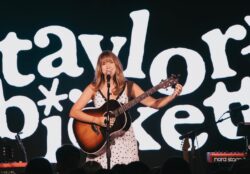
TB: My dream is to be able to do this forever and playing shows is one of my absolute favorite parts of being an artist. I would just love to be able to tour consistently and see the world through touring. That would be amazing. But ultimately, wherever my career takes me, I won’t stop making music no matter what. I also want to stay true to myself and my art and my vision. While I would love success, I’m not trying to primarily chase after that if it compromises my art and my happiness and mental health. I would love to be able to do this and support myself and also have a happy, balanced, well-adjusted life, which is kind of a tall order, but that’s what I’m shooting for.
