
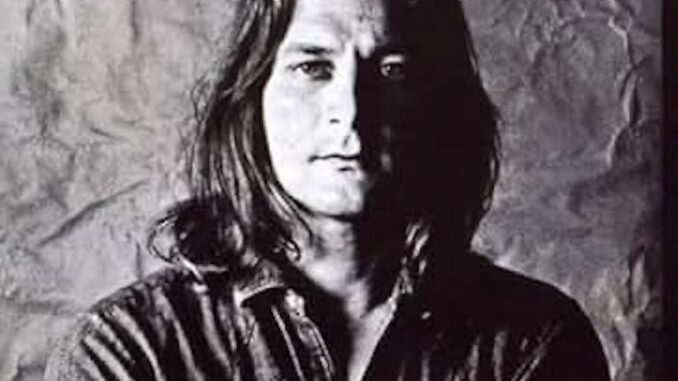
With this popular feature now well into its second year, I find myself challenged to make my fourth contribution. Having initially played safe with my first choice, Stephen Stills, I got rather bold with my second, only to feel the wrath of the global Deadhead fraternity at what was deemed by some to be a rather controversial decision. Suitably chastised, one could claim that I again chose to play it rather safe with my third offering in J.J. Cale, though I would argue that he was an excellent candidate for this series. However, if I’m honest, the artist I had planned to cover from the time this feature began, only to baulk every time I attempted to start, was Gene Clark. Was it through a sense of fear, possibly perceived as an act of betrayal, or simply a task destined for the too difficult tray? Probably a mix of all three, for there are few, if any, artists I hold in such high regard as the former member and main songwriter of The Byrds.
The choice for ‘Can’t Live Without It’ will come as little surprise, more about which later, but the issue for me has always been which album to choose for the ‘Can’t Live With It’ section. It would be fair to say that Clark never made a bad album. It’s simply that a few of his recorded outputs would become timeless classics, while the remainder didn’t quite reach the same level. However, after some real soul-searching, with my final decision going right down to the wire, here are my choices. All usual caveats apply.
Can’t Live With It: “Roadmaster” (1973)
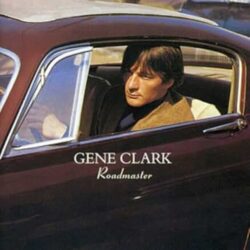
“Roadmaster” was officially Clark’s third studio album, following on from the album he recorded with The Gosdin Brothers in 1967, also known as “Echoes”, and his sophomore album, the seminal “White Light”, released in 1971, which received widespread critical acclaim on its release. However, despite the plaudits, “White Light” failed to garner much commercial success, other than in the Netherlands, where it had been voted album of the year by the local rock music press. Much of the problem revolved around the modest promotion attributed to the album, due in no small part to Clark’s refusal to undertake any promotional touring, dictated by his long-term fear of flying, which adversely affected sales.
The following year, he returned to the recording studio to work on what would eventually become “Roadmaster”. However, progress proved slow and expensive, and eventually his record label, A&M, lost patience and terminated the project before completion. When the album finally saw the light of day in January 1973, it was compiled from various unreleased recordings made between 1970 and 1972. Eight of the tracks were taken from an April 1972 recording session that featured such luminaries as Clarence White, Chris Ethridge, Spooner Oldham, Sneaky Pete Kleinow, Byron Douglas Berline, and Michael Clarke, while another two were recorded in 1970 with the original members of The Byrds, though each recorded their part separately. The remaining song from the original release was a track he had recorded with the Flying Burrito Brothers sometime during 1971.
Based on this, it will come as little surprise that one of my main issues with this album is its disjointed, thrown-together feel. The opening two songs, ‘She’s The Kind Of Girl’ and ‘One In A Hundred’, are the two tracks derived from an unissued single in 1970, by the reassembled five original members of The Byrds, with the latter being the very same song that appeared on the “White Light” album some eighteen months earlier. The third track, ‘Here Tonight’, is one of two songs recorded with the Flying Burrito Brothers in 1971 (the other being ‘Tried So Hard’), and of the remaining eight songs that appear on the original album, three were covers; Lester Flats and Earl Scruggs ‘Rough and Rocky’, the classic 1950s hit ‘I Really Don’t Want To Know’ written by Don Robinson and Howard Barnes, and the title track, a co-write by Freddy Weller and Spooner Oldham. In addition, the album also includes a cover of The Byrds’ classic, ‘She Don’t Know Care Time’ that Clark had written and was originally recorded in 1965, appearing on the B-Side to the single ‘Turn, Turn, Turn’.
Though there is nothing fundamentally wrong with any of the aforementioned, and let’s be honest, if Gene Clark sang the proverbial ‘Phone Book’, we’d all want to hear it. It’s just that too much of it is already familiar territory, which collectively lacks any sense of cohesion. It is therefore the four remaining self-penned tracks that hold the most interest, of which ‘Full Circle Song’ is undoubtedly the strongest. Recorded in Los Angeles in April 1972, the song is a pure slice of country rock that finds Clark’s narrative using an allegorical wheel-of-fortune motif to comment on the unpredictable nature of fame and fortune. Though it may not be Clark’s greatest ever song, within the confines of this album, it feels like the high-water mark, and Clark would go on to re-record the song as ‘Full Circle’ for the 1973 reunion album with his former group. The atmospheric ‘In A Misty Morning’ exudes many of Clark’s writing traits, full of intimate and poetical complexity, and along with the dreamscape of the closing number ‘Shooting Star’, runs ‘Full Circle Song’ a close second. The remaining number, the melancholic ‘I Remember The Railroad’ feels a little too lethargic, leaving a sense of frustration at what might have been achieved if more time, care and attention and been administered.
“Roadmaster” is not a bad album, in fact, for most other artists it would possibly be seen as a career high; it’s just that Gene Clark wasn’t just any artist, and though his overall output is not necessarily as vast as some of his peers, amongst his canon work lies some of the finest recorded music of the twentieth century. For those reasons, “Roadmaster” just pips “Two Sides To Every Story” for the dubious accolade of ‘Can’t Live With It’.
Can’t Live Without It: “No Other” (1974)
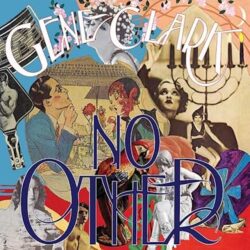
Having left A&M in late 1972, Clark joined a reunion of the five original members of The Byrds, recording the album “Byrds,” which was released in March 1973 by Asylum Records. Despite charting relatively well in the U.S., the album failed to match the commercial success expected by the label, and with disappointing critical reviews and dissatisfaction with David Crosby’s performance as record producer, the decision was made to dissolve the band. However, it was widely agreed that Clark’s compositions and contributions were the standout points of the album, and on that basis, David Geffen signed him to Asylum Records in early 1974. At the time, the label was the home for most of the prominent exponents of the singer-songwriter movement of the era and carried the kind of hip cachet that Clark hadn’t enjoyed since his initial spell with The Byrds, and Geffen was prepared to offer Clark the chance of a lifetime with the finances to record a big-budget album.
Thomas Jefferson Kaye was assigned the responsibility as producer for what would become “No Other” and approached the project like a man possessed, boasting he was going to record an album that resembled a cross between The Beatles’ “Sgt. Pepper” and The Beach Boys’ “Pet Sounds”. In addition, the vast array of session musicians involved included Danny Kortchmar, Leland Sklar, and Russ Kunkel, who collectively were all part of the rock/jazz fusion band The Section, along with Butch Trucks, Chris Hillman, and Timothy B. Schmit.
Clark composed much of the album in pastoral bliss at his home in Mendocino, staring out across the Pacific Ocean, though he briefly joined Roger McGuinn’s touring band, where he first performed the song ‘Silver Raven’, which would become arguably his most celebrated post-Byrds composition. In an interview with ‘Zigzag magazine‘ in 1977, Clark revealed how he had been strongly influenced by both Stevie Wonder’s 1973 album “Innervisions” and The Rolling Stones’ 1973 album “Goats Head Soup”, stating, “somehow the joining of the two gave me a place to go with “No Other”, and I wanted it to go in a powerful direction”.
Here on “No Other”, the plaintive country-folk sounds of “White Light” and “Roadmaster” were replaced by a sprawling and ambitious venture that united rock to country, jazz, blues, and psychedelia with intricate vocal harmonies and heavily overdubbed, vertiginous arrangements to create a hybrid like nothing heard before. From the opening bars of ‘Life’s Greatest Fool’, a foot-tapping country gospel anthem stuffed with counterculture wisdom and a hypnotic percussive beat that underpins a kaleidoscope of sound swirling like an out-of-control carousel ride, the album takes you to places no album had done before or since. The aforementioned ‘Silver Raven’ follows, with a sense of spirituality almost impossible to define, as Clark, who would surely have recognised William Blake as a spiritual progenitor, wraps his exquisite vocals around a poetic narrative inspired by a news bulletin about a satellite from beyond our solar system. Full of mysticism and reverence, it is possibly only equalled by Van Morrison on his seminal album “Astral Weeks”. The title track to the album is another bonified classic as it starts almost as a post-mortem to the West Coast Hippie idealisms before mutating into some sort of celebration for the death of a dream. On an album that simply delivers one timeless classic after another, ‘Strength Of Strings’ possibly best captures the ethos of the album, with its haunting slide guitar, weaving around the choral harmonies that gradually build in crescendo to an epic finale. It is the very epitome of the phrase ‘Magnum Opus’. The achingly beautiful ‘From A Silver Phial’ explodes with emotion, Clark’s vocals never sounding so passionate. Except they do. Immediately, as with the following number ‘Some Misunderstanding’, a slow, eight-minute cry from the heart, his soulful delivery oozes such vocal perfection as to leave the listener transfixed, lost in aural ecstasy. The relative simplicity of the upbeat ‘The True One’ with its infectious melody is followed by the closing number ‘Lady Of The North’, written with Doug Dillard, with whom Clark had made two seminal albums at the end of the 1960s. Here, Clark’s reflective narrative is carried by a wave of strings and keys, before an electric guitar played through a wah-wah pedal and a fiddle take the song through a psychedelic soundscape as it slowly disappears in kaleidoscopic haze.
When “No Other” was finally delivered to Asylum Records in the summer of 1974, it had, despite its hefty advance, come in vastly over budget. It is an interesting aside that Kaye also accumulated tens of thousands of dollars in cost overruns while producing Bob Neuwith’s solo debut. Geffen was also dismayed by what he perceived as the dearth of potential hits and the uncommercial nature of the material. In an Interview some time later, Kaye said, “I got flak from David Geffen about how come there were only eight songs on the record after spending all that money? There were eight great songs, and that was it. We were trying to make a real piece of art, and we thought Geffen, being a real arty guy, would get it. But he didn’t. I think it went over his head”. To be fair to Kaye, the finished result is now recognised as one of the greatest albums of all time; however, at the time, without any active promotion from the label, and limited critical favour, with many writers lambasting Kaye’s “bloated” and “pretentious” production style, combined with a curious choice for the album’s cover art, sales were almost non existent and by 1976 it had been deleted from Asylum’s catalogue.
Clark was bitterly disappointed by the album’s commercial failure, and some say he never fully recovered from the blow. According to his brother David, “(Gene) put everything into that…everything. Heart, soul, money, everything he had he poured into that thing because it was going to be his reclamation, and when they killed it, they killed him”
“No Other” may have been immediately and unfairly forgotten on its release, but over the years, it has come to be accepted as one of the most stunning additions to the canon of the West Coast music scene, and regularly appears in the ‘Greatest Albums” lists. For my part, very few albums have ever had the impact that this classic 1974 release had, both instantly and continuously. I appreciate that most regular readers of AUK, will more than likely be familiar with the eight tracks that make up this album, but those few who are discovering it for this time, make no mistake, “No Other” isn’t just one of the best americana albums, it is one of the greatest albums ever made, regardless of genre, and no serious record collection is complete without it.



Spot on Graeme, No Other is indeed one of the best of all time in any genre. I quite like Two Sides To Every Story, so would have to opt for Roadmaster as his weakest album overall.
Hi Tim. Glad you share my view on the two Gene Clark albums,
Wow! That’s a harsh reading of Roadmaster, one of his best in my book. I would have thought that Firebyrd easily tips it in the least essential category.
Hi Jed. Thanks for getting in touch. I hope my review of “Roadmaster” didn’t come across too harshly. I tried to be fair, and I’m sure on more than one occasion I stated that it wasn’t a bad album. The problem with this particular feature is, to be able to write about a favourite album, you have to find something negative to say about another. You’re right, “Firebyed” would definitely have been another contender, with a very similar profile to “Roadmaster” Ultimately, one had to be chosen, and if nothing else, it gets us talking about Gene Clark albums, and that’s got to be a good thing.
Brave choice, Graeme, but you got it right. Like Tim, I am a bit of a fan of Two Sides To Every Story, and I think Roadmaster is his weakest album by some way, but still essential to
Gene’s overall story.
Hi Martin. Yeah, it was, and as you can imagine, I didn’t find it easy to write negatively about an artist I hold in such respect. Glad you agree with my choices, and totally concur with your summation.
I love all the Gene Clark solo records but “No Other” is a masterpiece. As luck would have it my other half is out at a dinner tonight so, inspired by this article, l’ve just listened to it in the dark and it’s a stunner. I believe there’s a highly regarded biography of Gene which l might put on my Santa list. I like “Roadmaster” a lot too, the artwork on my copy, a recent reissue, is completely different from the above though. Not sure why they would have changed that. Anyway great article Graeme, thanks a lot for posting.
Hi Mark. Thanks for getting in touch. Glad you enjoyed the article and were inspired to listen to “No Other”. Not sure exactly when they changed the cover to “Roadmaster”, but I also much prefer the original.
Never truer words were spoken………….make no mistake, “No Other” isn’t just one of the best americana albums, it is one of the greatest albums ever made, regardless of genre, and no serious record collection is complete without it.
I listen to Gene Clark a lot. There are also other essentialClark covers listens. Go here for the Gene Clark No Other Band covering the entire No Other album… https://www.youtube.com/watch?v=OaF3znVBWe8
Also, Margo Cotten does some great Gene Clark / Byrds covers.
Look here youtube.com/watch?v=wfNctdnOP30&sttick=0 for her version of From A Silver Phial . She has others, you’ll see – worthwhile checking out.
Hi Patrick. Thanks for getting in touch. Glad to see you share my personal view on “No Other”, and many thanks for the attached links, will definitely check them out.
When we spoke last weekend at the While & Matthews gig in Kirton Lindsey, Lincs, you said (almost in passing) “check out my article that should appear next Weds” … and left it at that. Now I see. Very mischievous of you Graeme. You knew full well that I’m as much a Gene Clark
fangeek as you .. so to deliberately leave me hanging was unbearably cruel. However, now that I’ve allowed myself a “cooling off” period, I can acknowledge the fun you must have had. I was hoping to expose you on a point of detail, but your research – as ever – was cast iron. I can’t even dispute your fav … but that was never in doubt. And well done for achieving your real goal …. stimulating discussion & debate.Hi Alan. Many apologies if my mischievous aside last Saturday caused undue consternation; truly not the intention. I hope the choice of my article and its content has suitably impressed you enough to avoid too much chastisement when we catch up at our next gig. Will be interested to hear what you thought about my choice of album for the ‘Can’t Live With It’ section.
She don’t CARE about time
Hi Robert. OMG. How did that typo slip past? Many thanks for spotting that. I will correct it immediately.
Thanks for covering Mr. Clark, forgotten by so many and unknown by even more. ‘So Rebellious’ with Carla Olson was my intro to more of his solo work. Really like the column.
Hi. Thanks for getting in touch and saying how much you enjoyed the article on Gene Clark. “So Rebellious” with Carla Olsen was also a fine album, but then Mr Clark never recorded anything that wasn’t worth listening to.