
The wonderful You Don’t Miss Your Water, from The Byrds’ seminal 1968 Sweetheart Of The Rodeo album, was first written and recorded on the Stax label by soul singer William Bell in 1961. Bell was the first male artist signed to Stax, and this was his debut. He had been on tour for six weeks, was missing his home and girlfriend, and wrote the song as a result. So, although the singer in the song has been unfaithful and has lost his love as a result, it was homesickness that prompted it, rather than infidelity. Bell says of the song: “The message is universal: appreciate what you have”. As has happened with other songs, it was originally a B-side to the single Formula of Love before gaining fame. The single didn’t sell well until some DJs started to play the B-side. And the rest is history, as they say.
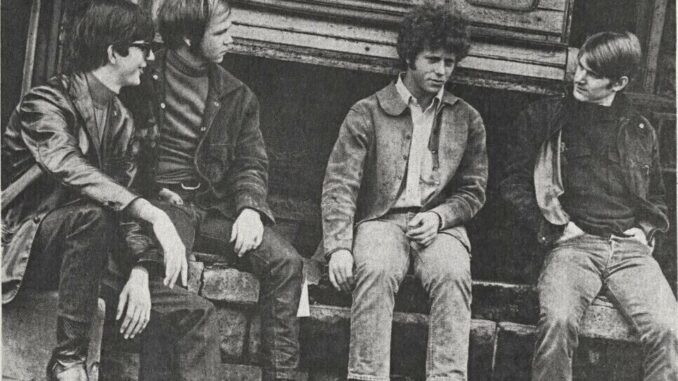
The Byrds had recorded the album The Notorious Byrd Brothers in 1967, but wanted to move away from the psychedelia on show there. They had sacked David Crosby and Michael Clarke from the band and recruited Chris Hillman’s cousin, Kevin Kelley, to replace Clarke on drums. However, they found it difficult as a three-piece, consisting of Roger McGuinn, Hillman and Kelley, to play the album live. McGuinn felt that they needed a pianist who could play jazz, and Gram Parsons, who had previously auditioned as a pianist for The Byrds, was recruited. Parsons soon gave up the piano and started playing guitar. Initially, McGuinn and Hillman liked Parsons’ apparently genial personality, but later, great tensions would grow.
McGuinn had planned the next album to be influenced by a great range of American music styles, such as bluegrass, folk, country, rhythm and blues, soul, rock, and jazz, but also by electronic music. However, Parsons believed strongly in the promotion of country music and its fusion with rock music and had started this on the Safe at Home album with his previous group, The International Submarine Band. He managed to persuade Hillman that the album should consist of this fusion. It was like pushing at an open door with Hillman, who had grown up playing bluegrass, liked country music and had already brought a country influence to some of The Byrds’ previous music. McGuinn needed more persuasion but eventually came round. He had some doubts but thought that it might boost the group’s waning popularity.
Sweetheart Of The Rodeo gained some critical plaudits but did not sell particularly well. It alienated a section of Byrds fans with its move away from rock and enraged country music fans who thought that The Byrds were just hippies. The lowest of the low, they were met with derision, jeering, and heckling at a live appearance at the Grand Ole Opry soon after completing the recording of the album in Nashville. However, it is now seen as being very influential as one of the first, if not the first, country-rock albums. Parsons apparently hated the term “country-rock” and preferred the mixture of country, rock, folk, soul and rhythm and blues to be called “cosmic american music”.
The linking of soul and country is seen on You Don’t Miss Your Water, although it is really a country version of a soul track, with not much soul to be heard. There is honky-tonk piano from Earl P Ball, lots of pedal steel from veteran session man JayDee Maness and also the trademark Byrds harmonies. Parsons initially sang, but the version on the album has McGuinn on vocals. The excuse for this was that there was a legal challenge from Lee Hazlewood, stating that Parsons was still under contract to his record label and so could not perform on the album. However, there had been a power struggle between McGuinn and Parsons about who made the decisions in the group, with, for example, Parsons wanting the group to be called Gram Parsons and The Byrds. It seems that McGuinn didn’t want Parsons to completely take over the album and so substituted three of Parsons’ vocals with his own. He left three Parsons vocals intact, though. Parsons was enraged and thought that McGuinn had messed up, though there is not much difference in the versions, with Parsons’ vocal being slightly preferable.
The Byrds went on a tour of South Africa, despite advice not to do so, for example, from Jagger and Richards of The Stones. Parsons said that he would not go, in protest against apartheid, and left the group, though McGuinn and Hillman felt that this was not sincere and was just an excuse to spend more time with The Stones. He was not a member by the time Sweetheart Of The Rodeo was released.
There have been a huge number of covers of the song. Soul versions came from Otis Redding, Percy Sledge and Taj Mahal, for example. There was a ska version from Peter Tosh and The Wailers, a folk-rock version from The Triffids and an electronic cover from Brian Eno. Sturgill Simpson has performed a live cover, and other more contemporary covers have come from Craig David and Richard Hawley. However, those mentioned above are just the tip of the iceberg, which serves to underline the greatness of the song.

