
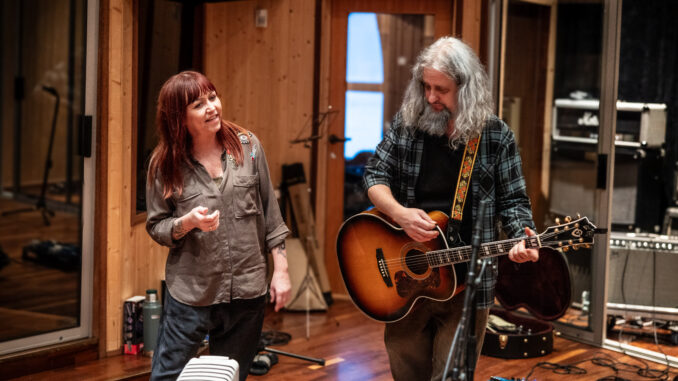
AUK Writer, John Lee, gets a rare opportunity to go behind the scenes and witness the creative process in close-up.
When I was invited to spend time with Thomas & The Angry Hearts in the studio, I didn’t quite know what to expect. But within hours of arriving in Norway, it became clear that this would be less about observing a band at work and more about witnessing a rare kind of focus. Here at Americana UK, we are always searching for new experiences and new ways of showcasing the artists who make the genre what it is. Spending time with Thomas & The Angry Hearts, as they recorded new material, felt like exactly that kind of privilege.
Thomas & The Angry Hearts are a Norwegian band so, armed with my single word of Norwegian, I headed out not quite knowing what to expect. That word was “hygge”, and I was hoping for some sort of cosiness and contentment on the trip. Norway did not disappoint. It has a way of disarming you: the welcome is unshowy and genuinely warm. Within hours of arriving, I got the sense that things are meant to slow down here. Conversations, meals and the process of making music are given the appropriate time. It is an environment that encourages listening.
Thomas & The Angry Hearts are Thomas Warhuus Ådland (vocals, acoustic guitar), Hilde Bergersen Ådland (keys, vocals), Nils Stian Aasheim (guitar), Stig Terje Inderberg (bass), and Leiv-Rune Gully (drums). All five are deeply experienced musicians, involved in multiple projects, but as I was to discover, there is something unusually focused about the way they come together as a band. Their self-titled debut album, released in 2024, already hinted at that cohesion, but in the studio it became impossible to miss.
I met up with Thomas in a café in Lillestrøm – a place of great coffee, open fires, wood and comfy chairs: a perfect place to be embraced by Norway, and by Thomas.
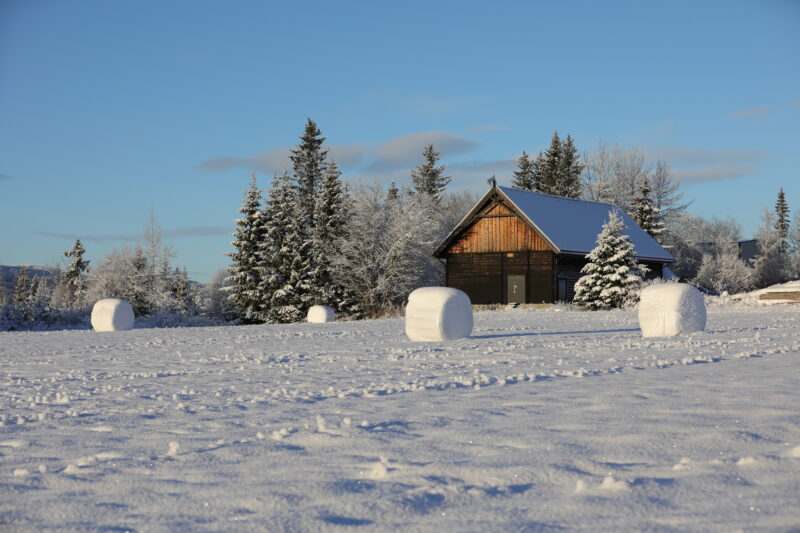
Our first stop was the studio. It belongs to Ronni Le Tekrø, and is a beautiful, secluded house in the middle of nowhere, surrounded by trees and silence. Just to add to the magic, Norway managed to give it a dusting of snow for me.
Ronni – best known as the guitarist from TNT and something of a national institution in Norway – had agreed to produce the band’s new material, and I got the sense that everyone was excited by this. He is a charming man, full of stories, dry humour, and an immense, undimmed passion for music. He remains an outstanding musician in his own right, and for readers who might not be fans of heavy metal, his work with current Norway resident Ledfoot is pure Americana, and pure brilliance.
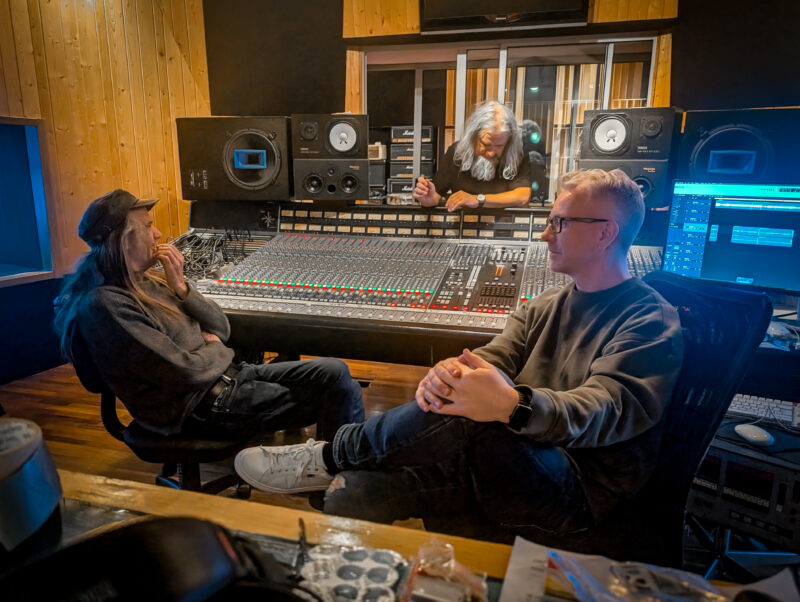
Ronni had first encountered the band when they auditioned to play his summer festival. There may have been an element of luck in this – they were stepping in to replace another group – but it also felt like a moment of recognition: a seasoned musician spotting something real and wanting to help it grow. Watching the band reconnect with Ronni was quietly moving. While he does exude a natural authority, it was obvious this was a collaboration built on trust rather than hierarchy.
They began by playing a selection of new songs for an audience of two – just Ronni and myself. From there, Ronni and the band would decide which to work on first. The songs were ‘Elinor’, ‘Open Your Eyes’, and ‘What Went Wrong’. All three are deeply personal, and all three demand a level of emotional exposure that makes first performances – especially in such an intimate setting – nerve-racking. There is nowhere to hide with songs like these.
‘What Went Wrong’ became the emotional centre of the showcase. When the band played it through, something shifted in the room. Ronni and I exchanged a look, one of those wordless acknowledgements that says everything. Both of us broke into involuntary grins. It was a visceral thrill – the kind that reminds you why people still gather in rooms to make music together. The song created a feeling, and everyone felt it at once.
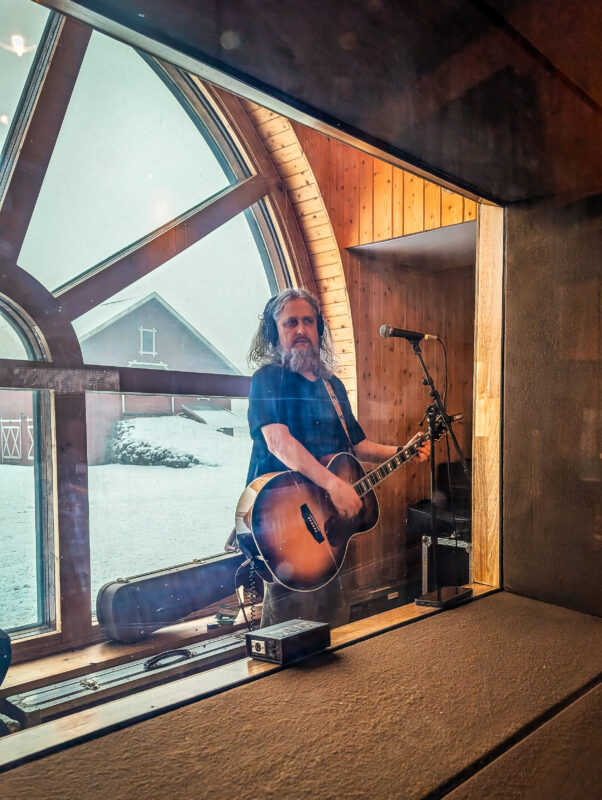
It was decided that this would be the first song tackled the following morning. After cosy conversation, a glimpse into the real passion of the band and a couple of nightcaps, everyone went to bed happy.
In the morning, the band was joined by Tomas Linnes, CEO of Southbound Records and co-producer of the sessions. His first comment was to quote Charlie Watts, who famously said that being in a band meant he had “worked five years and spent twenty years hanging around.”
And so it proved. For someone who had never been in a studio before, it was a fascinating experience.
There was a patient, gentle pattern to recording: a guide vocal laid down, the rhythm section carefully perfected, parts built layer by layer. There was a strong sense of collective investment. When something clicked – a drum fill locking perfectly with the bass, a harmony settling into place – the joy was shared instantly across the room. No egos. No point-scoring. Just five musicians completely committed to getting it right.
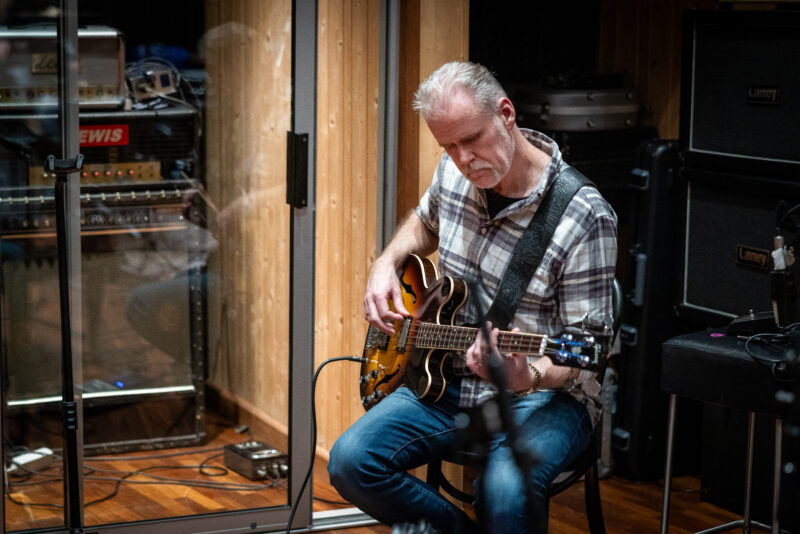
There were moments of painstaking detail too: sound engineer Kjartan Hesthagen – a man of breathtaking skill – catching tiny, almost imperceptible noises and homing in on them with forensic accuracy; discussions about the character of a German piano; the challenge of recording while physically separated, glancing instinctively around for bandmates who were actually in other rooms. This was craftsmanship at the highest level, rooted in listening.
Ronni’s role was less about control and more about excavation. The night before, he had talked about aiming for a fuller sound – “almost a Phil Spector version of folk,” as he put it – but always in service of the song rather than spectacle. With Thomas in particular, this meant gently steering him away from reaching for a voice that wasn’t quite his. Jeff Buckley came up early on, not as a comparison but as a temptation: the allure of fragility as performance. What emerged instead was something more grounded and, paradoxically, more vulnerable – a voice that sounded fuller because it was more honest.
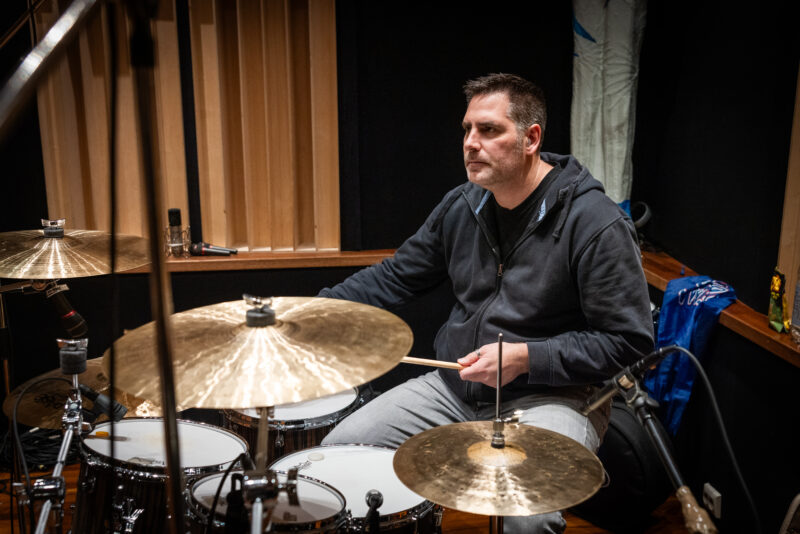
At the end of the first day, Thomas looked exhausted and quietly satisfied. “It’s like having a real job,” he laughed. The foundation was there, he said. Tomorrow would be about the finishing touches. Playing new songs, he admitted, is always harder. There’s no muscle memory yet, none of the deep familiarity that comes with songs you’ve lived with for years. These were still fragile things.
That fragility is something Thomas understands well. Later in the evening, conversations turned more introspective. He spoke openly about mental health, about the highs and lows that come with creativity. He used to restore motorbikes, he told me, the satisfaction of fixing something with your hands, of being completely absorbed in a task. Songwriting offers him the same escape. When a song comes together, the high can last for weeks. Writing is cathartic, a way for emotion to find shape. His favourite songs are always the most personal ones, the ones with a direct emotional line.
We talked too about language. Thomas sings in English not as a statement, but because it suits his voice. Singing in Norwegian, he said, simply feels wrong for this kind of music. That choice comes with complications at home, where English-language Americana can sit awkwardly outside expectations, but he is unapologetic about it. Their sound draws from folk, rock, Celtic influences and classic pop, and English gives it room to breathe.
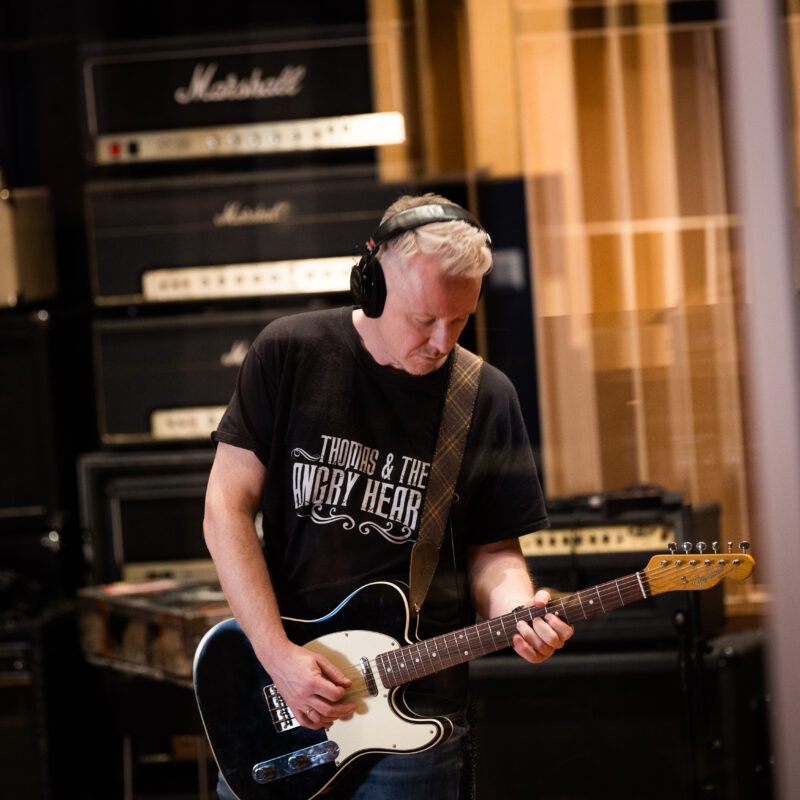
Day two brought violinist Amelie Lied Haga into the room, along with extra guitar parts and a renewed sense of momentum. Amelie is a perfectionist with a beautifully rich tone, her classical training balanced by deep folk intuition. Her presence lifted the songs effortlessly.
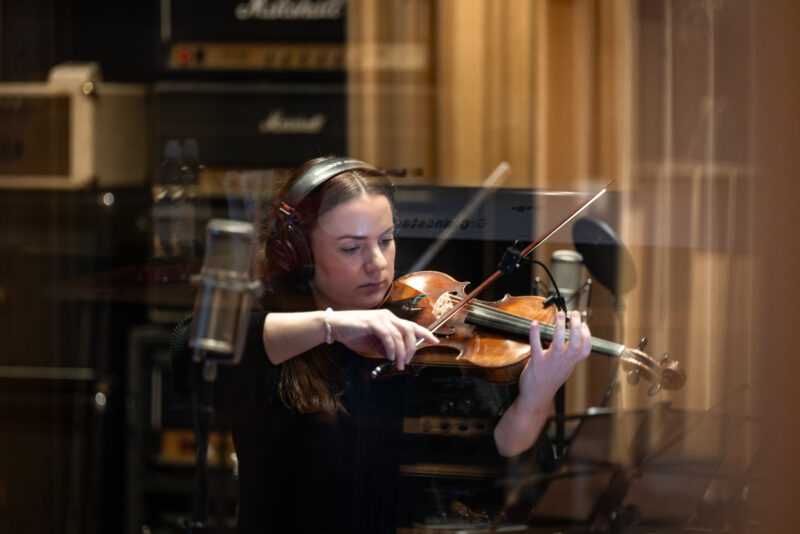
Sustained by waffles and brown cheese – very Norwegian, very rock’n’roll – the band worked through the details, shaping and reshaping until the songs told them they were done.
By the time I left, it was clear that Thomas & The Angry Hearts are at a fascinating point in their journey. There is ambition here, certainly. Thomas speaks of wanting to play more in Britain and Ireland, of building a fanbase and touring with the next album. But it is underpinned by something rarer: patience, kindness and a belief in music as a connective force. One of his heroes is Gandhi. He believes in non-violence, in responding with generosity rather than anger. “Without passion, there is no music,” he told me.
In that quiet Norwegian studio, surrounded by trees, care and craft, passion was exactly what filled the room. It was a privilege spending time with Thomas & The Angry Hearts. The new songs are brilliant, and worth looking out for. I also learnt that “hygge” also means enjoyment and that captures some of the trip. Tusen takk (literally, a thousand thanks) to everyone I met.
