

Willie’s 2010 release gets a re-boot with a multi-colour 2-disc gatefold vinyl release, plus CD and hi-res streaming options.
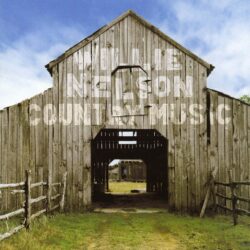
In the heady days of 2010, Willie Nelson, country and roots singer par excellence, decided to record his 58th album, Country Music (out of a total of probably 78 solo studio albums) with superstar producer T-Bone Burnett (and signed with the well-known and simpatico record label Rounder that first signed Alison Krauss and other high-profile names thereafter). In fact, it was a mutual decision arrived at on a golf course and was focused on recreating what Nelson believed was the true sound of country music, hence the title of the album, and a tongue-in-cheek antidote to the commercial country sounds of the day that Nelson despised. In an interview, Nelson responded to a question about his opinion of modern country music, such as Sugarland (who were big at the time), “Honestly, I don’t listen to it, so I don’t know (laughing). I just don’t know”. The laugh was the giveaway!
The album sought to reinterpret a collection of country music standards, most of which dated back to the 50s and 60s and were written by the likes of Hank Williams, George Jones, Ernest Tubb and Merle Travis. When talking on Larry King Live, Nelson described the songs he picked for the album as the stardust of country music, a tip to his most successful album, Stardust from 1978, a collection of songs from The Great American Songbook.
Nelson had begun his career as a songwriter, producing hits for Patsy Cline, Faron Young and Billy Walker in the late 1950s (you can guess the names of the songs!), before recording his first album in 1961, at the age of 28. He had also written a song called Man with the Blues in 1959, a track which kickstarts the new album and the only Nelson original on the album. It took him 50 years to record an album of the songs that shaped his musical career.
The production was to be “relatively low key, with fiddles, steels, mandolins, banjos and guitars. These instruments would all be in service to the famous Nelson voice, and also his equally famous acoustic guitar, “Trigger”“.
The album was well received, though, according to most critics, not up to his universally acclaimed “best record“, Red Headed Stranger (1975). It nevertheless hit the top 4 in the Billboard Country chart and number 20 in the Billboard 200. In 2019, the album was released again via a retailer-only franchise.
In 2025, HighTone Records was relaunched. It was, from its inception in 1983, a go-to record company for americana, blues and roots music, but effectively closed in 2008. Several years later, Concord Bicycle Music bought it, and a sub-division named Craft Recordings set about relaunching HighTone as a curated brand, starting in 2025. Country Music is one of the first albums to find a re-release, on vinyl in a two-disc format in a gatefold (with several other vinyl options with concurrent CD and hi-res streaming release).
Nelson certainly picked some classic songs to cover for the album, but it kicks off with the only self-penned, aforementioned track, Man with the Blues. And the session players, top quality musicians all, start to display their talents – Ronnie McCoury on mandolin first, then Stuart Duncan on fiddle. And there follows a slew of great songs, and a slew of great musicians – Buddy Miller on electric guitar, Russ Pahl on steel and Riley Baugus on banjo. And then there is the incomparable Dennis Crouch on acoustic bass. An early highlight is Merle Travis’ Dark as a Dungeon, about a miner’s life, taken at a slow pace with banjo underpinning the rhythm and Duncan’s mournful fiddle setting the tone. This has an impassioned vocal from Nelson, but the fiddle, steel, mandolin, and acoustic guitar outro is stunning. The next highlight is the traditional gospel song Satan Your Kingdom Must Come Down, sung in harmony with Buddy Miller, who also supplies subtle electric guitar on this track. The rhythmic banjo of Baugus again shines.
Hazel Houser’s well-known My Baby’s Gone (1958) is performed at a slower pace than usual, adding to the emotional impact of the narrative. The extended running time of 5 minutes plus allows the musicians to showcase their talents, including Nelson on his famous battered acoustic guitar ‘Trigger’. Mickey Raphael is the star turn on harmonica on the rollicking Freight Train Boogie, and then Nelson takes a very successful shot at Red Hayes and Jack Rhodes chestnut Satisfied Mind, recently resurrected in spectacular fashion by Mavis Staples, which speaks to the value of inner contentment vs materiality. Al Dexter’s Pistol Packin’ Mama is taken at a jaunty pace with Crouch’s outstanding upright bass laying down the tempo, and ‘Trigger’ and Raphael trading short solos. Ocean of Diamonds has Jim Lauderdale providing harmonies on this track and for the remainder of the album. Bill Mack Smith’s Drinkin Champagne has a slightly Spanish lilt.
The last three tracks are just gorgeous and pretty much act as testimony to the life well-lived of Willie Nelson, even tacitly acknowledging the ups and downs which go to make up that life. And together with the earlier Satisfied Mind act as the cornerstone of the album, recorded as it was towards what Nelson may have thought were the closing years of his journey (he was 77 at the time and is now 92, yet still recording some great music). The first is the often-covered mid-19th-century Christian gospel hymn I Am a Pilgrim, taken at a leisurely pace, making it sound less gospel and more traditional country, with Nelson’s guitar taking a great solo and his vocal turning the gospel up a notch toward the end. The second is one of the true highlights of the album, a wonderful slowed-down version of Hank Williams’ classic, House of Gold; Nelson gently, and a little resignedly, conveys the lyrics that value salvation over greed, with the chorus reinforcing the idea that a good soul is more valuable than wealth “I’d rather be in a deep, dark grave / And know that my poor soul was saved / Than to live in this world in a house of gold / And deny my God and doom my soul”. It is almost a sister song to Satisfied Mind, which posits the notion of inner peace trumping material wealth (pun intended). And the album ends with a song first recorded in 1927 by Blind Willie Johnson; Nobody’s Fault But Mine is handled beautifully by Nelson in a great spiritual bluesy interpretation of owning up to mistakes made and actions taken: “Mmm, father, he taught me how to read / Father, he taught me how to read / If I don’t read it, my soul will be lost / Nobody’s fault but Mine“.
Notwithstanding the outstanding musicians on board, including Nelson himself and his inimitable and distinctive acoustic guitar, and the exquisite laid-back production by T-Bone Burnett, the album belongs to Nelson’s iconic, largely baritone, voice and his interpretive skills. It is a welcome re-release, with kudos to Craft and Hightone in selecting it as one of the first of their planned re-releases.


