
Chicano rocker Joshua Josué celebrates a milestone gig on the night Rock ‘n’ Roll history forever changed.
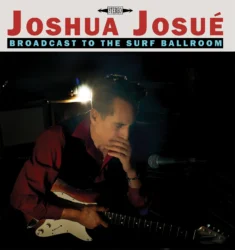 The Winter Dance Party tour made its final, fateful stop at Clear Lake, Iowa’s Surf Ballroom on February 2, 1959. The tour had been brutal on its headliners, Buddy Holly, J.P. “The Big Bopper” Richardson, and 17-year-old Ritchie Valens. Five tour buses had already broken down, exposing the musicians to bitter midwestern winter conditions, which resulted in a series of flu cases and at least one hospitalisation for frostbite. Following the gig, Holly chartered a plane, a coin was flipped, and the rest is Rock ‘n’ Roll history.
Joshua Josué’s album Broadcast to the Surf Ballroom pays homage to the lost legends not by remembering the night they perished when their 4-seat Beechcraft Bonanza crashed shortly after take-off (that song’s been sung), but rather by celebrating the show that preceded it. By all accounts, the Surf Ballroom was shakin’ that bitter February evening, and the teeny boppers lucky enough to make the scene “Rave(d) On” and Rock-A-By-Rock(ed) their winter blues away.
Broadcast to the Surf Ballroom picks up where the party left off. Opener Let’s Rock & Roll sets the tone. Its upbeat, shuffling 4/4 time and slapback-echoed vocals wouldn’t have sounded out of place in 1959. The lead single What to Do, a crisp, 3-chord retro gem, segues into the album’s first ballad, Now That You’re Gone, which features lively Hammond B-3 work by Nick Skalburg. The high-energy vibe continues throughout, culminating in a jubilant cover of Valens’ signature tune, La Bamba.
The album is more than a mere tribute. Josué hopes to carry on not only the legacy of his idols but also the work itself. He completes unfinished originals, “drawing from Buddy Holly’s Greenwich Village apartment demos and Ritchie Valens’ last recordings with Bob Keane,” according to press materials. He serves the spirit of the demos with empathy and humility.
Josué’s first album featured appearances by members of the Old 97s, Los Super Seven, and Los Lobos. It showcased Josué’s signature style, a blend of Latin folk, roots rock, and Tejano soul. His combo on this record is sympathetic and in the pocket. The leader’s voice and guitar are in fine form, and Marilyn Darrell’s accordion accompaniment adds a welcome Tex-Mex texture to the proceedings.
Today, the Surf Ballroom is recognised as a National Historic Landmark, and remains “a living tribute to music’s golden era.” It’s a vibrant live venue and hosts a vital museum of 20th-century music from the big band era through the heyday of early Rock ‘N Roll and beyond. It also holds classes, camps, and school programs to inspire the next generation of Rock ‘N Rollers. Each year, the Surf Ballroom celebrates The Winter Dance Party tour with three days of live shows and dancing on the fully-restored, original wooden dance floor.
Josué’s record is a loving homage to the Surf Ballroom and its place in Rock ‘N Roll history through a fusion of genres that reimagines the songs and the soul of an era that continues to resonate today.

