
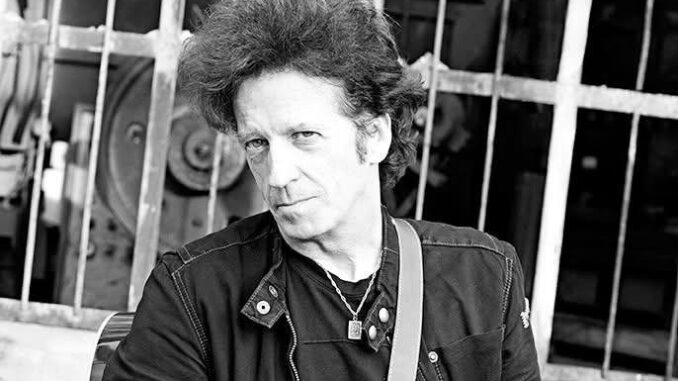
I do a lot of my listening to music while out walking in the mornings, with or without a dog. The day after Willie Nile’s The Great American Light arrived in the mailbox, I popped the CD into the Sony Walkman and tapped the volume button up to a nearly uncomfortably loud level. I wanted to feel the music as well as hear it. In the anticipatory silent seconds before the sound of the first track was heard, there was a lift of desire and possibility, something that felt like jonesing for a morning coffee or a late-night confection, perhaps more aptly, like starting the last episode of an engrossing TV series. You have a second to imagine what wonders will come out of the headphones, a little edge that is an active part of the pleasure; the matrix of expectation based on Nile’s other fourteen studio albums, the thrill of the unknown that isn’t fully unknown because the music is from such a familiar source. In a larger sense, I pretty much knew what was coming because I’ve heard each and every one of his other records, multiple times, so it should be somewhat predictable in a good way, right?
It’s a wild, wild, wild, wild world! He sings about bombs in Asia, floods in Arkansas, earthquakes, monsoons, snow in Zanzibar, and heat waves in Australia. Gesundheit! Who could ask for more? There it is, smack dab on your sweet spot. Before music soothes the savage beast, it wants to roar.
You can never fully translate the way a live show galvanises your body and mind to what flows from a studio recording, but a Willie Nile album comes this close. Press play or drop the needle and you feel something rising in your chest as waves spread through the body, an intense discharge of autonomic energy. The breath intakes sharply as though you were about to be struck by a taser; the body moves involuntarily. “We record as much as we can live because there is an energy in that you just can’t fabricate with studio gimmicks,” Nile said in a matter-of-fact tone that barely contained a kind of thrill.
The Great Yellow Light is briskly paced, skillfully played, and leans into the album’s retro-futuristic designs. It’s freshly entertaining even as it aims to maintain the familiar rock ‘n’ roll status quo. Nile has created an electric and, at times, unpredictably chaotic record, full of dazzling guitar, well-drawn storylines with razor-sharp lyrics. He chronicles slice-of-life events through a rock ‘n’ roll lens. Well, actually, it’s his photographer wife, Cristina Arrigoni, who uses the camera lens to capture images and events, but you get the picture.
Nile is a fixture in New York City’s Greenwich Village. He came there from Buffalo, did a 180-turn and went back upstate in 1982 before finding his way back to the city. He loves where he lives so much that he enjoys taking people on walking tours through the streets. “It inspires the hell out of me, the city,” he stresses. “I love the energy, the streets, the grit, the contrasts, the mystery, the heart. Rich, poor, lost, lonely, big shots, bullshit artists, visionaries: it’s got everything. I just find it fascinating.”
He still feels the fire and passion for recording and playing after all these years. “Every album is a new chapter in my life’s work.” We talk about some of that work in the following interview. I should add that I first met Willie Nile over thirty years ago through Tom Shea, my good friend and colleague at the Springfield, Mass. Newspapers, so we’re not exactly strangers.
Americana UK: Good to see you, Willie. I’m no longer in Massachusetts. It’s been a while since you did house concerts there. Tommy Shea says say hello, and that he loves you.
Willie Nile: You know what’s amazing about that, Dean, I played in ‘91 or ‘92 at the Iron Horse (Northampton, Mass), and there were 12 people, and Tommy was one of the 12. He proceeded to make cassettes with ten songs on and give ’em to people. It wasn’t long after that I was selling the room out, and every time since I’ve sold it out. I should give him 10% of all those shows. I love that guy as well. You know, my dad’s family grew up in Lowell, Massachusetts.
AUK: I remember your house concerts at Tommy’s home so well.
WN: He tore a wall down in his house the first time I did a show. I told him, are you out of your mind? He is such a good guy. God bless Tommy. I miss him and Suzanne. I haven’t seen them in a while.
AUK: Actually, we recorded one of the house concerts, then made a 2-CD bootleg out of it and called it Live at Shea Stadium. Home of the New York Mets, right, though he’s a Yankees fan. Do you still do any house concerts?
WN: Occasionally. We’re doing a fan fun thing now for the new album, and one of the things we offer is a house concert solo or full band. I don’t do as many as I used to, but I’m still up for ’em.
AUK: I noticed on your website that another thing you offer is a walking tour of the Village.
WN: Yeah, I’ve got so many people I got to get back to. I mean, I live on MacDougal Street (Greenwich Village), and it’s not a long walk, but the things that I can show people are really interesting. Like we’ll usually meet at the Café Reggio, and right across the street was where Little Women was written by Louisa May Alcott in the second floor of that building. That was where she lived. And Edgar Allan Poe lived briefly on West 3rd Street, a block away. He was on hard times then, really not in good shape. On 4th Street, there was a great restaurant that’s now gone, and they say he would crash on a couch upstairs. And there’s another place on Bond Street, a great restaurant called El Buco. Fancy five-star joint that has another basement where they say that he wrote the “The Cask of Amontillado.” When you go down to the basement, it’s their wine cellar, and they have tables there for groups. It looks just like that setting in the story.
So, there are so many interesting history points of New York, like in 1917 at the Washington Square Arch, up the street from the Provincetown Playhouse, where the poet Gertrude Dick, Marcel Duchamp and about five or six others snuck into the top and had a party. There is a small door, which is now locked, and at midnight they put out Chinese lanterns and balloons and read a proclamation declaring Greenwich Village as a free and independent republic for Bohemian artists. Buddy Holly lived a block North of there. I take people to these places, and I love doing it. I do it for friends just for fun when they come to town.
AUK: What’s the story behind when you were asked if you were a Buddhist, and you said, no he was a second baseman?
WN: Okay, I was a philosophy major at the University of Buffalo. Not by choice, by chance. I just took courses I liked, but no plan whatsoever. I think I was one course short of an English degree. I liked the philosophy of art and beauty. Sounded interesting. It wasn’t. But I took the course, had a philosophy degree, and the last two years I mostly ended up taking Zen Buddhism and a lot of Eastern mysticism courses. I found those the most interesting. Not as interesting as second base, though.
AUK: It’s amazing how many musicians are baseball fans.
WN: I grew up a sports kid. When my dad was a kid – he was born in Buffalo – they would go back to Lowell (Mass) every summer for six weeks. They would go to Hampton Beach in New Hampshire some days. In ’59, he took us there and we’ve been going there ever since. We’ve missed two years. A hundred of us go now. We rent about a dozen beach houses. Every year, dad would get tickets and we would go to a Red Sox game in Boston. I’m a Yankee fan. When I grew up, there were two TV channels, then three channels, and every Saturday there’d be a Yankees game. Dizzy Dean and Phil Rizzuto were the broadcasters.
Dizzy Dean fired that ball; it was a blue darter. His one-liners and his accent were really charming. Those years the stars were Mickey Mantle and Roger Maris. Dad, he was an accountant for a living, but for ten years he had a beer distributing business. One winter Elston Howard (the catcher) was representing one of the beers, and he came to our house. I remember one year at Fenway Park, it was ’61, Mantle and Maris hit back-to-back home runs in the first inning, and I was this little pipsqueak up in the right field stands, cheering the Yankees on. I’m surprised the Sox fans didn’t throw me over the railing. Whitey Ford pitched and the Yankees won the game. Ted Williams pinch hit in the ninth inning with the bases loaded, and he popped out to third base. It was the end of his career, but he was the last .400 hitter.
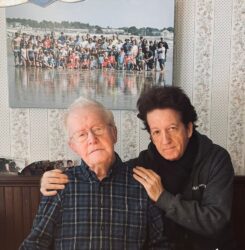
AUK: There is a picture of your dad on Facebook with what looks like a hundred people behind him.
WN: That’s at Hampton Beach. We brought him there a couple of years ago. He’s 107 and still doing good. He’s getting weaker, but he’s still happy. He does crossword puzzles, three, four hours a day. Lives at home with one of my brothers. He’s a great man and funny as hell. I’ll call at four o’clock and ask if he’s having happy hour. He’ll say, yeah, I’m here with your sister getting boiled. He’s got that Irish sense of humor. He used to get up in the middle of the night to use the restroom, then read mass cards from the ‘30s and ‘40s. If you asked him how he got up every night, he’d say my guardian angel wakes me up.
AUK: What was it that got you to go to New York City?
WN: Well, I grew up in a very musical family. My grandfather was a vaudeville orchestra leader for 30 years, seven nights a week. And he worked six days a week in the post office, a pretty hard life. He died at 69 and looked older than my dad does now. There was always music in the house. My older brother played rock and roll. Mom had classical records or big band. I took classical piano at eight years old and loved rock and roll. When I was in high school, I started writing poetry, stream of consciousness stuff. I ended up going to Walsh College, which was about five miles North of Canton, Ohio, middle of nowhere. My first year in college, I couldn’t get in anywhere because I goofed off.
I remember when I got dropped off by my brother, Richard. I saw him drive away, and I went, oh, what did I just do? But it turned out my roommate had a guitar. You never know where the road’s going to take you. I learned to play the guitar. And then my writing went into songwriting, and so I wrote all during college. When I graduated, I thought, these songs are pretty good. I’m going to go to New York and see if I can make records.
AUK: Where did you land when you first arrived in the City?
WN: I went to the Village. I used to hitchhike down during my college years. In the summer I’d come down, sleep in the park, whatever, go to the clubs for a few days. In my last year, my brother lived up in Yonkers, so I stayed with him and his wife for about a month while I was looking for appartments. My girlfriend and I got an apartment starting June 1st. We found a place real cheap. They were cheap back then but not anymore. So, we went back to Buffalo, got married, and drove to New York two days later. I’ve still got the same apartment and have had a fascinating journey to say the least.
AUK: How did you get started on stage?
WN: In Buffalo, I never played on stage. When I moved here, I was just playing open mics with an acoustic guitar, piano, if they had one. I had no money, so I couldn’t hire musicians, and didn’t want to join a group. I would hit open mics at the Bitter End, Folk City, other places around town. You get up there, do your 15 minutes. It was a great learning experience. You learn fast.
AUK: Did you play the Café-a-Go-Go? They used to serve these big boats of ice cream, banana splits, because they didn’t have a liquor license. People got stoned and ate tons of ice cream.
WN: That was a small room. Eventually, the building got sold, and they moved the club up to the sixth floor. I played both the downstairs room and upstairs, but it didn’t last long.
AUK: How and when did you put your first band together?
WN: Well, I was playing solo and in 1978, Kenny’s Castaways opened up on Bleecker Street. I auditioned there one night, and Don Hill was the manager. He saw me and told Pat Kenny, we got to hire this guy. I wish Don was around now. There’s a lot to thank him for. Robert Palmer of the New York Times called him up one day and said, I’m going to come to the club to review the headliner. I was opening. He asked what time he went on, and he said he goes on at 9:00, but you should come at eight. You need to see the guy opening up. He came and he wrote this really glowing review comparing me to Buddy Holly, Bob Dylan and whatnot. Gene Vincent, I think too. It came out two days later, and the place was packed. You couldn’t get in. At the time, I didn’t have two nickels to rub together, and that night there were around ten record companies in the audience. It had a small stage, and this guy comes on stage, gives me his card. He goes, I’m Paul Rothschild. I manage the Doors. I want to work with you. I never called him. What an idiot!
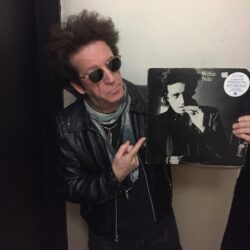
Anyway, I had a meeting with Clive Davis of Arista (Records) a few days later and signed with them. I was playing solo acoustic, but they were always rock and roll songs. So I put a band together. I knew there was a band called The Cryers. They used to play CBGB’s, and Billy Crystal managed them. They put out a couple records on Mercury. Clay Barnes played guitar, Tommy Etheridge on bass, Jay Dee Dougherty, who was a friend, played drums, and there was a guitarist from Boston, Peter Hoffman, great Stonesy kind of guitar player. It was a great band. We literally rehearsed for four days, and I had never played with a band before. We made the record in a week, cut basic tracks, week and a half, and went out to LA to mix it. Roy Halee produced it. Then it came out to just ridiculous press, double-page spreads in Billboard. Arista took out big ads in the New York Times, LA Times, Washington Post, London Times and Der Spiegel. It made a lot of noise, and I was grateful for that. But being famous was not ever something that was of interest to me. It’s still not. Money, yeah, stinking rich, I’m in.
I think I’d be a good rich guy, but I had two kids and a wife and family to feed. So, for me, all that praise just meant that, okay, so far so good. Let’s see if we can make a living at this. We did our first tour across the US and ended in LA at the Roxy. Freddie Mercury came out to the show, and Graham Parker’s people wanted to see the new hotshot from New York because of the writeups. John Hiatt opened. It was a great night. And Bill Curbishley, the Who’s manager, came backstage and offered me to open up for the Who. I went from playing for 250, 300 people to 15, 20,000 a night. It was like right into the frying pan. I never, ever, in my wildest dreams thought I’d be doing that, though I was big fan of the Who and the British Invasion.
AUK: I read Peter Townshend said he liked your first album. Now we know how he happened to hear it.
WN: I heard that as well. Clive Davis told me that Pete Townshend loves your first record. And I just thought, oh, that’s nice. But I just thought it was nonsense. I didn’t believe it. Bill Curbishley, Pete and Roger (Daltrey) are friends, and they couldn’t have been nicer to this day. They treated us really well. It was beyond fun. I opened up for them again at Woodstock, at Bethel Woods in ’22. What a thrill!
AUK: Did you get to hang out with them? That must have been a blast.
WN: A ton. We had total full access to their backstage, and I’ve done gigs with Roger. I played with the Who in 2015; I think it was Music Cares, the Grammy charity. I get this phone call from my booking agent on May 1st, 2015. What are you doing on May 28th? I said, I’m here. He goes, because I just got a call from the Grammys. They’re honoring Pete and Bill, and they’ve got four artists singing two Pete songs and they want a fifth artist. Their manager called saying, get Willie Nile. I picked “Substitute” and “The Kids Are All Right.” Pete wasn’t a part of the show, but he came on for the encore, which was “We Won’t Get Fooled Again.”
The five artists were Roger Daltrey, Bruce Springsteen, Joan Jett, Billy Idol and me. I remember we’re doing a soundcheck of the finale, “We Won’t Get Fooled Again,” and all the mics are lined up. I’m over in the far right, and I’m thinking, what’s wrong with this picture? It was funny. On stage, I’m standing there ready to sing. I check my hat to the new constitution, whatever, revolution. Pete’s got his acoustic guitar, and he’s looking around and he’s looking at me, and he goes, I think we need another electric guitar. And I’m thinking, I’m not Richard Thompson. I don’t know how to play that song. That’s not my main thing. I’m a poet. So, he says that again, I think we need another electric guitar. He is still looking at me. I had just rehearsed and I went, I’ll get mine. And I’m walking over to get it from the roadie. I’m thinking, what are you doing, you idiot? And I figured, well, I’ll just turn my sound down. So I come over, and instead of being on the far right, they moved my mic right between Pete and Bruce Springsteen, and I’m thinking, I’m so fucked, I’m screwed. And I thought, well Bruce plays really loud and he’ll cover it.
So, we start out and Pete’s singing lead. He’s doing his great guitar playing, burning a hole through the acoustic guitar. And I knew the first couple of chords, then I would just mute it and go pluck, pluck, pluck. At one point, Pete turns around and goes, that was terrible. Willie, loosen up. So, his brother, Simon, God bless him, goes, I’ll do the solo. What was he thinking? I’m going to do the solo? So we did it again. Now Bruce has turned down all the way. He didn’t know the song either, and if he did, he wasn’t showing it. And Pete goes, well, it was rough. We’ll get through it, and off he goes. And Bill Curbishley says, as I’m walking off the stage, if there’s no mistakes, it’s not a Who show.
So, I said to Bruce, I don’t know the song. I got to go rehearse it. I go back in the dressing room, sit on the couch with my guitar, and next thing Bruce comes, sits next to me and Kevin, his guitar tech, puts down lyrics in front of us. Bruce and I are sitting there like two teenagers, and after 15 minutes, Bruce goes, I got it. And I go, well, I don’t. I need to practice more. So, I went in the corner with the lyrics, and learned it. It is on YouTube, and it’s a great clip.
AUK: You knew Mike Peters of the Alarm. I just did his obit and David Johansen’s, too, not long ago.
WN: Mike used to close his shows with “One Guitar.” There is this Parkinson’s benefit I’ve been part of for 25 years called “Light of Day.” Every year for those shows, we would go to Europe. It’s like four songwriters, so we’d pick up an artist in every different city. We went to Scotland, London, Wales, Scandinavia, Italy and Spain. When we were in Wales, Mike Peters was on the bill with us. We closed the show with “One Guitar,” and Mike goes, I love that song. I told him, I’ll get you a copy of it. He says, I already got one. My sound guy is at the board. He released it on his next record. One time, he was playing in Buffalo and asked me up. We did a really nice version of it. For 30 years Mike suffered with leukemia, but he was a force, a brave guy. I admire greatly the way he carried on. He was like a guy living his last day every day, which he kind of was. And he would do those walks. I’ve got a video somewhere of him playing “One Guitar” on Mount Fuji and another on Mount Kilimanjaro. I think they did Machu Picchu, too, and they did the Empire State Building. They would do these walks to raise money for cancer.
“Love, Hope and Strength” was the charity that he started. It was a brave, courageous battle, and at his funeral, a buddy sent me a clip of it where one of the guys speaking was talking about me and my bass player, Johnny. His was a great loss. Once, I opened up for the Alarm on a tour, and I was on their tour bus, going around the UK and Scotland. These were wild fans, great songs. On that tour, I told Mike I had a new song I’d just written called “American Ride,” and I played it for him. That came out in 2013, so it was probably the year before. He said, I have an idea. And he went off on his own and changed a couple of chords and the tempo. So, he’s a co-writer on that song with me. He made it better with his contribution.
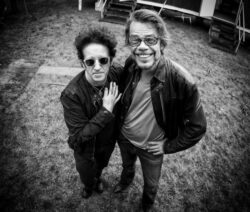
And David Johansen, I knew David and what a class act! I love David. Any room he was in, he was the coolest guy. Not because he was trying to be, he just was. There was something about him. He was skinny as a rail. I played with him the last time he sang. It was a gig that we did at Zankel Hall, which is below Carnegie Hall, and it was a music and revolution of the sixties show. Richard Barone, who was one of the Bongos, produced it. He also had Eric Anderson, Tom Paxton, Carolyn Hester and David Amram. They had me sing “Like a Rolling Stone,” and how can you lose with a song like that? Steve Howe was supposed to do it, but he had a funeral to go to and he pleaded with David to fill in for him. David said, I don’t play anymore. He didn’t tell anybody he was ill. This was two Novembers ago and it was a sold-out show, just amazing. Anyway, I see David and his wife, big hug. He was always really nice to me. Turned me onto the throat spray, Singer’s Saving Grace. Great for the throat. I need it now because I sang too much the other day. I forget the first song he sang, but the second song he sang was “There But for Fortune,” Phil Ochs’ song. I know they didn’t film the show; sadly, it would’ve cost too much. I should ask if anybody filmed it with him singing, (Willie starts singing) Show me the whiskey stains on the floor/ Show me the man as he walks out the door / and I’ll show you a young man / Oh, so many reasons why / there but for fortune go you or I. It was stunning performance of that particular song. This was a guy who lived it, and that was apparently the last thing he sang live. Great loss, both of those guys. (scribbling a note to himself) I am gonna ask around, maybe Mara (Hennessey, Johansen’s wife) knows someone who has it.
AUK: We should start talking about the new record before your people get mad at us.
WN: Alright. Well, the title, The Great Yellow Light, came from Van Gogh’s letters to his brother Theo, who was an art dealer. When he moved to Arles, France, he wrote about the light, and I remember reading some time ago that he said he’d been looking for it all his life, and that inspired the song, not the subject of the song, but just the title. For me, The Great Yellow Light is one of those moments of awe and wonder that we’re lucky enough to come across occasionally in life. And the cover is this great photograph my wife took. So, the song is about a woman and a mystical experience, but the collection of songs are about a variety of subjects. “Wild Wild World” opens the album. It’s a crazy world out there, and it’s a party song for the insanity, but the content is deeper than that. I love when rock and roll can do that, when you can take a song and write about whatever, but there could be a subtext to it that’s deeper.
AUK: “Wake Up America” features Steve Earle and is probably the type of song you would expect to see him do.
WN: Steve lived around the corner from me, three doors away for over fifteen years. We became friends and when I put it out as a single, I texted Steve and said you might want to sing on this. Three minutes later, he was in. It’s funny how we got feedback on the song from both the left and right. It’s just about looking for the better angels in people in this country. Things are so divided right now. It’s shameful and it’s not necessary. The album ends with “Washington’s Day,” which is like a prayer for unity and embracing. (singing again) I hope and I pray that you’ll be here with me / when the mountains that rise tumble into the sea / when the kingdoms that come set us free on our way / hope you’ll be here with me home on Washington’s Day.
AUK: You let it all hang out on “Electrify Me.”
WN: It’s a raucous punk howl. It’s about passion for living and a love song, a lot of fun to play. It’s got a lot of attitude. Open your door / We can set each other free / Come on little baby and electrify me. I love it. I’ve got Philippe Petit in there, the guy who walked a tightrope on the World Trade Center. He’s a good friend of mine and hasn’t heard it yet. I’ve got to send it to him – Take me to the edge / come on pretty baby / electrify me. It’s just a fun rock and roll song.
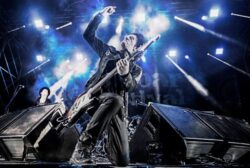
AUK: You are involved with the Light of Day benefit for Parkinson’s research. Tell us about that.
WN: It’s Parkinson’s, ALS and PSP (Progressive Supranuclear Palsy). Bob Benjamin started it 25 years ago. He is a friend of mine from Jersey who worked in the record business. He was 35 or 37, a pretty young age to get diagnosed with Parkinson’s. He’s in really rough shape now. He can’t understand a word, and his body’s all gnarled up in a wheelchair. He used to have a birthday party every year. The Stone Pony people would bring gifts or whatnot, and after he was diagnosed, he said let’s have the money go to the Light of Day organization. He asked me to help out. It was Marshall Crenshaw, me, Joe Grushecky, and a bunch of Jersey artists. The third year we did it, Bruce Springsteen came. Bob Benjamin had done some work for Bruce, making cassette tapes for pre-show audiences, and they were pals. We’ve been doing these 25 years, and he’s come maybe thirteen or fourteen times. He’s played with me and my band every time. There’s a great clip from this past January (2025). I’ll make a note to send it to you. (And here it is below.)
AUK: When did you meet Springsteen. I think you once said it was around 1992.
WN: I put a record out on in Columbia in ’91, and I went to the West Coast staying at the Sunset Marquee in San Francisco, then Los Angeles, just doing PR interviews. So, I’m walking through the pool area at the Sunset Marquee, which is a real rock and roll hotel. Patti Scialfa was there having lunch, and I knew her from Southside Johnny’s band in 1980. We opened for them a couple of times and would hang backstage with friends. Anyway, she waved me over and she said, Bruce and I love your new record. Are you playing in town? We’d love to come see you. She said, oh, we work out to the record every day, and bless Patti for saying that.
Shortly thereafter, that would’ve been probably April, and by the summertime the record had come and gone. By the end of June, I was off the label. My champion at the time at the label was on the way out the door, so they didn’t put anything behind it. A couple people fought for it, but they didn’t release it because my champion was in the doghouse. That happens. I understood it. My son was working at the Bottom Line, and Bruce was doing a private event there. I told Luke to say hi to Patti, and she said tell me to come on over. It was after the event, and I walk in and Bruce is by the stage and he sees me. He came over and had a chat. That’s when I met him, and we’ve been friends ever since. He has been very generous to me, inviting me on stage sometimes and joining me on stage. I think the world of him.
AUK: After your second album, did you go back to Buffalo? Was it because you weren’t happy how things were going?
WN: I walked away from the record business. I had problems with a lawyer and a manager, and I was doing shows at night, going to arbitration during the day. I told my wife, they’re killing my buzz. I hate this. I didn’t come here for this. I came to New York to try to make music, and here is this business mess. All these people wanted to manage me, and it just galled me that here I am doing arbitration. I went there with a good heart, wanting to make good music, and here I am dealing with these snakes and wolves. Let’s get the hell out of here. My first record was in the spring of ’80; the second one was the spring of ’81, and in February of ’82 we moved.
AUK: That was when you went to work for the post office.
WN: I spent a little time working there. I couldn’t cut it. I was a lousy postman. I was horrible at it. I’m small and I’d be out delivering mail in the sticks, driving my mail truck, and people would be chasing me down wanting their welfare checks. I wasn’t suited for it and didn’t last long. These were hard years and some struggling before I got a publishing deal and signed with Columbia.
AUK: Didn’t you go to Europe around that time?
WN: I went to Europe in ‘87. The first time I went to play a benefit for a writer who had died in a car accident in a snowstorm. He was like the godfather of writers in Norway, and his wife and kids were doing a benefit. I had been writing songs but couldn’t get arrested. People thought I’d died. So, they filmed the charity event in Norway. It was a guy making a documentary about me and the Bottom Line, and I took that videotape to a producer at Columbia, who signed me. So doing that charity thing got me signed. It’s funny that the only good things that ever happened came when I played live. I got signed when I played on Bleecker Street; I got signed when I played Norway, and I still enjoy it very much playing live.
My favorite part is writing songs. When it feels right, nothing can match that. And I love studio. I love recording. I love bringing them to life. Those magical moments, my God, and then playing them live. It’s always a celebration. I tell the band if we have a good time, the audience will have a good time. Nobody phones it in on my band, every song with Johnny Pisano, Jon Weber and Jimi Bones. I’ve been really lucky with the bands I’ve had.
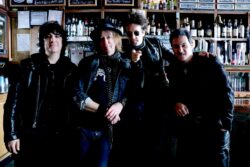
AUK: If you had to pick one, what would be the best work out of all your records?
WN: Well, I like ’em all for different reasons. People mention Streets of New York, and a favorite is Children of Paradise. This new one – The Great Yellow Light – that’s up there with the best I’ve done. And for me, it’s more the body of work. They’re all collections, and I like the way they’re all put together and compliment each other.
AUK: I couldn’t disagree. They are all good, especially Beautiful Wreck of the World.
WN: I definitely love that record. I was doing demos to document the band at the time, and we recorded the songs on one inch tape. It came out so good. A buddy of mine convinced me to put it out on my own, which I did, and I’ve been doing that ever since. Yeah, there’s so many. I thought that I’m just going to try to put out masterpiece after masterpiece and build a body of work that I could be proud of. So, for me, it’s hard to single out one album. But this new one, I’m really happy and proud of way it came out. It just has a great flow to it.
AUK: You recently played another benefit, this one for Jesse Malin.
WN: Jesse is a really good buddy. He’s coming along. He’s weathering the storm. I’m not a doctor, but he was out with a walker, not in a wheelchair. The two benefit shows were amazing at the Beacon. I played the second night, and that’s one of the top five things I’ve seen in my 53 years of being in New York. I played “All the Way from Moscow,” and the band did a great job of it on the record. I mean the outpouring of love for him and the respect was beautiful to see. Jesse performed and man, when he stood up at the mic, and for him that is not an easy thing to do. I saw him the other night. He was in good spirits. He’s still working at it. He sits on the edge of the chair and struggles to lift his upper body.
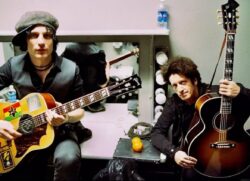
AUK: The last time I saw Johnny Winter play, he was like that. He had to struggle to get out of his chair
WN: Cristina (Arrigoni), my wife, met him a month before he died. She’s a big blues fan and a great photographer. She took her portfolio and showed it to the road manager, and he brought her back to see Johnny. He had some surgery so he could see, and he loved the pictures. They hung out for an hour, became friends and she took these great pictures. There’s a book of hers, it’s called The Sound of Hands, and the cover photo is of Johnny Winter. You want to see a masterpiece, one picture. It’s all photos of musicians’ hands: Jackson Browne, BB King, stunning photos, some knowns and unknowns. She did it because she wanted to draw attention to unknown blues men. Jackson Browne flew her up to Scotland to shoot him, and it’s a great photo. When Johnny Winter died, she was in Italy at the time where she’s from, and she was crying.
AUK: I saw you played a benefit for Popa Chubby, who had spinal surgery. The older we get, more and more benefits are to be expected, I guess. You played “Off My Medication.”
WN: That just came to me. It’s a Chuck Berry kind of song. It starts out as this big musical hot mess, then suddenly after the guitar solo, it all seems to come together. It is me clowning around, having a good time. Have you ever seen the video of it? Oh, my god, there’s a great video, really funny. I write songs about all kinds of things, and the absurdity of some things. I hadn’t heard that one in a couple of years, and it just made me laugh out loud. What was I thinking?
AUK: I’ve taken up enough of your time, but it’s been great catching up. I’m going to have to come to New York one of these days, maybe take that walking tour with you.
WN: It’s really pretty interesting. Patti Smith lived across the street with Robert Mapplethorpe. She lives a block down now. Little Steven lives two blocks away. Just the history of the place. James Dean’s favorite joint was in the corner right down there at San Remo Café. I like the history. By all means, come on up. I’ll give you a free tour. We’ll do it for fun.
Superb Willie Nile interview .He has an amazing musical history which unwinds throughout this article. Willie Nile continues to write and perform at the highest level.Select any of his albums, you will not be disappointed! Live he is still a tour de force !!!