
If History was your favourite class in school, raise your digital hand. Only two? Come on, the subject is not that dull. Now pay attention. Today, we are going to learn about a river called the Verdigris, which got its name from French traders who explored the region in the 18th century. They named it after the French phrase vert-de-gris (which breaks down to vert for “green” and gris for “grey”), because of the greenish-grey hue of its waters caused by mineral deposits and copper ore in the area.
The river was prominently featured in early American expeditions, including those of Zebulon Pike in 1806 and Thomas Nuttall in 1818. A tributary of the Arkansas River flowing from Kansas into Oklahoma, the river was an important fur-trading route. It played a pivotal role in the “Three Forks” trade hub area and served as a territorial boundary in US treaties with the Cherokee Nation in the 1830s.
Wake up those of you who have nodded off. I’m getting to the point.
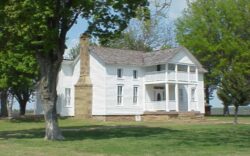
The Verdigris River is deeply tied to the origins of the legendary Cherokee-American humorist Will Rogers, born in 1879 in a house on his father’s Dog Iron Ranch on the banks of the river in Oologah. Back then, it was Cherokee Indian Territory, which later became the great state of Oklahoma after a treaty brought it under US jurisdiction. At the time, not so great for the Cherokees, but they did cash in many years later by operating a bunch of casinos.
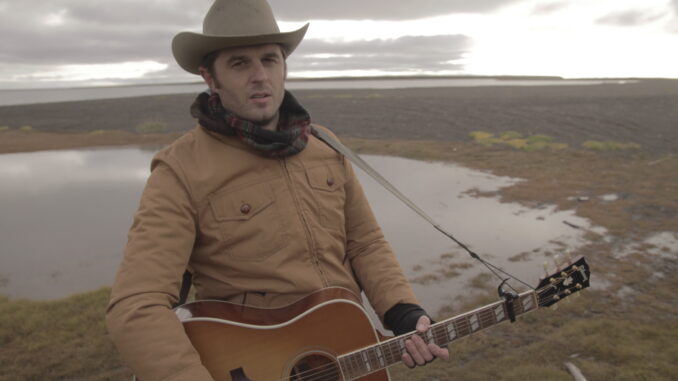
Which brings us to the recent re-release of an album Oklahoma songwriter Beau Jennings put out 11 years ago in 2015 (do the math, people). Jennings, who grew up in Inola, a hop, skip and jump from Oolagah, penned a paean to Rogers, his boyhood hero, in much the same way as Tom Petty wrote a paean to the great wide open, where tornado sirens squeal every springtime and vast skies dominate the horizon line. Jennings’ album of song-stories documents the fantastical life and adventures of Rogers in a narrative both sprawling and intimate. He also animated the project in a documentary film in which he plays the leading role.
“I’ve always loved Will Rogers, and he always just seemed like the patron saint of where I’m from. You grow up with God and the bible in Oklahoma, but Will is kinda mixed up in there too,” Jennings noted. “The Verdigris River flows from his hometown to mine, and I couldn’t help but see that as an opportunity to grab whatever he sent floating downstream.”
Inspired by the field recordings Alan Lomax made for the Library of Congress in the 1930’s, Jennings decided to travel to places Will Rogers had been during his life. There, he would record on-site the songs as they pertained to each location. Clear-eyed and linear, he has crafted a work both lofty and intangible. He plays it as if Rogers himself is in his shadow, ushering him down a path that encapsulates the region in all its rugged glory and, anecdotally, brings into focus the “Cowboy Philosopher,” a multi-faceted individual who once famously said, “I never met a man I didn’t like.” It’s my guess Rogers would have enjoyed Jennings’ account of his life.
Americana UK: Let’s begin with the Verdigris. I’m pronouncing it the French way. Do locals also?
Beau Jennings: That is the correct way, but it’s not how everybody in Oklahoma says it. When I wrote the title song, the “s” sound at the end rhymed better with the lyrics.
AUK: How and when did you first become interested in Will Rogers?
BJ: The town I grew up in was around 15 miles from Oolagah. That is where his birthplace home is today. You can go visit it. The Will Rogers Museum is in an adjacent town called Claremore. All that to say, I was homeschooled as a kid, and the museum was a frequent free field trip for our family and other homeschool families in the 1980s. I became fascinated with Will Rogers, the cowboy and the funny guy. Half the streets in Northeast Oklahoma are named after him. That’s where it began. He was a fascinating guy.
AUK: How did that interest evolve into making a record?
BJ: What happened was I had moved to Brooklyn and was playing with my band, Cheyenne, and I realized it’s hard to stand out. There’s always somebody that’s better than you, or cooler, or something. Looking back, I was trying to find something that only I would do, something that was unique to me. Also, I had left home, and for whatever reason, that made me focus on where I had just left, because you’re in a new place, trying to get your bearings, remembering what your roots are.
At one point, I had gone back home to visit my folks, and there was a Will Rogers biography on the coffee table that wasn’t there before. I took it back on the plane with me and just became absorbed, and that reawakened the childhood interest I had in Will. Not long after that, I started going to Strand Bookstore, a very famous, huge, used bookstore, and they had a whole bunch of Will Rogers books. So I bought all those that I could and then just poured myself into it.
AUK: Why the choice of The Verdigris as the title?
BJ: The Verdigris is the name of the river that runs through both Will’s hometown of Oolagah and my hometown of Inola. It was both a literal and metaphorical connection, and part of it goes back to this concept of the first song on the record, which is called A Glow Beneath the Surface. What happened was after Will died in 1935, the Army Corps of Engineers dammed up the river and created a new lake, which covered up this original spot where Rogers was born. An effort was undertaken to pick up his house and move it. So, where his birth house is today is not where it was originally; it’s a few miles away. I had this vision of taking a boat out onto Oolagah Lake and floating above where he was born, and so that’s one of the scenes in the documentary film.
AUK: The songs on the album match up to scenes in the documentary. Are they curated in order?
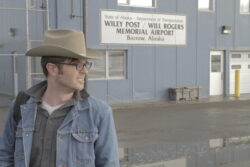
BJ: The order follows Will’s biography, and that was my rough outline. We start with prepping the boat to take out over the lake, and we progress from there to Arkansas, where he got married. We go to New York City, where he did vaudeville and was on Broadway, then to California, where his ranch house was. I got to play the piano that was in the house. And we end up in Alaska, where he died with Wiley Post in a plane crash. So, more or less, we followed his life story.
AUK: What was initial reception when it was first released?
BJ: Really good. It didn’t make me rich, but I felt a lot of love. In the film, there are a couple times when I speak with my grandpa about his memories of Will. And at the end, I make this connection that I’m not really as interested in Will as I am in using him as a way to connect with others, like Will connected people. All kinds of people came out of the woodwork with stories about Will Rogers, warm memories of him, and the sentiment was we need this kind of guy again today, with his spirit.
AUK: Outside of its 10-year anniversary, what was the purpose of bringing the album back?
BJ: What happened was in Oklahoma City, there’s a nonprofit, a gallery foundation called OK Contemporary, and they reached out. I actually met the director by happenstance at an event, and he told me how he was a fan of the album. He wanted to do something to celebrate. The first idea was to do a concert, and over time, that morphed into making a concert film that will be a full performance, but in a theater setting that will end up being sort of a companion film to the original film. We have been talking with some public television stations about airing it. The original documentary was picked up by American Public Television and shown all over the country.
AUK: How was the first song written?
BJ: It was in an unconventional way for sure. One morning, I woke up at 4 a.m. and thought I have to get out to Will Rogers’ house and write a song at sunrise. So I grabbed my guitar and drove out there and just leaned against the car. I know it sounds like it’s out of a TV show, but that’s what I did. That’s not how I usually will write songs.
AUK: Any environmentalists reading should skip this question. As in the title song, are there actually beer bottles and trash in the river?
BJ: People party on that river and the lake for sure. I would always introduce the title track as an imagined conversation between myself and Will. I was approaching it with this kind of reverent, spiritual feel, while acknowledging this is irreverent in some ways. I think the bottles and trash are saying the opposite happens in those places.
AUK: Next, you are out in California on Santa Monica Range.
BJ: I’m a planner and would write songs knowing where I was wanting to go film them. I knew that there was a piano in the Will Rogers Ranch House, which burned down last year in the Santa Monica Fires. He built it while he was in Hollywood making films, and at the peak of his fame, he would entertain Charles Lindbergh and some presidents. They would come out and play on the polo fields.
There was a piano in the living room that was roped off, and they would play as a family. I wrote a song with the hopes of being able to play it on that piano. We get there to shoot the scene, and the docent is like, “No, no, you can’t touch it. Nobody touches it.” So I said, “Understood. Can I be near it, and I’ll play it on the guitar?” She could tell this meant a lot to me and offered to let me sit at the piano. I asked if I could just play a key, maybe a chord. She nodded yes, so I played a chord, and one thing led to another, and eventually she says, “You can play the song.” It was a really cool moment, and you can see it in the film. A big worry was that the piano wouldn’t be in tune, but it was perfectly tuned.
AUK: Can you tell us about First Line of a Dream?
BJ: I was imagining this trio of people that meant a lot to me, which were Will Rogers, Woody Guthrie and my grandpa, all coming from roughly the same time and place in Oklahoma. My grandpa grew up in Tulsa. He told me stories of coming to see Will Rogers when he landed at Tulsa Airport, and he gave me his Woody Guthrie records.
AUK: You used to sing Wreck of the Old 97.
BJ: That was one of his favorite songs. Anyway, First Line of the Dream was me just trying to make sense of what these three figures meant to me. This might sound kind of strange, but if you remember, at the end of Return of the Jedi, there are three ghosts: Darth Vader, Yoda and Obi-Wan. I had a vision of those ghosts hanging out, looking over my shoulder. So that was an imagined campfire where Woody and Will are hanging out, and then my grandpa comes over. A lot of these songs venture into some sort of spirituality that I don’t know how to define, but it all felt very spiritual to me.
AUK: Now, that would have been quite a scene in the documentary if you had access to CGI, the Star Wars characters around a campfire with Woody, Will and grandpa.
BJ: The next song is Seedlings. Will Rogers’ mom died when he was very young, and he didn’t talk much about her, but from what I read about him, her absence was a major hole in his life. In what little he did say about her, he talks about being with his mom in the springtime, covering up these seedlings from the cold so that they would survive into the summer. I just took that imagery and ran with it and tried to create a song that honored what his memories were of his mom. I wanted to hit all the major factors that made him who he was.
Next is I’m Not Askin’, which is about the courtship of his wife, Betty. Essentially, he had to chase her down a long time and eventually convince her that he was the one for her, that he wasn’t going to take no for an answer. In retrospect, I can see where that sentiment might be taken as funny now, and I’m sensitive to that, but in the context of what was going on at the time and who he was and who she was and the way they talked about each other, I think it was a storybook romance.
AUK: Economy Stupid Blues sounds like you got the title from the famous James Carville line about what is the most important political issue: “It’s the economy, stupid. Always.”
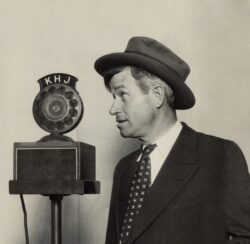
BJ: Right. Kind of a nod to that quote. It’s a story of a guy who is at his breaking point, and he’s listening to Will on the radio. It was just a story of the desperation of the depression era. People that had been ruined financially were jumping out of windows. Will offered solace to people having tough times.
AUK: The Wheat King of Oologah is about a Cherokee Civil War soldier.
BJ: Will Rogers’ dad was known as the Wheat King of Oologah, and he was a very prominent Cherokee figure in pre-statehood Oklahoma. His family came over on the Trail of the Tears, as I understand it. I think his dad’s name is on the State Constitution. So, a major prominent landowner. After cattle stopped being the big thing because of barbed wire, he got into wheat. It’s a story that Will told from his dad’s perspective, watching his son grow up and then going off to New York City. He was like, “What are you doing, son?”
AUK: Isn’t that what you did, go off to NYC or Brooklyn and start the band, Cheyenne?
BJ: That’s right. I felt a lot of parallels with my own life, wanting to meet your dad’s expectations and doing something that they don’t understand, at least right off the bat. We all want to make our dads proud of us. I think it was Mick Jagger who said, “Every rock and roll song is basically saying, hey, dad, look at me.”
AUK: Scattered Lights is the song playing when you were standing on the balcony of the New Amsterdam Theatre. In the film, you do see a McDonald’s across the street. I wonder if Will would have gone in for a Big Mac and fries.
BJ: As I understand it, Will invented the late-night television show thing, a precursor to the Tonight Show. Obviously, there was no television then, but at that building in Times Square, they would do a vaudeville show, the Ziegfeld Follies, and then late at night on the rooftop was the late show. Will Rogers was the host, and everybody wanted to go on. FDR would be in the crowd, and he’d make fun of him. Back then, people just didn’t do that, but Will did. The president would laugh along, and it worked.
So I thought, let’s get on the rooftop and go play this song. We went into the lobby, and they’re like, “Sir, you need to leave, that whole bit.” We got some of that on video. Disney has a lease on that building. I did some research, and there was just no way to get up there, but we ended up performing the song across the street. Scattered Lights was about his time as a Broadway performer, but Betty wasn’t into it, so they left. It was about the Broadway time, then; A Little Bit Higher Now was a song I wrote with the intention of performing it on that rooftop. Its gospel feel felt appropriate to me.
AUK: Rogers hopped on a boat and went to Argentina, hence the song, done solo acoustic.
BJ: That was just one take into a mic live, playing and singing at the same time, so it has that looser live sound. That was trying to capture those youthful adventures he went on. Being part of Wild Bill’s Circus Show, they took a train to New Orleans. The boat didn’t leave from there, so then they had to take the train to New York. That’s where the boat left from. Then they sailed down to Argentina, where he joined the circus, essentially the rodeo show. And from there, it went all around the world. Like it says in the song, he met a gypsy lady who gave him a prophecy.
AUK: It feels like it must have been a Butch Cassidy and the Sundance Kid kind of adventure.
BJ: His friend’s name was actually Dick, but that didn’t work so well in a song. I thought Richie would work a little better. They left Oologah, and their goal was to be ranchers in Argentina. After a while, they get to Argentina, and Richie can’t hack it, so he leaves, but Will says, “I’ll stay, and I’ll figure it out.”
AUK: He takes off in the opposite direction with another guy, Wiley and Me, North to Alaska. In the song, it says they wanted to find a shortcut through Alaska for the US Mail, but Betty wasn’t on board with that adventure.
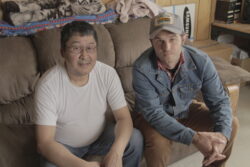
BJ: That was the story of him and Wiley Post. They were both fairly famous at the time. Instead of a mail route, the more I read, I think it was just an excuse to go on an adventure. Their plane was homemade; Wiley Post put it together. This was super early aviation, so there’s no FAA to say, hey, that’s too heavy or whatever. I went to Alaska, and we found that little pond where they crashed outside of a town called Barrow, which has since been renamed. They went back to an indigenous name. It’s the northernmost community in North America, if I’m not mistaken. So I found a guy who helped take us out to that pond on some four-wheelers. It was an adventure for me too.
AUK: Where did he meet Wiley Post, who sounds like a real character?
BJ: Wiley Post is another interesting Oklahoma guy. He invented the spacesuit. He had one eye with a patch over the other one. He was a part outlaw, part pilot, part inventor, one of the first guys to fly around the world. Just one of those early American original characters, so of course, they would find each other and be friends.
AUK: Now this one seems similar to the Jack Kerouac / Dean Moriarty On the Road movie.
BJ: That’s a great comparison. Again, I think back to that early America, where things that sound absurd or too crazy to us, people were just doing all the time, like, let’s go to Argentina and be ranchers. No one even knows how to get there, and they just do it. And let’s fly to Alaska in this plane that I put together from salvage parts. Just a different time.
I finished with Into the Wind as I was saying earlier. That was a little journalistic, ripped-from-the-headlines type approach. The story is there’s an Alaskan fisherman that sees them crash, and he runs back to town. It was a distance of 15 miles, almost like a modern marathon, to tell them the news of a crash that happened. His name was Clair Okpeaha, and I met his grandson, Perry and was able to film my meeting with him. That was kind of a poignant ending to the film, with him talking about his grandfather, then me talking about my grandfather.
