
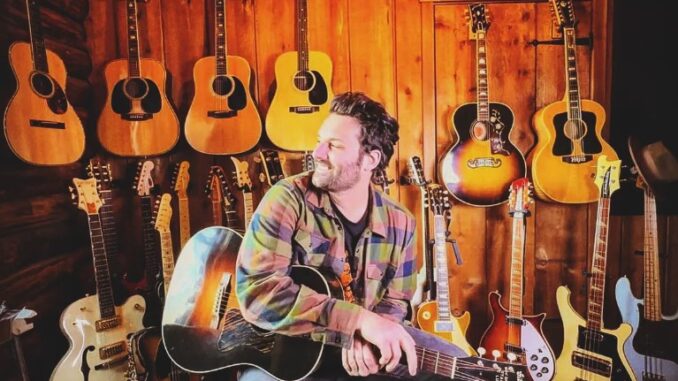
Greg Loftus comes from the town of Bourne, not far from the bridge that connects Massachusetts to Cape Cod. It is there that he practices woodworking, operates a club in nearby Falmouth and makes rock music with a rugged americana character. His songs don’t have a decided regional flavour, like neighbours Lori McKenna in Stoughton, Grace Morrison in Wareham or Dennis Brennan in Boston. “My old stuff that’s not really online does a little bit more,” Loftus notes. “I lived in Texas for seven years and been back probably seven years now. The songs that will be on the next album seem to have a bit more of a regional feel.”
Listening to I Don’t Want to Die in San Antone, the lead track on his 2024 album No Kings in the Wild, you would assume he had seen enough of Texas. I mean, why pick on that city? It’s got a vibrant scene on the river walk, a fantastic basketball team with history, and when you are out of smokes and the tank is dry, they have Buc-ees, powerhouse convenience stores that are a roadside Texas-wrapped beef jerky haven, brisket brimming, peanut brittle laden, coven of kolaches, disguised as refuelling stations. Doug Sahm made a nice living singing about San Antonio. “No, I like San Antonio,” Loft deflected. “I just didn’t want to spend my whole life there. I was dating a girl who I ended up marrying and divorcing, and there was what you would call a big argument between the two of us. Her sister lived in San Antonio, and I really didn’t want to go. Besides, the sound of the town’s name had a nice ring to it for a song.”
Loftus has recorded two other albums under his own name: Western Medicine in 2021 and Raise the Rent, which was made (2015) in Austin. “In between there, I was in a band called Carpetbagger down in Austin, and we released some songs, though they’re not really available.” He still plays Cinder and Soot from the first album, and Hill Country Choir is a staple from the ’21 album. “It’s about divorce and tends to resonate with some people.”
He closes just about every show, however, with Evergreen, the first track on Western Medicine. “When I came back to the Cape, I wasn’t really playing a ton of music,” Loftus said. “I started my woodworking business. Then I got married, and we bought a house just before COVID hit. Me and my wife split up and sold the house. With everything going on, I just started writing a ton, and that is more like a positive pandemic song; at least it’s not super negative, which there was a lot of weird shit going on. And the hook is, ‘Well it don’t matter, hell or high water, You’ve got to find something you love and just surrender.’ During that time, people were really having a hard time with identity, and I feel like I buckled down and decided what was important to me.”
Reintroduced to his roots, he has reestablished himself as a solid part of the Eastern Massachusetts community. “Where I’m at, as you know, I’m an hour from Boston, an hour from Providence, an hour and a half from Portsmouth (New Hampshire), Western Mass, Portland (Maine). I play at home with a band maybe once or twice a month, and then most of my other gigs are solo.” He has toured earlier this year with Steel Wheels, a bluegrassy band out of Virginia with whom he shares a manager. “I met them at Americanafest a couple years ago and went on a two-week run with them last year. They’re great guys, all in their late 40s, so it’s easy to tour with them because they all exercise and eat well. It’s not a party the whole time, which is nice.”
Loftus opened a music club and does the booking for the Lounge at the Daily Brew. “It used to be the Silver Lounge in Falmouth,” he said. “It was like an old clam chowder bar, very old Cape Cod type thing. There was a big antique shop next to it, basically a barn. Friends of mine bought it, and we turned the barn into a music venue similar to the Word Barn in Exeter (NH) or Levon’s Barn in Woodstock. That was kind of the blueprint.”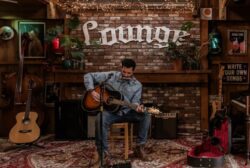
Years ago, this area was fairly barren for active music venues, but several are sprinkled around southeastern Massachusetts now, and even to the islands, with the Gaslight on Nantucket and Hot Tin Roof on Martha’s Vineyard. “I saw Toots in the Maytalls there,” he recalled. “I’m actually going to the Vineyard soon because I’m also a furniture builder, and I’m building a bar there on Circuit Ave. in Oak Bluffs. It’s the old Rare Duck.”
Loftus’ small-town pantheon of characters and situations is Hiatt-esque, and so is the way his songs find each one on the brink of their lives changing forever. When they reach these moments, the songs usually end on a note of futile promise, stubbornly hopeful in the face of an ambiguous future. In Loftus’ town, when things seem like they’re about to tip over the edge, sometimes they just, well, don’t. On some tracks, there’s a cautionary tale at work with these close calls, but elsewhere there’s just more ghosts. The characters on Miss Marigold and Angelica are left with another, stranger feeling than learning your lesson or facing the inevitable: of racing headlong into something that seems like a dramatic turning point, only to end up unscathed and searching for meaning.
He gets up close and personal on The Day I Walk Away: Honey, this is where I’m from, I want to build something big, work a job that doesn’t end, step back and know every part is right, dirty up my hands, let the sun burn my skin. “A lot of people tell me that’s the most personal song,” he offered. “I just started writing down just little things that I felt or wanted to do. It’s basically like a list song of these are a few of my favorite things, which includes my dog and ‘Spinal Tap’ references and John Prine. There wasn’t a ton of planning behind it, but I like it.”
There is a decided regionality to Castaways and Washashores, which closes the Kings album. Loftus tends to feel more in his element when he turns off his phone and is alone in his woodshop, out in the woods or woodshedding with his guitar. “I find that people worry about the wrong things, allow themselves to be bombarded with politics,” he gave as an example. “Castaways is kind of how I view my surroundings, growing up around here, leaving and then coming back. Washashores is what people on Cape Cod call those who aren’t from here but move here, like driftwood.”
Loftus was a kid during the Nirvana, Green Day MTV daily dose 1990s. Guitar looked like so much fun to him, and pretty soon he and his buddies were forming punk rock bands. “From the day I picked up a guitar, I didn’t know how to play it, but I started writing songs because I thought that’s what you were supposed to do. That got me more in touch with vocalizing how I feel about things. Since that age, I write down something almost every day, even if it doesn’t become a song. It’s very therapeutic, and people usually don’t have to wonder what I’m thinking.”
Rock stardom was not in his future plans. That seemed like some place to travel where you would need a passport. He just wanted to play music and still does. “As you get older in this industry, the idea of success and what you are willing to do to have success changes. When I was in my early 20s, I would jump in the van, and we’d go on tour, and be playing in front of nobody. There was no planning behind it. It was like just to do it and have fun. And then, as I got older, you start to have a little more strategy. If something cool comes up, I’ll go play it, but it’s not like I’m chasing something. That being said, if I were to look where I’m at now from 15 years ago, I’d probably be pretty thrilled.”
Like the majority of musicians, Loftus does something else to pay the bills and something extra to pay for recordings, whether it’s the day job, session work, production or booking at a bar. “It’s tougher in this day and age because touring isn’t as profitable. And no one’s buying records. All I want is to be able to have enough money to make another record because I really enjoy making music and love the process of recording, but right now I run a woodworking company. I run a venue. I play music. It’s like I’m pretty busy.”
Loftus has come to a point in life when he doesn’t care to be in the bar band scene until two in the morning, though he admits to still feeling it would be fun every once in a while. And he and his band have just the place. “Have you ever been to Grumpy’s in Falmouth? It’s a real shithole, but it’s great. We’ll go play over there and pack the place maybe once or twice a year. But I’ve got buddies who have been doing this forever, and they never really learned another way. Some people are trapped in this; they just got stuck with it. It’s the same as having an accountant job or something that you didn’t plan on doing forever, and you just ended up there. Some of those gigs are 200 bucks a night or whatever, and for some people they’re like, ‘I’m good.’ They’re eating peanut butter and jelly every night. I don’t want to do that.”
He has a quality of voice that sounds as if it could have been honed from years in bar bands. His guitar slices and climbs with the best of them, raucous and just the right amount of seriousness. The songs will make you want to put on a pair of dirty black Converse shoes and smoke a covert cigarette in an empty playground. Over the course of spinning his music, you find tunes that are gritty and enormously easy to listen to, whether tackling subjects such as death, divorce, pandemics and the homogenization of the Western world on Western Medicine or taking on a more positive tone on No Kings in the Wild, an album about resilience and rejuvenation and, more importantly, about humility. “Understanding that our time on this earth is short and relatively insignificant in the grand scheme of things, ‘Kings’ is about letting go of the small stuff and making the most of it all. After the last lightbulb burns out and the last well runs dry, nature doesn’t care whether you were a king or a peasant.”
Wry and bouncy, Loftus’ music focuses on hometown blues, restless discontent, and messy relationships. Seven Sisters is a sticky song full of verve and tenacity, with deliciously discontented lyrics like “The daughter of a soldier and a diamond on her ring, she hid out in the holler where the coyotes sing.” He has a knack for bringing his subjects to life with tiny, funny details that can break your heart or make you laugh. It is the fate of a music lifer.
“Besides water,” he said, pausing to give the question of what he couldn’t do without for a day some extra thought, “probably music and writing. I listen to music all the time, especially in my woodshop, and I love discovering new stuff. Anybody who says there’s no good music anymore just isn’t listening. Discovering a new band or an old blues artist is the best, and then that inspires me to write. It’s funny because some of my favorite records are from the early ’70s, and everyone’s like, music used to be so much better back then. There was also a lot of shit music being made back then.”
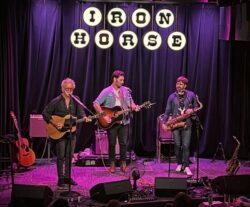
Loftus has had his influences, just like any other musician, and can rattle off names when asked, but it’s the advice he received from someone in Austin that led to what has become a beneficial friendship with Anders Osborne. “I was told, don’t worry about anything except playing in front of other musicians because they’re the ones who are going to notice what you’re doing, and they’re going to be the ones asking you to play with them. The other stuff will come later. I ended up meeting Anders a few years ago, and he has been a mentor to me. I just got off the road with him, and it was like a masterclass in performing and navigating the industry. I am sitting on some songs and plan to go down to Louisiana in the fall and record them with him.”
You can expect these songs will have different characters and situations, but they will be the same in the most important way: by giving the impression that they have been lived in and are relatable. In a word, that describes Loftus as well. Relatable. He’ll be playing the new material this year, and the album will be out hopefully before the snow flies. There will be vinyl, even though it’s costly and CDs. “I still have CDs pressed even though hardly anyone buys them,” he said. “They are cheap to make. It’s funny, though, when you play live, people over 45 will buy them.” His band is called the Ten Ninety-Nines after the IRS form that reports taxable earnings, and it’s a good reminder for those going to one of the shows that there is no tax on tips.


Thanks for this “heads up” on Greg – an artist I hadn’t come across before. Excellent selection which will have me scurrying to explore his output asap. He reminds me of J.D. Malone a s/s from Chicago who – also unfortunately – flies well under the radar.