
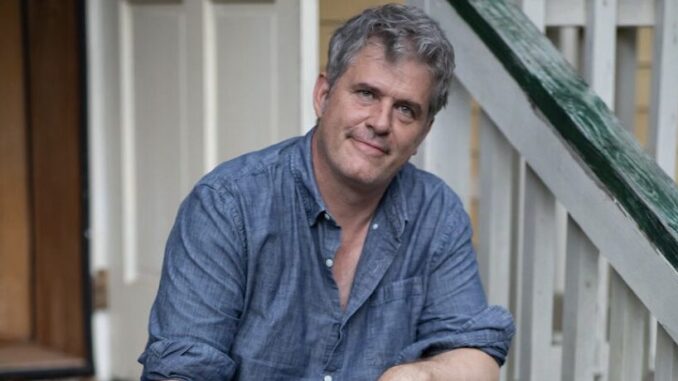
Dirk Powell is a special kind of musician, someone who, through family connections, knows and understands both Appalachia and Cajun music, and is at the same time comfortable with modern music technology. He has won four Grammy Awards, worked with everyone from Rhiannon Giddens to Eric Clapton, and runs his own Louisiana studio, Bayou Teche, while maintaining a solo career. His instruments of choice are fiddle, banjo and accordion, and on his current album Wake, he plays most of the instruments himself. Americana UK’s Martin Johnson caught up with him by phone just as he was about to start his short Ireland and UK tour, which includes one UK date on Sunday, June 14 at the Sound Lounge, Sutton. Dirk explains that it was his fiddle-and-banjo-playing Appalachian grandfather who first inspired him, and that his ex-father-in-law, Dewey Balfa, was his biggest Cajun influence. His new album has been described as his best yet, and he shares the concept behind it and why he thinks it is his most cohesive album. Light is also shed on his special musical relationship with Rhiannon Giddens, and the fact that he has been invited to play Eric Clapton’s Crossroads Festival in Austin, Texas, later in the year. Family is very important to Dirk, and he shares his pride in recording and touring with his daughter Amelia, and that in the eleven years he worked with Joan Baez, his daughters came to think of her as a grandmother figure. Finally, he may be a “musician’s musician” and carrier of the flame of Appalachian and Cajun Music, but he explains why he also feels right at home with the UK’s Last Music Company and its roster of roots artists.
How’s Ireland?
It’s great. We’re just getting into the swing of things here. We had a really nice meal last night with some friends, and we are starting our first show this evening. So yeah, everything’s good so far.
And then you’ve got a gig in South London, I believe.
Yes, coming back through for one show at the Sound Lounge in Sutton.
Apart from your own recording career and your sort of work as a producer, you also own a studio. You seem to be the go-to musician for anybody who wants a bit of authenticity added to their recordings. What do you think you bring to other musicians that makes you so popular?
Well, I think in some ways, it’s authenticity, spoken almost like a language, I feel like I was so immersed in a few American traditions, at a young age, particularly Kentucky’s Appalachian Mountains, and then in Louisiana, that I am speaking those languages with a certain kind of, fluency or something that’s tied to the roots and a direct way when people want that kind of flavour. I guess I’m able to sort of bridge the gap between that world and maybe a more standard kind of studio world where I can bring some of that flavour but also shape it in the direction that producers want and things like that. So, I guess I’m pretty fortunate to have that background.
Your own studio is a modern studio, isn’t it?
Yeah, it’s a building that was built probably in the 1850s that I converted into a studio, and I’m very much interested in analogue audio gear and those kinds of things. It’s a space where there’s a lot of wood on the walls. It’s a very warm kind of environment, and there’s some history there. Hopefully, a place that is to be inspiring but also very relaxing, settling, and kind of feeling like home.
Fiddle, banjo and accordion are your prime instruments. Did you just fall into that naturally when you were younger, or did you have sort of a moment when you made a conscious decision to focus on them?
Well, my grandfather played banjo and fiddle. He mainly played banjo when I knew him, and there was kind of a moment, you know, I would go see him as a young teenager and learn banjo from him. He played a song, a very old, simple melody, and he said, “You know, people used to think that just that was beautiful”. Something that simple, and it was kind of an epiphany for me, where I went, I really want to do this because I think the beauty is still there. I think the people have maybe lost touch with it, but the beauty itself hasn’t changed. And so that was a moment where I thought, okay, I really want to do this. So it came directly from him, especially learning banjo from my grandfather and feeling like I had something to say with that music; I was fortunate that way.
As well as your grandfather, do you have any other sort of key influences that still inspire you?
Yeah, the Cajun, the Louisiana side of stuff. My ex is Christine Balfa, and her father, Dewey Balfa, was a great Cajun fiddle player, and he really inspired me. He’s obviously my daughters’ grandfather; there’s a connection there, and that kind of music too. Dewey Balfa, I really admired him, and he was a real mentor to me. Also, I tend to listen mainly to stuff that’s a little bit older, you know, from that era or old blues, or things like that. Some of that stuff just speaks to me. So, various mentors and heroes for sure. But most of them aren’t really with us these days.
What’s the current Louisiana music scene like these days?
I would say it’s pretty vibrant. It’s interesting, too, because the French language is a unique thing in Louisiana, so there are decisions about a unique and small subculture, but given that, I would say it’s pretty active.
I’m going to ask you what may seem like an unfair question. You don’t have to answer if you don’t want to offend anybody, but in terms of all the sessions and touring gigs you’ve had, what was your most enjoyable experience?
Playing with Joan Baez was great. I played with her for 11 years, so that was very much like family; that was my whole life, a whole chunk of my life that was so significant to me, and beautiful. My girls grew up, almost feeling like she was their grandmother or something, you know, so a familial connection. But as far as making music with people, one of the highlights for me has definitely been playing with Eric Clapton. He’s somebody who is so full of music and loves music so much, and just converses musically in such a beautifully expressive way. That’s definitely a highlight for me, just in terms of somebody who makes music from such a deep source.
I believe you are playing Crossroads this year. Is that right?
Yes, my daughter Amelia and I are going to do that this year.
You’ve mentioned your daughter Amelia. She’s on your new album, “Wake”, which is your first album in 6 years, I believe. Some people are saying this could be your best. solo album. What do you think of it?
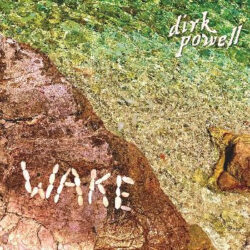 Well, it’s definitely one that I really wanted to dig all the way into this journey that I wanted to take on it. I would say it’s the most complete so far, literally taking the listener through a story, kind of through a journey, and exploring some themes that felt very relevant to me. So I’m glad to hear that feedback. I feel like it’s the most realised in a way, the most cohesive as one work of art, probably more than some of my others. So, I’m glad people are responding.
It opens with a ‘French waltz’, and that certainly gets people’s interest. Was that the intention?
Yeah, that is kind of like establishing that we’re going to be exploring memory and emotion, and that’s, in a way, setting up the world of the record, and that it’s going to be exploring these emotional themes. The line between memory and presence, and where all that resides. So yeah, it is definitely the intention to say, okay, this record is, is hoping to bring you on a journey.
The next track, ‘Tomorrow We Sail’, is a jig, but it is also highly arranged as well. What were you thinking with that one?
On that one, I have this image of the two subjects of that song: someone who is waiting for another to come through and kind of sweep them up and take them on the journey of life through all these places and ports unknown. I really wanted to paint a picture with the language of it and the music of it that conveyed this image of being on the water and the freedom of that. It’s also how much of this is imagined, and how much of it is real. Just exploring a lot of those things, it’s kind of a painting in a way.
You’ve also got a song on there as well, about the travelling lifestyle, ‘Down The Line’. I take it that is from personal experience.
Yeah, that really is, that is for me, and you know, that’s kind of where I live in Louisiana. Texas is right next door and kind of heading west, heading out over through Texas. There’s a certain kind of freedom that comes as you get further and further away from the Gulf of Mexico. The desert kind of gets stronger and stronger, and there’s just a feeling in that I wanted to encapsulate in that song, just kind of going west, and feeling free, free with every new town.
How much outside help did you get on the album?
That’s interesting. A lot of it. I kind of did myself, but the background vocals are so significant, and Darrell Scott really added a lot, both vocally and with pedal steel and things. You know, my daughter’s, they are foundational to it. They’re really part of it, and having them sing background vocals is kind of. I don’t do anything really in the studio of my own that I don’t think about having them on it. That’s a significant part of it to me, what they add, you know, those meanings to some of those songs, is really encapsulated through what they add to it.
In terms of your own creativity, you are a session musician, you’re a touring musician, you’ve got your own recordings, and you are a studio owner, which is used by yourself and other artists. How do you prioritise your activities and set the tone of your career?
Well, it’s interesting. It’s an interesting mix of establishing stuff that I want to do and then seeing what else comes along. Amelia and I have been playing with Rhiannon Giddens, and I’m always up for anything she wants to do. So if something comes in, then prioritise that fairly regularly, but it’s an interesting balance, keeping it all the right amount of things, because playing live is definitely essential. But then being in the studio and crafting, and that way feels really important too. So, it’s a little bit tricky to maintain the balance, but so far it’s kind of just flowed that way, luckily for me.
What plans do you have for the future? Anything firm, or is it more of the same?
It’s more of the same. I mean, I’m still playing with Rhiannon, and then Amelia and I are going to do more of our duo shows, and I’m excited to have this record out because now I can start creating and writing, and thinking about whatever lies ahead. I’m doing some writing with Rhiannon; we’re working on different projects together. She’s got a new record coming out that we co-produced. So yeah, there’s just a lot of irons in the fire, but. kind of rolling along with the same kinds of projects and recordings and writing and performing, just kind of keeping it all rolling along. It’s exciting.
You mentioned Amelia a couple of times. What’s it like working with your daughter? Obviously, you know each other very well, but what’s it like working so closely with a member of your family?
Well, it’s really, really special, and there’s a trust and a knowledge there that is second to none. Really, it’s a beautiful thing. I often say when you feel like family in that way with somebody you’re making music with, it’s just kind of this beautiful situation because if something goes wrong, it’s funny. You know, it’s not a big deal, but if something goes right, it can be transcendent, you know, it can be amazing, like the best thing you could experience on stage. So, I really feel fortunate to travel with her, and I mean, when I look back at what we’ve done and think about what we’re going to do, it’s really living a dream, and a lot of people wish they had that opportunity, especially, you know, parent-child. It’s very rare to get to work together and travel, and do all the things we do. So, it’s really a blessing; it’s very, very special. And that’s definitely something I won’t ever take for granted, that we’ve gotten a chance to do that.
The UK’s Last Music Company released “Wake”. What do you think of the label?
I’m really, really thrilled to be part of that label. When I learned about them, and I had known about Proper Music previously, I went and looked at who they had, who they were working with, and I thought, oh wow, this is exactly my wheelhouse. This is exactly where I want to be because at the time they were working with Andy Fairweather Low, and I knew him from playing with Eric Clapton. Then seeing Paul Brady was there, and then the Fabulous Thunderbirds, and then the Bobby Charles project they’re doing, and he’s a local hero in Louisiana, an absolute icon. I just looked at all of that and thought, wow, this feels like exactly what I love, and I’m right in the centre of all these different things. It was great to connect with them and work on this project, and I feel like I’m doing it as a labour of love. Basically, they’re doing it as a labour of love; I mean, everybody’s doing it for the sake of the art. I feel like that’s where I want to be these days for sure, you know.
For the sake of the art, absolutely, but everybody has to make a living as well. How does streaming impact musicians like yourself?
Well, it’s very interesting. It’s a time when, as you said, you’re trying to make a living, but you almost have to assume that the income isn’t going to be generated from the sources you would have expected years ago. To make a recording and sell it and make money on them, you know, at least something, but it’s tricky these days for sure. I don’t know exactly how the model is going to endure over time. It’s an odd moment for sure; the whole music business feels uncertain, so it is tricky to imagine the future. How are people going to be able to support themselves? So, it is an interesting time, and I feel grateful to put the art out there. As you say, it is tricky to envision really supporting yourself the way you would hope to.
And before we finish, we haven’t really mentioned your ex-wife. How’s she doing?
Christine Balfa. Yeah, we’ve been divorced for 13 years, but she’s doing well. She’s home, playing music in Louisiana, and she’s there with her band, Bonsoir Catin, and then Balfa Toujours, which is a band that she and I started. So she’s still playing some hard-driving, good Cajun music for sure.
The pair of you were at a key point in Cajun music.
Yeah, there was a moment when we were in our mid-20s; we really made a mission to play that music and keep that alive at that time.
And you certainly did, Dirk. Is there anything you want to say to our European and UK readers?
No, nothing you haven’t asked about? I appreciate the interview, and that’s all good with me.
Good luck, and hopefully next time you come back to Europe, you’ll have a few more gigs.
I hope so.



I’ve always thought Dirk Powell is an American music treasure. I’ve not yet had the chance to see him ‘solo’ but he’s enriched every performance I’ve seen, whether Rhiannon Giddens or Transatlantic Sessions. ‘Wake’ is a terrific album. Steve Earle once promised he and Dirk would cut an album together. That would be interesting but I’d settle for any Dirk Powell album. For ‘classic’ stuff check out an album he was on with The Wandering Ramblers. Great interview. Thanks.
My pleasure, Jeremy. Given his ability to transform the sessions he plays on, and the rich nature of his own catalogue, I would have expected Dirk to be better known. We can only continue to spread the word. Like you, I’ve seen him on the Transatlantic Sessions but not in a solo capacity. He is someone who genuinely loves the music he plays.