

Late beginnings, hard-earned wisdom and songs that find grace amid life’s darker corners.
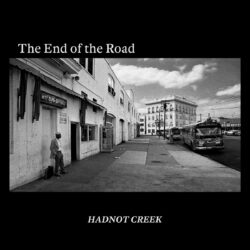 Robert Sawrey’s story inevitably shapes the way The End of the Road is heard. Recording under the name Hadnot Creek, he only began releasing music after retiring from a career outside the music industry. That sense of freedom runs throughout these ten songs. There is no sense of chasing fashions or commercial expectations, just a songwriter drawing on country, blues and americana traditions to tell stories about flawed people, broken relationships and the long shadows cast by addiction and mortality. Despite the darkness that often inhabits the lyrics, there is also something quietly life-affirming about the album simply existing: proof that creativity need not have an expiry date.
Opener A River of Love immediately introduces Sawrey’s central preoccupation: that love and suffering are inseparable companions. “A river of love is a river of tears” becomes both a memorable refrain and a statement of intent, while lines such as “You can’t feel the glory without the pain” reject easy optimism in favour of something harder won. Musically, the song offers one of the album’s brighter moments, its upbeat country feel providing an effective counterpoint to the reflective lyrics and showcasing the warmth and vulnerability in Sawrey’s voice.
Much of the album succeeds through similarly uncomplicated arrangements that allow the stories to take centre stage. Misery Is Your Favorite Cup of Tea pairs a commanding vocal with a brooding country-noir bass line to tell the tale of a man trapped in cycles of self-destruction, while Thirty One unfolds over haunting saloon piano, its half-sung, half-spoken delivery lending devastating inevitability to the account of a young life cut short. Rather than reaching for melodrama, Sawrey trusts the narrative, allowing ordinary details to carry extraordinary emotional weight.
Several songs return to addiction and the possibility, or impossibility, of redemption. I Ain’t Begging drives forward on a blues foundation as its narrator recalls violence, guilt and brushes with death while insisting on a fragile dignity. Yee Haw, despite its playful title, proves one of the album’s saddest moments, capturing both the endless promises of recovery and the heartbreaking recognition that tomorrow rarely arrives. These are songs that resist easy judgement, instead finding compassion for people caught in lives they no longer control.
Elsewhere, Sawrey turns his attention towards mortality itself. The beautifully understated Nothing Dies Beautiful reflects on loss with disarming simplicity, from childhood memories to Townes Van Zandt’s death, concluding that beauty and endings rarely coexist. The title track continues this thread through another almost conversational performance, its gently fluttering guitar creating a dreamlike backdrop as the narrator wonders what remains “when you reach the end of the road“. By the closing In the Kingdom, questions of faith, mental illness, and judgement are left unresolved, bringing the album to a suitably sombre conclusion without ever slipping into despair.
If The End of the Road occasionally falls short, it is less through the quality of the songwriting than through its brevity. Just as the album settles into its reflective rhythm, including a cover of the Rolling Stones’ Sway, it comes to an end. Yet perhaps that restraint is part of its charm. Sawrey writes with the confidence of someone who has lived enough life to know that simple stories often carry the greatest truth. This is an unpretentious collection of songs, rich in empathy and quiet wisdom, that suggests Hadnot Creek’s musical journey is only just beginning.

