
One Eleven Heavy’s Mitchell Maiato delivers a healthy dose of cosmic psychedelia for the 21st century.
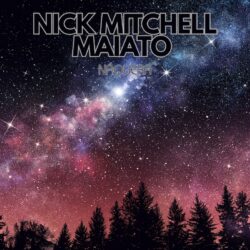 Four years have passed since we last heard from Nick Mitchell Maiato, at which time One Eleven Heavy, his sometime band with James Toth of Wooden Wand, had just released their third album, Poolside. Now, after some serious woodshedding, he returns with what is his sophomore album, Naquera, named after the Spanish pueblo in which he resides, that continues to mine the same musical seam, pulling country roots together with funky horns, jazzy guitar lines and deep grooves to create a modern take on the cosmic psychedelia so popular in the late sixties and early seventies.
Mitchell Maiato’s previous work has, unsurprisingly, drawn comparisons to the Grateful Dead, and one immediately recognises those influences. However, bands such as Royal Trux and Meat Puppets are also considered relevant touchstones, and here the loose, almost playful approach to the musical arrangement, combined with a mischievous nature to much of the narrative, is delivered like streams of consciousness, with a constant sense of ambiguity that deliberately leaves the listener trying to salvage some sense of understanding.
Opening number Two Left Feet wastes no time in finding a groove that could have come directly from The Dead’s back catalogue, where a bluesy repetitive guitar riff underpins a delightful solo while the vocal delivery, with its sense of urgency, begs a faint nod towards David Byrne of Talking Heads. The following number, Critical Mass, with its soaring two-chord ode to dropping out, is undoubtedly the album’s highlight. Featuring the Grateful Dead’s very own MIDI-tech Bob Bralove on the opening organ salvo, and interjected with an infectious chorus and stunning key-changing guitar duel at its core. It’s a song that demands repeated plays. Not so appealing is the instrumental Los Serranos, which feels rather directionless, but the cosmic americana ballad Riki Rachtman, which features some excellent piano playing from Gavin Rushing and a quirky narrative that examines the state of heavy metal in contemporary pop music, all underpinned by the sublime pedal steel of Aaron Feder, is another tasty offering.
Elsewhere, The Angle, with its long outro full of jazz-infused lines courtesy of the guitar and horn section, pays homage to a rock and roll pool hustler, while Flamebait, with its narrative that embraces the hippie mantra, has a guitar solo that echoes with the sound of the late great Walter Becker, lending the song a distinct seventies Steely Dan groove. Steve Carty’s trumpet playing steels the show on the quirky Crosshairs before the album closes with The First P.o.W. Here the narrative offers a more linear and thus cohesive storyline, concering a drugs bust around the time of the ‘Marihuana Tax Act of 1937’ which saw a tax placed on the sale of cannabis in the U.S. Told from the point of view of a “worn down nobody” caught in the act, the tale delivers just the right amount of empathy to connect and hold ones interest right through to the final notes of what is just one of four songs to clock in for at least six minutes.
With Naquera, Mitchell Maiato continue to pursue his quest to find a home for cosmic psychedelia in the new century. And, for all its heady mix of dazzling guitars, funky horns and big chorus, this may be, relatively speaking, his most focused offering to date, for, despite the continued presence of the extended jamming, there is still a greater sense of structure to the songs, even if the obscure narrative continues to confuse and confound in equal measure.

