
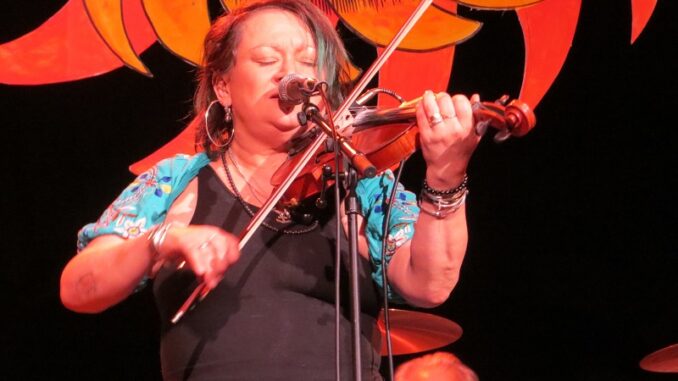
Bright Phoebus is one of the three great “lost” albums of its era – as special in its way as No Other or Forever Changes because, like these albums, it redefined what was possible within a musical genre, in this case, folk. Unlike those albums, it still lingers somewhat in obscurity – it might appear on lists of great albums, but unlike Forever Changes and No Other, it hasn’t benefitted from regular reissues and periodic deluxe editions. As compere for the evening Stewart Lee noted in his introduction, the original issue was a pressing of only 1,000 records; it was met with apathy or negative critical coverage, and subsequent attempts to reissue in the CD age have been hit with legal issues. And so it falls to periodic ensemble recreations – or appreciations might be a better term – in the live realm to keep these songs of Lal & Mike Waterson alive. Fortunately, there are plenty of champions both from within the Waterson-Carthy musical clan and outside – the last revisitation in 2013 featured the likes of Jarvis Cocker and Richard Hawley; tonight would see support from Paul Weller. Offa Rex recorded To Make You Stay, further indicating how far this album has spread its influence.
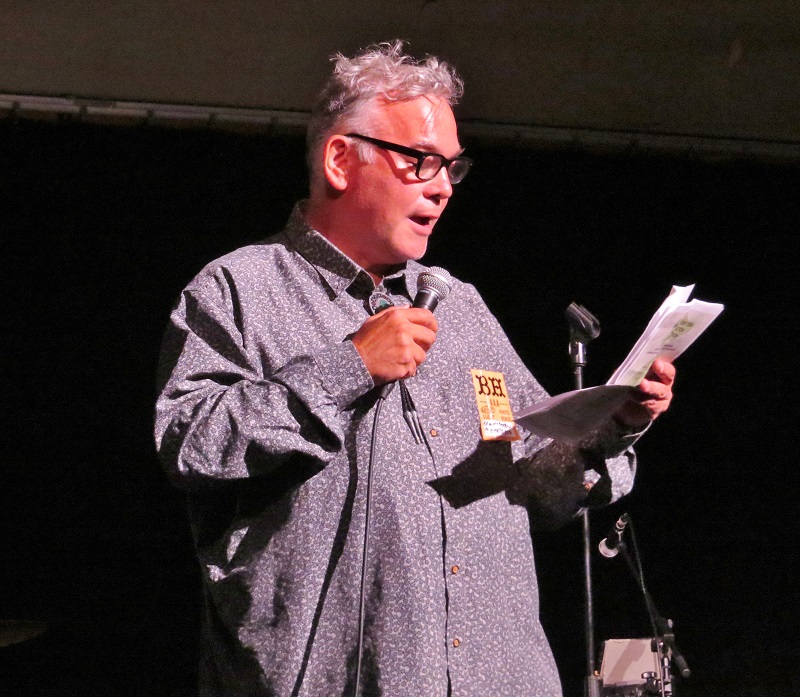
Stewart Lee’s introduction included an appreciation and recollection of the recording process from one of the participants – Richard Thompson – who clearly still feels great affection for this music. And it is worthy of recalling the original album’s line-up of talent included Martin Carthy, Ashley Hutchings, Richard Thompson, Dave Mattacks, as well as Watersons Lal, Mike and Norma. How could such a line-up fail? It could be seen as a reflection on the staid attitudes of the folk world at the time – and that claim is made, but even that’s a puzzle: by 1972 the world had experienced Liege & Lief, Hark the Village Wait, The North Star Grassman and the Ravens, amongst which Bright Phoebus would happily fit. So why the problem? On the other hand, Henry the Human Fly also received a vast silence on its release – so had the folk world become overwhelmed with its own New Wave? Imponderables that can only be filed under “we’ll never know“. One thing we can be sure of, though, is the quality of the lyrics on Bright Phoebus, as Lee’s dramatic recitation of Red Wine & Promises serves to prove it stands up as the poetry it was originally conceived as.
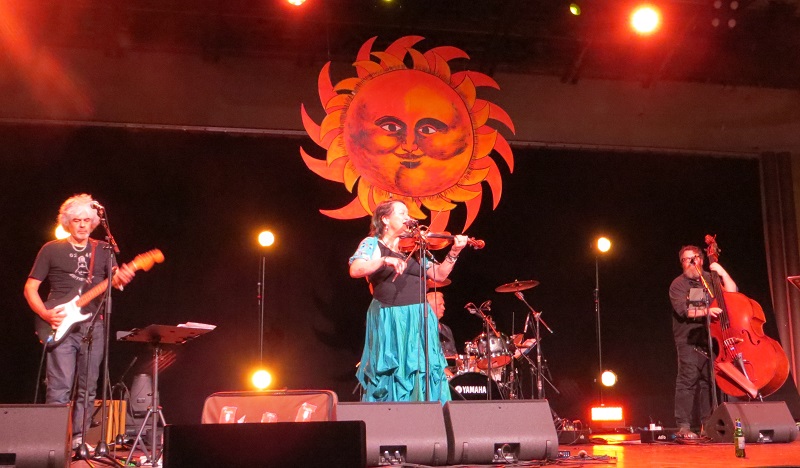
With the band – Marry Waterson, Eliza Carthy, Daragh Lynch, Ben Nicholls, Martyn Barker, and Matt Deighton – on stage, the music began with a glittery flourish and the up-tempo Rubber Band, a song that has the hallmarks of a novelty song but actually, with the combination of vocal intertwinings and clever wordplay – something Eliza Carthy noted Mike Waterson rejoiced in – rises far above that classification. It’s a blend of pure joy in music-making and rather ironic bravado in declaring the musicians to be “the best band in the land” whose efforts can only lead to huge future success. To follow this up with the enigmatic Fine Horseman was to show the breadth of ambition that the album had – to go from glee in music-making to a sombre reflection on the hardships of life and the consolation of love within hard times is a huge, but successful, step.
Eliza Carthy led on the rollicking feminist song of self-reliance that is Red Wine & Promises, pleasing Stewart Lee with the reading of the line “I don’t need nobody helping me / I don’t need no bugger’s arm around me“. She also notes that it’s a song that’s dear to her because it brought her parents’ tentative moves to getting together as a couple to fruition – adding that makes it special because no song, then no Eliza. The male members of the band took charge of the stage for the rock and roll bad boy story that’s Danny Rose.
The original album ran to around 38 minutes, so of course there are other songs brought in to fill the two halves of the concert; these are drawn from demos by Lal or Mike. There’s the beautiful contrasting imagery of complementary partners on Black Horse, and Mike’s masterful Jack Frost amongst others.
The second half of the gig got underway with a soulful interpretation of Never The Same with Paul Weller on lead vocals. It’s a song about an unspecified emotional crisis, with carefully drawn images of bleak despair as family and church wade in with their opinions. You could trace a line from some of the writing of Ray Davies through to The Jam that would pass through Never The Same. Weller’s soulful reading was beautifully offset by Eliza Carthy’s violin playing.
Marry Waterson – described by Lee as the lead singer of Girlschool – took the lead on To Make You Stay, having noted that last time – the 2013 gigs – they had Kami Thompson sing it, adding “we love her.” As good as that performance was, thirteen years later Marry Waterson’s is as beautiful as anything we’d be privileged to hear on this night. She really is one of the finest English folk voices.
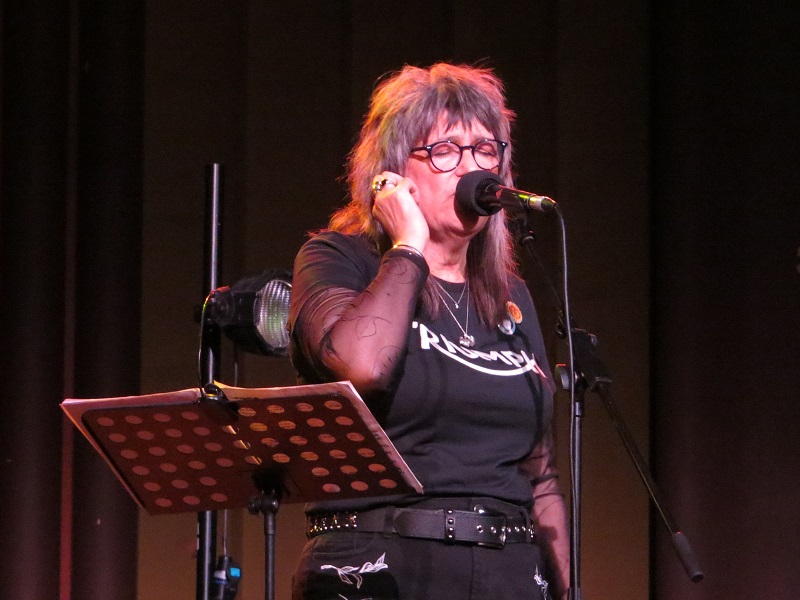
Arguably the finest song on the album – well, we like to argue – Scarecrow is like a lost Seventies Folk-Horror film encapsulated into a scant few minutes. With elements of life, death, the rituals of he cycle of the year and a ritual killing which goes beyond John Barleycorn, the full eeriness of the song was dramatically brought out by the duo performance by Daragh Lynch and Matt Deighton. It’s a song one can never tire of.
Another non-album song that’s almost too overwhelming in its frank emotion is Song For Thirza, which, as Eliza explained, was about the woman that her grandmother got from the workhouse to help with the raising of the three small children she had suddenly found herself responsible for – Eliza’s mother and her siblings. And let’s just reflect on the first line: “You were brought from the workhouse to live with us” – and that was only seventy-five years ago. And if that were not shocking enough, the next two lines are knock-out blows, catching at both a depressive state and the casual neglect of children who later in life realise what they had: “And named yourself Dog on a very bad day – and I strayed in my youth and lost my precious dog.” It’s a song almost too strong to be sung.
Closing out the second set, inevitably, with the joyous Bright Phoebus made for a lovely sing-a-long finale, which continued into the encore of Shady Lady, which demonstrated more of Mike Waterson’s wordplay and took a country rock direction steered by Matt Deighton’s electric guitar playing.
What can one say but “what a night!” Swiftly followed by “but let’s not wait 13 years to do it again, eh?” Another gig that occurred under the promotion of Broadside Hacks – we aren’t in their pay, but it bears repeating that they are bringing so much fantastic music to the capital’s folk music life – check their website for upcoming gigs; you won’t regret it.


