
An homage to the songs that shaped his long life, award-winning Canadian singer-songwriter and acoustic guitar maestro releases his 39th album.
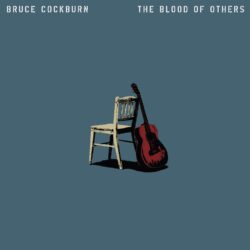 If you were asked to vote in a poll of the most activist artists in modern popular music or were minded to vote in a poll of the best singer-songwriters or greatest guitarists, it is most likely that you would leave off the name Bruce Cockburn, the Canadian from Ottawa who has flown largely under the radar, despite having possibly been the most awarded singer in Canadian music; many Juno awards for his albums, honorary doctorates from several universities, lifetime achievement awards and a member of the Canadian Songwriters Hall of Fame. As an acoustic fingerpicking guitarist, he is almost without peer, as anyone who has listened to his instrumental albums Speechless in 2005 and Crowing Ignites in 2019, or who has seen him perform live, can attest. His albums are full of literary lyricism, and although many of his songs are known only to aficionados, a number of them have been recorded by other artists. His most famous songs are Lovers in a Dangerous Time, about hanging on to hope in a time of global tensions – his famous line from that song, “got to kick at the darkness till it bleeds daylight”, became the title of a tribute album as long ago as 1991 (Kick at the Darkness). If I Had a Rocket Launcher was probably his most famous protest song, written after a visit to the Guatemalan refugee camps. They both appear on what is probably his most well-known album, Stealing Fire from 1984. Or maybe it was If a Tree Falls, from Big Circumstance in 1988, a critique of environmental destruction. Until now, he has released 38 albums, with subject matter covering soul-searching and spiritualism, political observation, and environmental issues. He has written about love and loss and fear and faith, and produced one of the very best and most original Christmas albums, Christmas, in 1993. He has made albums of gentler folk stylings as well as more rock-inspired albums and has tinkered with many different styles of production; jazz, blues, reggae, and so on, each one featuring to a greater or lesser degree his unique guitar playing.
And now, in 2026, he has come to produce his first album of covers, songs that have influenced or inspired him over his musical life, which largely started at the esteemed Berklee School of Music in Boston in the mid-60s when he was 20 years old. Some of the choices are sentimental favourites; others are interesting vehicles for exploring the fingerboard style of guitar-playing. All of them connect to times and places that remain shadings on the map of a life, as he describes the song choices.
Blood of Others is almost exclusively just Cockburn on acoustic guitars, which he plays beautifully in service to the songs, which cover gospel, blues, ballads, folk, and jazz genres. Cockburn has explained that certain songs have been drifting around in his mind for many years, and some have been chosen as they work very well as exercises in his fingerstyle. The title comes from a book by Simone de Beauvoir written during the wartime Nazi occupation of France and deals specifically with personal responsibility in the face of oppression, a concept he felt appropriate when recording songs that he did not write.
Now in his 80s, his voice is not quite as powerful as it once was, but the empathy and emotion that he has always demonstrated still remain, and that almost seems to be more appropriate to the songs he has chosen. The guitars he plays are entirely suited to the style of the song; take, for example, the classical style he plays on the French chanson classic Les Feuilles Mortes (known in English as Autumn Leaves), which he sings entirely in French, with its original semi-spoken introduction. The solo on this track is mesmerising. He semi-speaks again on As Time Goes By, an intro rarely used to preface the song, but it gives extra weight to it, especially as he changes the words “Yet we get a trifle weary / With Mr Einstein’s theory”, to “Yet we get a trifle weary / with AI and Quantum Theory”. These last are two of five songs, effectively from The Great American Songbook. Johnny Mercer wrote the English lyrics to Autumn Leaves and co-wrote One for My Baby (made famous by Frank Sinatra); the others are You Belong to Me with lovely bass lines courtesy of superstar bassist Viktor Krauss, who also appears on the desperately slow and intensely moving I’ll Be Seeing You (recorded in memory of a brief heart-breaking relationship), with a stunningly fine acoustic guitar solo and soft organ swirls towards the end from regular Cockburn contributor Janice Powers.
On only a few tracks is there any additional instrumentation; Colin Linden adds some fine acoustic guitar on Arthur Crudup’s That’s All Right, Mama (made famous by Elvis but slowed right down here), with Scotty Moore’s guitar being the influence on Cockburn on this track. Lonnie Johnson’s Laplegged Drunk Again is one of a number of outright blues songs, which again displays Cockburn’s outstanding fingerpicking style. Yellow Dog Blues and the brilliant Buddy Bolden’s Blues, with its growly vocal and jazzy roots, are others.
All of the songs have relevance to Cockburn’s life, marking memories of when he first heard them or the influence they had on his musical life; such as hearing a certain guitar style that he wanted to explore on the album (eg Mississippi John Hurt’s fingerpicking style on his blues Louis Collins, a sad murder ballad). There are a couple of gospel-infused songs, the better one being Robert Wilkins’ Wish I Was in Heaven Sitting Down, a conversation with God, with Cockburn in fine voice. He also delves into folk music with a lovely rendition of fellow Canadian Ian Tyson’s Four Strong Winds, with a perfect intro of the tune on guitar and later followed by another amazing solo, as Linden adds a little dobro for effect. And also in a folksy mode is Fare Thee Well, which he sang with The McGarrigle Sisters at Pete Seeger’s 90th birthday bash. We should also mention the longest track on this 60-minute album, which is Billie Holiday’s God Bless the Child, with yet another exquisite solo as the tune takes on a bluesy feel with a jazzy influence.
Cockburn has probably flown under most people’s radar, but just put this album on, retire under some decent headphones and wallow for an hour in this brilliant album, an outlier in Cockburn’s huge catalogue, and come out mesmerised by his interpretive ability and his guitar mastery.
