
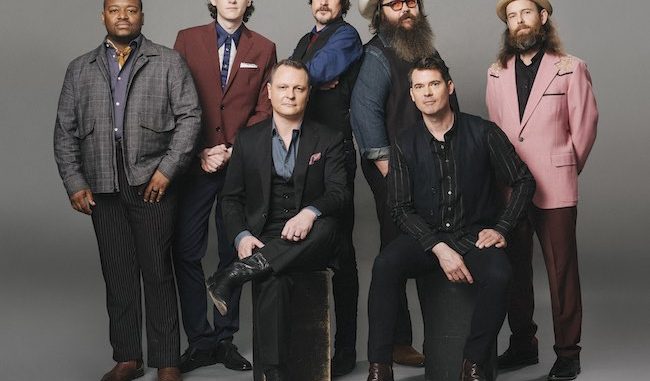
The Old Crow Medicine Show have been entertaining us throughout the 21st century. Led from the outset by the irrepressible Ketch Secor, they have cycled through some 17 members over that time, including such luminaries of the Americana scene as Willie Watson and Gill Landry. They are one of the great live bands, starting at the fever pitch of an encore and working up from there, with their driving brand of americana/bluegrass music, often enhanced by the crazy mountain-dancing skills of Cory Younts. They currently boast a ludicrously overstaffed 10 members. The pre-requisite for membership seems to be that you must be a fabulous musician and singer, a team player, and wedded to a life up on stage, night in, night out. It probably doesn’t hurt if you enjoy a half of lager shandy as well.
Secor sees himself as an ambassador of country music, and from what one knows of him, he comes across as one of the good guys. He set up a school for children from diverse backgrounds in Nashville. He has lobbied against gun violence. He has appeared in numerous television shows and documentaries devoted to country music. He has co-written a children’s book. And he married fellow americana royalty, Molly Tuttle, this year. So, a busy man, but most nights he and OCMS are out on the road somewhere playing another show.
Can’t Live With It: 50 Years of Blonde on Blonde (Columbia, 2017)
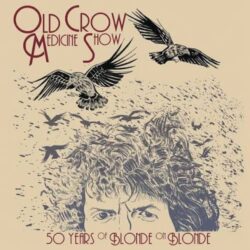 One question. Why?
Secor has expressed his love of Bob Dylan, and the OCMS trademark song, Wagon Wheel was co-written with the great man. We can all agree that the Nobel prize-winning Dylan has penned a decent tune or two in his long career. There are well over 100 tribute and cover albums devoted to him. Indeed, there is an argument that had OCMS decided to record their own tribute album with songs from across Dylan’s catalogue, it would doubtless have been a worthy enterprise. However, to recreate one record track by track strikes me as fairly pointless unless you are doing it as an academic project.
Secor says: “Our performance would celebrate not only this seminal record, pop’s first double album, but also Bob’s legacy as our nation’s premier shape-shifter/performer”. Well, perhaps he could have written Bob a letter or popped something on the band’s website instead. Taking on an album, which is as familiar as our front door to most of us, seems to suck much of the energy and ragged charm from OCMS. Solemn is not a word one would normally associate with OCMS, but that is how this comes across to me, despite the fact that it was recorded live at the Country Music Hall of Fame. And, readers, I did (of course) buy the album, and went to see it performed by the band at the Shepherd’s Bush Empire. It was the only OCMS concert I have been to where I found myself looking at my watch after about half an hour, and shuffling in my seat for the wrong reasons. It notably bucked up when they finished the gig with a few of their own stompers.
It doesn’t help (dons tin hat) that I do not consider Blonde on Blonde to be among the best of Dylan’s records. The best, obviously, is The Basement Tapes, but there are a few others I would turn to before BoB (and I have just about all of them). Reviews are just opinions, and mine is no better than anyone else’s (this record scored a 9 out of 10 when reviewed on release by AUK!), but it does mean that I was always likely to take a rather sour view of a cover version of the whole flipping thing, even when performed so expertly (and it is expertly played) by a favourite band like OCMS.
And this comes from someone who really does like good tribute albums, especially by a range of artists. Avalon Blues (the tribute to Mississippi John Hurt) and the Tom Russell/Dave Alvin curated Tulare Dust tribute to Merle Haggard, to name but two. As a jazz fan, songs like Body and Soul and Summertime appear countless times in my collection. A great cover version can even supplant the original (exhibit one: Marvin Gaye’s I Heard it Through the Grapevine over the Gladys Knight version). And sometimes a cover version can put a whole new spin on a much loved song, for example Rumer’s amazing take on Townes Van Zandt’s Flying Shoes.
I genuinely accept that it was a labour of love when OCMS fully immersed themselves in Blonde on Blonde, rather than any sort of publicity or money-making manoeuvre. To show that I am an equal opportunity cynic about the re-creation of well-known albums, if I had chosen Ryan Adams for this feature, I would have put his take on Taylor Swift’s 1989 in this slot, without hesitation.
So, apologies to lovers of this record, and of the Bobster, but this is one album I can live without. (However, I will not be getting rid of my copy just yet; I can always be persuaded, and those who think they can will doubtless explain why I am a wrong-headed, cloth-eared fool in any comments!).

Can’t Live Without It: Old Crow Medicine Show/O.C.M.S. (EMI, 2004)
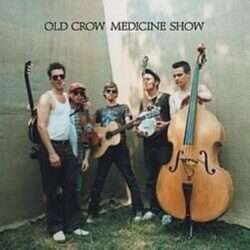 Now, this is more like it. Early OCMS with their breakthrough album filled to the gills with great songs (including the aforementioned Wagon Wheel). To be honest one could have chosen several other albums from their lengthy career, in particular, 2018’s Volunteer, but this one will do. It was the record that introduced me to OCMS so retains a special place in my heart.
It helps that the great David Rawlings assumed production duties, and he does an excellent job in capturing that mix of stunningly accomplished and energetic playing with the sense the band has just staggered in after a hard night on the town. Gillian Welch also features on a couple of tracks on drums. The songs are a mixture of re-arranged traditional, and original, with Secor, Willie Watson and Critter Fuqua (OK, and also Bob Dylan) on song-writing duties. Fuqua takes the lead vocal on Big Time In The Jungle and the haunting Take ’em Away, while Willie Watson does the same on CC Rider, Trials and Troubles and We’re All In This Together. Otherwise, it is Secor out front, singing and fiddling. It means there is plenty of variety in pace and lyrical content, but it is a very cohesive record.
Of course, in addition to the fiddle there are guitar, banjo, harmonica and upright bass, as well as Welch’s drums, creating that irresistible modern/old sounding americana/bluegrass sound. Great live bands sometimes sound a bit flat when they are confined to a sterile studio, and there is no doubt OCMS are best heard live, but this record does an admirable job in conveying the OCMS pizazz. By which I mean a real sense of the joy this band derives from playing together.
The record covers plenty of bases – from cocaine on Tell It To Me to the Vietnam war on Big Time In The Jungle. The album sounds both modern and traditional at the same time with its mix of fast and slow songs that sound as if they could have been performed on a Tennessee porch or in the Grand Ole Opry with equal ease. The harmonies are fine, there is even a (small) touch of yodelling. Hard To Tell is a cracking hoe-down with Secor’s fiddle and urgent vocals to the fore – always a live favourite. The lovely, beautifully sung We’re All In This Together is enhanced by Fuqua’s subtle bottleneck guitar, before the gently anthemic Wagon Wheel rolls the album to a close.
Definitely a keeper, and long may OCMS be out there entertaining the masses.

