
Lavinia Blackwall’s “The Making” is a welcome addition to the canon of Baroque pop.
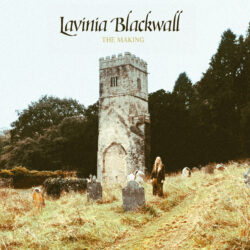 “The Making” is an extremely well-produced album, the result of collaboration between Blackwall and her partner, Marco Rea, with help from Thomas McKay. The orchestration throughout provides a complex but complementary backdrop to Blackwall’s exquisite soprano. There are Baroque overtones but also a variety of other influences, including traditional English folk and music hall ditties. What draws these varying styles together is the lyrics. They address different issues – some personal, others universal – but clearly come from the same source. Just as “Sergeant Pepper’s” reflects different musical styles woven together by collective effort, “The Making” weaves disparate musical threads together on the loom of Blackwall’s words. The juxtaposition of differing styles with an individual experience conveyed in the words is one of the album’s strengths.
This is only Blackwall’s second solo album, but she’s been around for a while. She was the voice of the band Trembling Bells for 10 years. In 2018, Blackwall left the band, and it dissolved shortly after. The song ‘My Hopes are Mine’ are Blackwall’s reflections on the band’s demise, and she is joined by Maggie Reilly of Moonlight Shadow on backing vocals, while Ross McRae and Richard Merchant provide great horn work. It has to be one of the best band break-up songs of all time. There is the fear, “There won’t be a bright future/ For the likes of you/ Your lack of motivation /Will stop you getting through” and hope “We were a band of brothers /And each has gone their way /Our journey still continues /Despite what some may say.”
Most of the songs address issues of personal loss (both Blackwall and Rea lost parents during the making of the album), love, and other challenges. There is mention of meditation, mantras and that modern moment when a “Mystery package arrives/ Well, I guess that I bought the wrong size”. Blackwall works the online shopping confusion into ‘The Will to be Wild’.
‘Scarlet Fever’ is an outlier compared to the other songs. The arrangement is simple, just piano and Laura Martin on recorder. The lyrics were written by Blackwall’s former history teacher, John Plowright; Blackwall set it to music. It is musical re-enactment, a bit like a British Music Hall Society sausage-and-mash sing-along supper, a pleasant walk through an imagined past. ‘Morning to Remember’ also has a music hall feel; you can almost smell the greasepaint and see the flickering gas footlights. But the lyrics are very modern: “Oh what a thought it would be to be/To be on the right path and to finally be someone.”
It is this combination of old musical styles with modern introspective lyrics that makes the album so engaging. Will its appeal endure? Right now, the world is interested in the very personal, but it’s not clear if such a preoccupation will last.


