
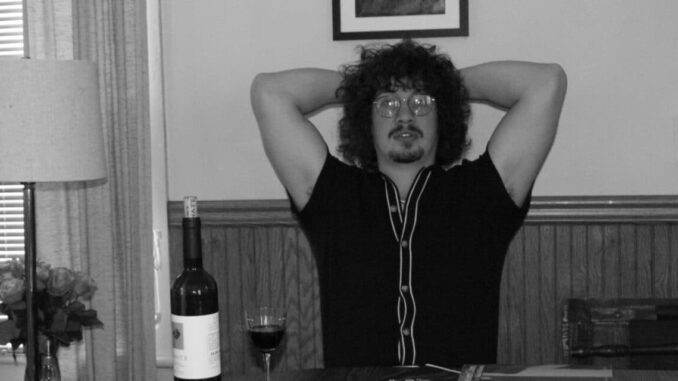
“Are you really real, do you feel the same thing that I do, girl, when I touch you, girl?” ~ Ricky Nelson
According to iconic filmmaker Federico Fellini, “The visionary is the only true realist.” Before we dismiss that declaration as the ravings of a … well, visionary, we should also consider the provocative French author, Georges Bataille, who posited with perspicacity how surrealism tried to escape from reality and its contradictions.
Why bring up these quixotic artists? First of all, because Trevor Sensor titled his 2025 album “A Few Tears of Eros” after Bataille’s “Les Larmes d’Eros,” his final work, which, among other things, explores the connection between eroticism and death. Sensor is also an avid bookworm: “I read a lot of Yukio Mishima and Georges Bataille a few years back when these songs were in gestation. Maybe that’s got something to do with how they came out.”
Following the point of view shared by most theoretical physicists and mystics that purports everything in the universe, large or small, is simply a projection of our consciousness, isn’t it also possible that the digital world and social media occur as a projection that normal human relations can’t express well enough to register valid connections? With that in mind, isn’t it a bit unrealistic to consider what is real and what is not?
What modern romanticists would have us accept as real connection, Bataille probably – and possibly by extension Sensor – would see as the behavioural patterns of a swarm of fruit flies on one bursting peach in an orchard with thousands of varieties of strange fruit stretching beyond every visible horizon. Granted, those fruit flies are pretty damn interesting, but from the standpoint of “reality”, they are hardly the only game in town.
Since the reality of sexual and interpersonal activity has evolved towards a solipsistic, self-centred, isolated way of connecting with others, Sensor sees it as continually stained by myriad hues of objectification. Any poor shut-in doomscrollers who believe they are establishing real relationships may be the unwitting butts of a fiendish cosmic joke.
In a recent interview following the release of “A Few Tears of Eros,” NPR podcast “Into Music” noted: “The material draws from a wide range of musical idioms, while the lyrics delve deep into the subject of love and the nature of it at a time when human connection seems on the decline.”
So, one could make a case that all singer/songwriters are realists who write about the secret lives of made-up characters and situations, whether they call the big city or rural South Dakota their home. Trevor Sensor has chosen the latter.
Americana UK: The cover art for your previous release, “On Account of Exile, Volumes 1 &2,” was stark black lettering on white or the reverse. For the new album, the artwork is abstract. Could you comment on what’s being presented there?
Trevor Sensor: It’s a collage. I had these guys, Recluse Collective, listen to the album. I told them it was a romance record, and we were definitely thinking vermilion red for the color. When you zoom in, there’s a William Blake painting hidden in there, and there’s roses and thorns and religious iconography. They’re all hidden, so it’s not a very clear thing. But after the last album’s artwork, I was glad to have them interpret my music and go in a different direction.
AUK: The title is beautiful, after Les Larmes d’Eros (tears of Eros) from Georges Bataille. You must be interested in his writings.
TS: Definitely. He was a big influence on this record.
AUK: But a writer not without controversy: paedophilia, incest, all sorts of controversial topics.
TS: Bataille was interesting to me because it’s an interesting juxtaposition to today’s world of romance and sexual culture. He goes so out there that would disgust most people, but he was a big advocate, especially in his book on eroticism, about how taboo is the cornerstone of making anything erotic. And if there’s no taboo there, then there’s nothing to push up against. Obviously, he goes to extremes, but you think about today, it’s like his extremes are the only taboos left in terms of sex culture in America. In the time when he wrote all that stuff versus now, it’s a much more sexually liberalized kind of place, but also young people are having less sex than ever on record, and that’s a very dull, kind of sad, depressed landscape. People are very atomized. They’re very far apart from each other and aren’t connecting with each other as much anymore.
AUK: For the new album, you have a lot going on in terms of instrumentation. On ‘When I Had the Gall’ are those synths or strings?
TS: Those are real strings. I play guitar and keys and sing, of course, but there are a bunch of guys on other instruments. It was calling for a big, old-Hollywood-type sound, so I wanted to have us chase that. It’s the closest I’ve gotten to writing the big ballad that moves me; they’re very hard to do the right way. But I had help to arrange all that, and I just laid down the piano and the vocal, and the guys did the rest.
AUK: You can hear Broadway or a Jimmy Webb song in its structure. But then you take a 180-degree turn on ‘Heaven’s A Big Disgrace.’
TS: Basically, I wanted to do a Dwight Yoakam song. I really love his version of ‘I Want You to Want Me.’ I think he puts his kind of quintessential guy out of luck, sadness to it that’s not the same as the Cheap Trick version.
AUK: This falls in line with the Christ imagery and fallen angel references found throughout your music.
TS: Still, we’re talking about a secular piece of art.
AUK: ‘Schmuck for Life’ is a depressing penitence, isn’t it?
TS: That’s white boy funk, sleaze, probably some of that Bataille theme in there of just a very messed up character, somebody who’s not right in the head, but somebody that probably has delusions of grandeur. The problem with those is you run up against reality, and then your mind breaks or you wake up and snap out of it.
AUK: ‘The Farm’ brings back some of your previous work with perhaps a Dylanesque feel.
TS: It’s funny you say that, because we felt it was, in some regards, newer ground.
AUK: Well, maybe I just heard the title and put “Maggie’s” in front of it. Then, there’s your voice, which has a little Dylan in it.
TS: I’m to Dylan as Roberto Bolaño is to Jorge Luis Borges. There’s no point in denying the lineage. It’s not really a wordy song, though it might have a Dylan cadence to it. Maybe people don’t talk about it, that Dylan kind of mildly invented rapping, but he didn’t really invent it. That’s just part of blues culture. With blues and gospel, you think about Baptist churches and how much we’re fitting into music praising the Lord and all that stuff. Sometimes you’re squishing a lot of stuff in there, so you end up creating a new Whitman-esque cadence with a lot going on. In that song, I’m actually very sparing on the words. So, no Maggie, just drudgery.
AUK: You couldn’t overlook how much stuff is going on in ‘This Is A Dark Matter.’
TS: There is a kind of ‘Out on the Weekend’ thing going on. I like that fat, straight Neil Young beat, and then just riffing over it. A lot of characters I’ve known in my life made it into that song. They had a tough time recording that one because they were like, what is the structure to this thing? And I’m like, I don’t know. It’s a stack of verses and a turnaround. I hate songs that stick to a formula. There is a time and place for formula, like ‘The Farm’ probably has more of a classic verse, chorus, interlude thing, but I like songs where you can’t tell what’s really going on, but you’re engaged the whole time. That’s tough to do because people like structure a lot, so you have to trick the listener a little.
AUK: Many songwriters would say it’s because formula works. That’s why it’s formula. Going outside is harder.
TS: It’s tough. The reason a lot of people don’t listen to Ornette Coleman is because they’re scared, or they listen to it and hear just noise.
AUK: ‘Now That I’m Naked’ seems to come from a place of confusion.
TS: I don’t know, maybe insanity. These records sometimes take so long to make that I don’t even remember totally where everything came from. I hear it now, and it just sounds like somebody having a manic episode. A lot of the characters in this record obviously are not happy, distraught about something, and it usually has to do with their sex lives in some way. Sometimes that drives people to do insane things. And it’s kind of interesting how masturbation isn’t enough for people. They have to obtain something. So, I think that probably speaks to what our nature actually needs for nourishment versus just straight pleasure.
AUK: Would you say there has been a natural progression in your music from “Texas Girls and Jesus Christ” to “Andy Warhol’s Dream” through the Exile albums to now? Or were they all snapshots in time? Or both?
TS: Definitely, there’s a progression. I mean, for me, but I also see it as all one big work as well. The songs evolve as I evolve, so I change and the songs change, but there’s obsessions that I don’t think will ever leave me for themes. But I’m not the same guy that wrote this record. Now I’m writing a new record, and I’m who I am today. So, I think the only thing that I’m trying to do is just get better at it, and hopefully that leads to better songs and new ground being broken. I’m always trying to get at something new that excites me, because doing the same thing over and over again is boring for anybody.
AUK: When you say breaking new ground, is there anything specific?
TS: I’ll say that a lot of my music prior to this record was recorded live, and sometimes it doesn’t sound like it because I had really good technical people working with me. But on this record, we legitimately broke it down in a way that people make records now, where everything was done separately for the most part. There are only a couple songs where I’m playing live, and then we build around it. ‘When the War Gets Done’ and ‘Keepin’ By Your Door’ are probably the only two live songs on the whole record.
And that was an interesting experience. It definitely drew out the recording process to an unbearable length for me personally, because I’ve been listening to these songs or picking them apart and trying to make them better for a couple years, I’ll probably attempt something like this again, but not right away. So, I might be going back to some older versions of stuff that I used to do recording-wise, but as an older, better player with a bit more of a sense of what I’m doing. When I went in and made “Andy Warhol’s Dream” with Richard Swift and the Whitney guys, I had no clue what I was doing. I just had the songs, and I let people dictate to me, and now I have a better hold on stuff than I used to.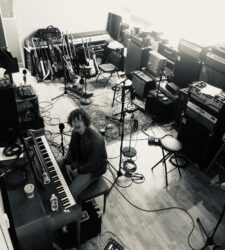
AUK: Would you say then that it was wanting to go through this process and see how that felt?
TS: In a sense? Yeah. There’s a lot of vocals that I wanted to isolate. ‘Now That I’m Naked’ is an example of that, where I wanted to do the vocal take separate; I wanted to get it right, where an older song like ‘Chiron, Galactus,’ that’s just live. Me and the drummer did it live, and then we built around it. That whole performance is raw, and all those vocal takes are just one take. It’s not like we piece crap together like pop artists do, but I think to have the space to be like, here’s the track and just sing over, it allows you to do a couple takes and try different things, then land on a take that’s going to work versus if there’s any blemishes in the take, we just got to roll with it.
AUK: No one would call ‘Thomas Park’ a cheery track.
TS: Oh, I don’t know. That sounds like a weird one. That’s a depressing little number. I like that it’s short. I hadn’t done something short like that in a long time, and I think I achieved it this time, where it actually feels like a full song, versus, okay, why does this song stop at a minute and a half? Really fun. The engineer was a little confused, but then figured out a fun trick to make it work. This is the trick I used to do with GarageBand in my bedroom: just pan both vocals to each side and throw the guitar at the middle. I don’t know why they didn’t think of that, but they were like, whoa, that’s kind of trippy. It goes from mono to stereo within the song. It’s probably something rooted in childhood.
AUK: Why did you choose to play live on ‘When the War Gets Done?’
TS: Well, I love jazz, and I wanted to do a jazz ballad. That’s the most straightforward song in terms of, it’s just about the guy who is in love with somebody, and he makes the wrong choice to try and make the love happen. Like, I don’t have money; I’ll go join the army. Oops! That was a bad idea. A lot of fun to make that song. The only thing that is overdubbed was the trumpet, and the player was kind of a perfectionist, so we had to wrestle with him to lighten up, just because that’s not what the song calls for. We’re playing this in a whiskey bar or something, and you can play a little drunk if you want, just have a little slop in the horn.
I’ve tried to do songs like this before and don’t think I ever succeeded. Finally, with this one, I’m pretty proud of it. Frankly, it’s not really an anti-war song; it’s just people making dumb choices for love. People wreck their lives for love, and it’s always confusing to people outside of that relationship because it’s like, man, if you just don’t do that, then your life would be a lot better off. That wasn’t very smart. I mean, there’s 8 billion people on the planet, can’t you find somebody else? But life’s a little funny that way, where sometimes logic doesn’t come in, and we’re almost driven to do stuff. It’s our destiny in a way. And that guy’s destiny, I guess, is to risk getting killed just for some gal that he really likes, which is silly in my opinion.
AUK: Well, in my experience, guys are prone to doing a lot of stupid, silly stuff for women. You say you love jazz. Who do you listen to?
TS: There are so many: Ornette Coleman, Weather Report, for a couple. The fusion stuff is really fun. I even like the smooth jazz shit that the jazz community really poo-pooed. Grover Washington, Jr. is really good, and obviously Coltrane, Davis, basically, I like almost all of it in some way, unless it’s too straight. So I’m sure some jazz people would get snappy with me about it. But I love saxophone the best. Dexter Gordon is awesome. I don’t listen to guys like Bill Evans much. Anything piano-led, I’m not as into, but you put on a sax or a trumpet, I’m pretty much down.

AUK: ‘Trampin’ seems to be about, well… sex.
TS: It’s the weirdest song on the record to me. Maybe not to other people, but I like using different voices. Definitely a Tom Waits philosophy that I follow, where how you sing any song in the world is by the character within that song. The character in ‘Trampin’ is definitely a finger-pointer, but it’s a song about sex and adultery and swingers and all that.
AUK: Is that something from sourced from Bataille?
TS: You could say that. I’ve been around a lot of rural towns in my life, and it’s kind of funny where there’s always this thing that happens where they have a presentation on the outside and then find out about the Flamingo Club in the town, where people that put up flamingos in their front yards are swingers, and it’s their signal to each other that they’re down with the clown. And those will be the same people that go to church, or there’ll be some sanctimonious politician or businessman who’s screwing his secretary or whatever, or the closeted congressmen. There are always these fun juxtapositions within people where they have a presentation of what they show the world, and then what they’re actually like behind closed doors. But it’s not even fair to say it that way. I mean, they could fully embody both of those identities, but they can’t show their entire selves. People are complicated, and I think we definitely don’t allow for that kind of complexity in our world today. I think a lot of the dialogue surrounding politics, or art, or anything is evidence to that. People like to know what you are, box you in that box, and then interact with you as they see fit and how they’re supposed to interact with X person or Y person, which I think is incredibly boring.
AUK: There it is. The weird identity politics.
TS: Yeah, but it’s more than that. It’s a less controversial version of it. I have a ton of musician friends that don’t get why I watch football, or I love to hang out in sports bars, and I get along with the mechanic down the street. And at the same time, I have people that when I work jobs that don’t understand why I listen to jazz, but I’m usually working blue-collar jobs. I’ve never really wanted to be in a white-collar yuppie environment, and I’ve never understood why people can’t have multiple interests. It’s like, well, you’re a songwriter, so you have the wild hair and stuff, so you should be X, Y, Z, not A, B, C. Yeah, it’s just kind of silly.
AUK: Well, that’s what free will and living in a free society brings. You can like anything you want, or be anything you want to be, or think you are.
TS: That’s kind of the point of that song. I feel like all the songs have to deal with that. I like people who are multifaceted. I don’t like people who are just one thing, and that’s it. For example, hanging out with musician crowds, it’s like I already know what they all think about every hot-button issue. I know a lot of the time what they’re going to say about artists that they like and those they don’t. And that’s why I don’t really hang out in those crowds too much because it’s just boring to me. It’s like we’re going to discuss left-wing politics. Isn’t Father John Misty so witty and smart? And isn’t Trump so bad, and on and on and on. I just find it really boring.
AUK: Politics is definitely a topic worth avoiding with most entertainers. You know what’s coming.
TS: It is. And I think the problem, too, is that given the industry, sometimes a lot of it is performative, where they’re virtue signalling and being like, well, I have to let everybody know that I’m on the good side. And there’s a line in the record that deals with that near the end in a song we haven’t talked about yet. But I don’t like anybody being sanctimonious about anything that they believe, because we don’t really know. You know what I mean? It’s like our dispositions go certain ways to what we would like to see the world be, but to act like we have the answers is just foolish.
AUK: When you were talking about the flamingos on the lawn earlier, I couldn’t help but think of the kiss cam incident at the Coldplay concert.
TS: What’s funny about that goes back to what we were talking about on the aspect of people. I love that there’s a mass shaming, but it’s like you just know there’s a bunch of adulterers that are partaking in the shaming. There are people that are committing adultery right now that will share that video or laugh at that and be like, oh, they’re so stupid. How could anybody do that? But that night they’re going to go see their mistress. It’s a very unfortunate thing for them, and especially the husbands and wives and families of those two people, and I’m glad at least it’s being taken more as humorous than people trying to get self-righteous.
AUK: The strange part about it is how they got caught in the affair. Deception has a way of catching up with you when you least expect it.
TS: Isn’t that interesting how the inflated ego kicks in? He is CEO of a big company; she’s head of HR or marketing. And they think that they are bigger than what they are. They know they’re doing something wrong. But they went to the Coldplay concert, and it’s like, who’s going to see it? If nobody sees it, they continue their affair, and the guy is still the CEO, and she has a job. But they get caught on camera. It was so powerful that they, like Adam and Eve, immediately hid from the eye of God into the bushes off-camera.
AUK: Psychologists would say deep down, they probably wanted to get caught.
TS: Sure. You ask, why can’t people just get divorced if they want to be with somebody else? It’s the taboo. People have affairs. They get off from doing the bad thing. That’s why they do it. And because everybody knows that if you just run from one relationship to the other, never build anything, you basically just get to the point where you’re bored, and then you’re done. And then that whole entire process becomes boring, and you’re sexually dead. Some movie came out recently where it was about a high-powered businesswoman having an affair with a young office guy. It’s hot because she feels desired by some younger man, and her marriage is stale and yada yada yada. But again, without the taboo, people wouldn’t do it. You have to wonder if it’s worth the time and money invested, not to mention the eventual consequences.
AUK: So, in ‘New York Mourning,’ what is the pun about?
TS: New York is my favorite city. I think if you’re going to spend time in a city, go to the one that’s actually doing it quasi-right. Because I grew up by Chicago, and it’s just a pain in the ass to go anywhere in Chicago, to do anything there. It really is. It’s the same thing with Toronto, but Toronto at least was more walkable when I went there. I know there’s trains in Chicago, but the trains suck. And the subway kind of sucks in New York City, too, compared to European train lines, but at least the system makes sense in a way. It’s all a big grid. I like that you can turn a corner in New York City, and you’re in a different cultural landscape. The song is just a setting for this guy-chasing-a-gal thing. It’s really my version of a Steely Dan story. When we were tracking the guitar on that, I wanted it to be like Larry Carlton. We thought, let’s really lean into this. So, it’s a sleazy New York romance story between some guy and some very hip New York gal. He wants to marry her and settle down, and she is not for that. He is going to give all of his money away to do this and is trying to enforce his will upon her, but that’s not going to work. So, he does crazy things like a lot of the characters in my songs. I definitely found some influence from Wes Montgomery with the guitar on that, which is that thumb-type of jazz picking. It’s got that muted sound, and that felt right.
AUK: ‘Take All My Love’ comes off like a bad relationship song.
TS: That’s not really even a romance song. It’s more of a familial type of thing, or even friends not seeing eye to eye. I’ve had that song, probably since 2017 or so, and it kind of fit into the theme of this record. That’s how it usually goes. I have never written a record front to back. It’s always like putting a puzzle together with all these songs I’ve got sitting around. But it’s funny that how that song was written is not how it was recorded. I had a new vision for it. Sometimes we sit with a song you’ve been doing one way, and it’s not working. Well, what if we slowed it down and turned it into something softer? I think it was hearing ‘Third World Man’ by Steely Dan. After that, it worked.
AUK: Would ‘Too Many Years of Drinkin’ and Cryin’ be autobiographical?
TS: That was the last song written for the record, and there’s a lot of stuff going on there. It’s not a ton about me, although I’m in there. I had a penchant for many years of not caring about stuff, and I just wanted to get drunk and read poetry all the time. I still do the latter, but I drink a lot more tea instead. Obviously, drinking is a classic way to self-medicate. It is probably a call to throw off the yoke of that and start living better, or keep on dying. Fortunately, I calmed down. It’s tough on your body, your spiritual state, and tough on your everyday existence. I mean, you really end up doing nothing, just fall into a pit. Even if you’re reading or listening to records, it’s like I haven’t seen people in months because, oh, I can’t go out. I want to have some drinks, and what am I going to do once I can’t drive? So, I guess I’ll hunker down here with a bottle of brandy or a 12-pack and just let my problems wash away. Not a recommended thing to do in my opinion.
AUK: I read an interview with Martin Scorsese where he said he had to work even harder because he is in his 80s and has little time left to get closer to what he wanted to achieve. He understood finally what art was all about. I’m wondering if you have a better understanding of where you and your art are going several albums into your career.
TS: I don’t know if I understand anything more. I’ve learned what not to do. I’m very fortunate that I’ve always known what I wanted to do with music. I don’t have the crisis of meaning that many people suffer from. I make the music whether I’m making money at it or not. I’m very fortunate that even the small amount of people that I have pay attention. Frankly, it’s kind of amazing, but I would still do it no matter what. And then there’s this sense of faith that it’s all going to work out for the best. I’m more aware that I don’t know anything more now than I did back then. That’s the cliché of when you’re young, you get a couple ideas in your head and think you’ve got it figured out, and then you get older, and you get kicked in the teeth.
AUK: If you don’t watch out, you get dragged down into the suffering artist syndrome.
TS: I’ve never suffered from anything like political activism or religious zealotry. My biggest flaw was getting caught up in the beginning when some of my music conflated my ego, and I was in some Rimbaudian vision of being young and delirious. That doesn’t work for very long. You have to find another path. So, I feel akin to Martin Scorsese’s thing, even at my age, because you just don’t know how much time you’ve got or not. I am always trying to keep working and trying to get somewhere, but maybe not as urgently.
AUK: Unless you are in the upper percentile of popular musicians, it must be harder and harder to get your music noticed with the sheer amount of new music coming out.
TS: There’s so much music released every day; we say so many things, and so few of those things mean something. I’ve learned to just take my time better, and I’ve been very graced with failure. I think if I would’ve been successful after “Andy Warhol’s Dream,” the music would’ve gotten worse. I wouldn’t have become a better artist, and maybe I’d be dead, to be frank. We suffer things, and we get upset about it, but maybe through that suffering, we’re being spared a worse suffering.
AUK: It seems like the human condition is to make that grand statement before leaving this world.
TS: I don’t like the artist that become self-satisfied with thinking I’ve done it before. Like Francis Bacon never stopped painting, and even his last painting, of the bowl that’s fading out of existence, is marvelous. I mean, you’re never done until you’re dead. There’s always a new day where you’re given opportunity to try and do something. I know that to stay healthy, you get to a ledge and then you want to point to the next ledge and want to try and get there. You never want to be happy with where you’re at. You do that, and then you’re kind of dead already. You want to keep striving after something.
AUK: There are several artists who, running out of inspiration, either drank themselves to death or took their own lives.
TS: Suicide is never the answer, but there are a lot of people that talk about suicide, and then when they face the barrel of the gun, they can’t do it. And then, ironically, there are a bunch of people who say, I would never do that, but then something snaps, there’s too much of a burden, and they do it. I’ve known three distinct suicides – I won’t mention who they are – and they happened in succession over two years, and so it was kind of a wild time in my adolescence. Three people killed themselves for different reasons, but it was all from too much despair, and none of them had a terminal illness. They were just in a place where they couldn’t get out.
AUK: This is becoming a little dark. On a happier note, the final track on Eros, ‘Keepin’ by Your Door.’
TS: My big love song, the tear-jerker one, I guess, for people that have heard it, they get a little teary-eyed. That’s just about needing to accept love. It’s like you’re standing guard or looking for the door, what’s going on there? Do you need to accept the love you’ve been given? Or it’s a call not to be hard-hearted, me looking at myself not to be. So, if my character is anywhere, it’s at the beginning, and the end of the record and everything in between is different people.
AUK: For people listening to the album, what would you imagine they would take away from it?
TS: That’s always tough. I said once that I wanted listeners to be exalted, which is tying an easy, all-encompassing bow. You want people to enjoy listening to your stuff. It’s like a Rorschach painting. I mean, how you relate to these things is going to be down to you. I can’t really be there to hold your hand. I kind of give puzzle pieces of ideas. We talked about Bataille, but there’s not really philosophy in this record. There’s no philosophy in any of my records. I just read that stuff, and it permeates my writing.
If people were really going to dig into the lyrics and want to parcel out meanings, I would think that people should be able to relate to how we’re a very sexually dead people now in comparison to times past. I think a lot of unnatural things have deadened us to each other. Too much naval gazing, too much SSRIs, too much pornography, too much consumption on the Internet, and too much staying in our own homes versus going out. You go down into all these small towns, for example, or even cities, and see how the streets are so empty sometimes of people not being out with each other doing things. They’re inside watching a TV show, scrolling on their phone or masturbating instead. Or drinking themselves to oblivion.
AUK: Yours are not really the drinking songs type.
TS: It’s not a lecture. I think everything has to be about songs, about suggesting things to listeners, and the listeners taking it and running with what’s relevant to their own lives. So, there’s no thesis going on here. It’s just a theme that I was putting together from all these different characters into songs.
AUK: Well, I think you hit upon it right at the first when you said enjoyment. That’s basically it. Listeners want to enjoy listening to the record. The lyrics should be partners with the music.
TS: It’s like when I listen to jazz, I don’t know music theory, so people could tell me all this different stuff that they’re doing, and I only care if I like it. I don’t care what era of Miles Davis I’m technically listening to when I play “Bitches Brew.” That’s what I’m in the mood for. That’s supposed to be fun. I feel like so much music talks down to its listeners now, and I don’t like to be a part of that. I like to think that everybody has the potential within them to really enjoy some stuff that’s a little bit more complex than what they’re used to listening to, or something that’s not so obvious. It’s like our whole world is full of strip tease karaoke now, and songs that are so just blunt about what they are, that it’s really boring. I think mystery, and obscurity, and suggestion are just so much more interesting.