
A timely and heartfelt tribute to the late, lamented Blaze Foley reminds us of the ongoing quality and influence of a great songwriter.
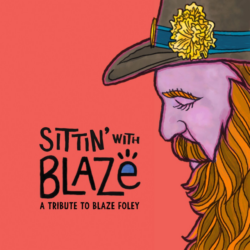 What is the ‘various artists’ tribute album for? Most obviously, it provides an opportunity to pay homage to an esteemed songwriter. However, from a record company’s point of view it also extends the reach of possible listeners and sales. If, for example, Lucinda Williams is one of the contributors (and, let’s face it, she seems to be featured on most americana tribute albums), then you may attract her fans as well as those of the artist to whom tribute is being paid. From the point of view of the artists asked to put their spin on one of the songs, it must be flattering to be asked, as well as being an interesting challenge. Meanwhile, the casual, but intrigued, listener may be prepared to take a chance on the variety afforded by the range of musicians taking on the songs of someone they have heard of, when they would not splash out on a whole album by the artist being honoured.
And listening habits have, of course, changed. The Times newspaper has asked whether the album is dying in an age in which the Spotify generation listen to songs, not complete records. Buying an album may soon be as quaint and outdated as renting your television from Rumbelows (unless the vinyl revival saves the format). Attention spans are, distressingly, getting shorter and shorter. A tribute album allows the modern listener (not AUK readers, it goes without saying!) to pluck out the songs they like and ignore the rest.
Sometimes, a song on a tribute album can dramatically change one’s perceptions about an artist. A prime example was the revelatory version of You’re Gonna Make Me Lonesome When You Go which Miley Cyrus contributed to the Chimes of Freedom: Songs of Bob Dylan Honoring 50 Years of Amnesty International. The sooner she is dragooned into making an americana album, the better; Dolly Parton’s god-daughter clearly has a lot more to offer than twerking and outraging Mail Online readers.
Enough preamble. The fundamental requirement for a tribute album is the quality of the songs it contains. And in Blaze Foley, the source material is of the highest quality. Foley (born in Arkansas in 1949 and originally named, more prosaically, Michael David Fuller) is one of the great lost titans of the Austin music scene of the 1970s and 1980s. His life story was not a happy one, from contracting polio as a child, leaving him with a permanent limp, through the inevitable drinking years, to being shot dead at 39 by the son of a friend whom he had accused of stealing his father’s veteran pension and welfare checks. However, along the way he left a fairly slender catalogue of wonderful songs, many with the same wistful, but worldly-wise, mood of melancholy and underlying sense of surviving in a confusing world, of his good friend Townes Van Zandt (perhaps not the best company for a drinker, but definitely a plus for a songwriter).
This is not the first tribute record to Foley, but another one is a welcome addition. The tracks are all taken from early Foley recordings from the period (in classic americana fashion) when he lived remotely in a hand-built tree house in the woods of west Georgia, which were originally released by Lost Art Records as Sittin’ by the Road in 2010. Their resurrection in this format is to be applauded.
It is topped and tailed with two very different versions of his best-known song, If I Could Only Fly by Phosphorescent and (surprise, surprise) Lucinda Williams. Incidentally, Merle Haggard’s take on the song on the 2000 album which bears its name is essential. Phosphorescent has always had a knack of putting across the vulnerability and ache in a song, and he duly steps up to the plate here.
Big Cheeseburger and Fries by Willie Watson follows, and is a highlight; he is, of course, a master interpreter. Accompanied by his distinctive acoustic guitar, he tells Foley’s tale of who he is and the life he likes to live: “I like to drink beer hang out in bars/Don’t like buses/Don’t like cars/Don’t like presidents/Don’t like stars.” Lucy Dacus, with her clear voice and her own acoustic guitar backing, then takes on the restless Clay Pigeons: “I like to stay, but I may have to go/Start over again/Might go back to Texas” before Cactus Lee, with David Amran, and what sounds like a tin whistle, gives us the idler’s anthem, Sittin’ By The Road. Next up is Slow Boat To China with Dylan Earl backed by a dusty, but funky, electric guitar, drawls a fine version of: “A long hot lonely night in Texas“, musing about a woman back in Georgia: “The prettiest woman I ever did see“.
Uncle Lucius gradually ups the tempo on one of Foley’s finest songs, Election Day. This builds to a full-band finale, a distinct contrast to the gentle acoustic original on The Dawg Years album, on which the gurgles of Foley’s baby can be heard as he recorded it in his living room.
Riley Downing brings out the full gospel vibe to Let Me Ride In Your Big Cadillac with his deep, deep voice: “Lead me to the promised land“. Another Foley classic, Cold, Cold World, is then included by Joshua Ray Walker, a moving acoustic version of what could be a Woody Guthrie Dust Bowl ballad. Twain (Mat Davidson, not Shania) is next up on The Way You Smile in which a lady is buttonholed to listen to Foley’s story (presumably in a bar) before “I will be going home to her”.
Angela Autumn brings to mind Patty Griffin as she sings pensively of Rainbows and Ridges: “Someone gets started, and someone resigns”. The excellent John R. Miller then takes over for the rolling Fat Boy as he makes Foley’s tale of tentative change from being one of life’s losers his own. This almost qualifies as an optimistic Foley track! Another americana heavyweight, John Moreland, then sings Faded Love, in company with Lydia Loveless, which sounds like another lost country classic. Finally, Lucinda Williams rounds things off, conveying the sadness of If I Could Only Fly with her inimitable soulful vocals, and beautiful acoustic backing: “Sometimes I write happy songs/Then some little thing goes wrong.”
Despite the mix of musicians, it all adds up to an unusually organic album, which is not just a fitting acclamation of a largely overlooked talent, but actually hangs together as a record in its own right. What comes through is the full engagement of the artists with Foley’s songs, and how good those songs are. Some tribute albums feel like rather uneven box-ticking exercises, but this is one which will be plucked off the shelf with regularity, if people keep records on shelves any more.

