
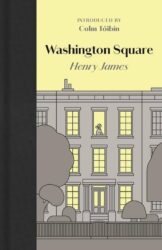
 Henry James’s Washington Square has been described as “one of the most psychologically acute novels in nineteenth-century American literature.” Published in 1880, during James’s middle period, it lacks the complexity of his later works but has a clarity that makes the cruelties of the plot even more cutting.
James tells the story of Catherine Sloper, a wealthy but gauche young woman caught between her caustic, brilliant father and Morris Townsend, the charming suitor whose interest in her fortune is transparent to everyone except Catherine herself. What makes Washington Square essential to American literature is James’s examination of money, power and gender in American society at the end of the nineteenth century. Dr Sloper’s psychological manipulation of his daughter, his certainty in his own superior judgement, and his willingness to sacrifice her happiness to prove himself right, create an alarming portrait of paternal authority.
Washington Square matters because James captures something basic about American class dynamics that differs from European ones. This is not aristocratic privilege but commercial wealth, professional authority and that peculiarly American assumption that intelligence justifies dominance. Catherine’s tragedy unfolds not in drawing rooms thick with centuries of tradition but in the relative newness of New York society, where money talks and where a father’s contempt for his daughter’s ordinariness can shape her entire life.
James’ prose here is “restrained, almost cruel in its precision“. When Dr Sloper observes that Catherine “is about as intelligent as the bundle of shawls,” the reader feels his dismissiveness. The novel’s power lies in how James declines to be melodramatic whilst delivering emotional devastation. Catherine’s final rejection of Morris, years later, when he returns seeking another chance, is one of the most satisfying moments in American fiction, exactly because it is so quiet and dignified.
We were sent the new Manderley Press Edition, which costs £19.99. Why would you want to spend £20 on this rather than downloading a free Project Gutenberg file or buying a cheaper Penguin Classics paperback? That’s about what book lovers might call “the complete reading experience.”
Manderley Press specialises in highly designed editions which treat books as tactile objects. The font and type size make for ease of reading, reducing eye strain and making the visual experience a positive one. The cloth and board bindings are another element that sets this edition apart from a basic paperback.
Reading Washington Square on a screen is certainly possible, and Project Gutenberg offers a great service by making out-of-copyright texts freely available. However, that experience differs from holding a well-made book. The physical book keeps you in 1840s New York in a way which a tablet or phone never will. The real book experience is about being connected to the words, which, for me at least, an eBook just doesn’t do as well.
Penguin Classics, or their like, are excellent and affordable, but they’re designed for economy rather than reading pleasure. After a couple of hundred pages, the difference between a cheaply produced paperback and something better can be found in your hands, your eyes and your sustained attention to the text.
Books are objects which reflect the reader’s relationship with the writing. They show that Washington Square matters enough to own in a form that will last decades, and which sits on a shelf as both a reminder and a recommendation. Small independent presses like Manderley survive on readers who value craftsmanship and understand that books are not just information-delivery systems but physical objects which shape how we read, and remember the stories which speak to us.
For a novel as “psychologically penetrating” as Washington Square, an edition which invites slow, attentive reading seems particularly appropriate. Catherine Sloper’s story deserves to be read with care, without distraction. As one of the aforementioned book lovers, I love the tactile nature of the Manderley Press edition, and, as a newcomer to Henry James, I also found the introduction from Irish writer Colm Tóibín interesting and useful.



A book such as this one is a thing of beauty. Although I own a kindle I mich prefer a physical copy of a book. Mrs S is enjoying the read