
How the worst kind of family tragedy can lead to a career high
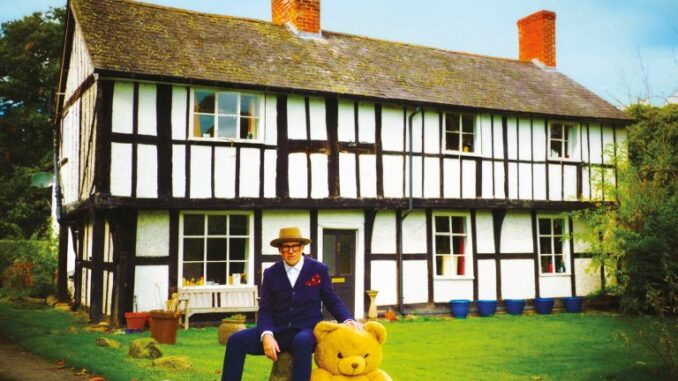
British americana stalwart and music award winner Michael Weston King is releasing a new solo album, Nothing Can Hurt Me Anymore. On the face of it, this is surprising as his main act is My Darling Clementine, which he formed with his wife, Lou Dalgleish, and this would normally have been the vehicle for a new release. However, normality for Michael Weston King and his family ceased on 29th July, 2024, when his granddaughter Bebe became one of the three child victims murdered in the Southport Stabbings. American UK’s Martin Johnson caught up with Michael Weston King over Zoom during his tour of Italy with My Darling Clementine to discuss Nothing Can Hurt Me Anymore, and how it was influenced by what happened in Southport. What quickly becomes clear is that as a songwriter, he had no choice but to respond to those terrible events in songs like the title track, The Golden Hour, and La Bamba In The Rain. He also shares that some of the songs had been written by 2024, and this, together with the recordings being split between the usual suspects in Sheffield and Clovis Phillips’ facility in mid-Wales, helps explain why Nothing Can Hurt Me Anymore is probably Michael’s most diverse album. Michael explains why he and Lou decided to deal with their grief separately through their individual songwriting and recording. While the family tragedy has weighed heavily, he shares that ultimately it has made him stronger and more resilient, something reflected in what is probably the strongest album of his career.
Your family experienced the worst tragedy imaginable when your granddaughter, Bebe, was murdered in the Southport stabbings in 2024. How much has your songwriting helped in dealing with the aftermath of the horror?
Oh, well, it’s helped me a lot, Martin, really has. It’s been, I mean, it’s a bit of a cliche now, the whole cathartic thing, but it really has been cathartic. It’s been, very helpful to express my pain and my feelings, not just about the actual event and how it’s affecting me personally, but all the other things that went on around, you know, the actual day, and the wider reach, all the riots and all that stuff relating to the rise of the right, and all those kind of things came out in the songs, really. But personally, I found it very helpful, and I’m grateful songwriting is my medium because it’s allowed me to get out all these feelings that have built up since the summer of 2024.
The album title is very stark, “Nothing Can Hurt Me Anymore”, and could hint at some inner strength or an emotional numbness.
Well, not emotional numbness, and I mean, nothing. The reason for the title wasn’t because of being numb. It was more of being like, well, we’ve been through something that is about as bad as it gets, so really, nothing can hurt me anymore. It just kind of puts things in perspective. It’s kind of a way of saying that all the things that you would get anxious or angry or wound up about really are irrelevant compared to this huge loss that we’ve had. So, yeah, it was more of a perspective thing. After this, I mean, we all have terrible things to go through in life, and hopefully, nobody has to go through what we’ve been through on losing a family member so young, but there will be sad times to come. What I’m saying is that after this, it’s never going to get as bad as this, so really nothing else can hurt me as badly as that has hurt me.
So, by the sound of it, Michael, you’ve taken personal strength from what you’ve been through, in a way.
Absolutely, I would say I have. My outlook on life has changed. I was always kind of laissez-faire anyway, but my attitude was always very driven, and, you know, now things don’t matter so much anymore. Live life, do what you can to be decent, achieve what you want to achieve, or try to do what you want to do, but it really puts things in perspective, something like this. So, strangely, as much as I would give anything, as would the family, to have Bebe back with us, something as shocking as this has changed my approach to life. I would even say, for me personally, almost for the better.
You and your wife, Lou Dalgleish, could have used My Darling Clementine to help you deal with the aftermath, but you have tapped into separate creative processes and solo albums to deal with the tragedy. What has that meant to you both?
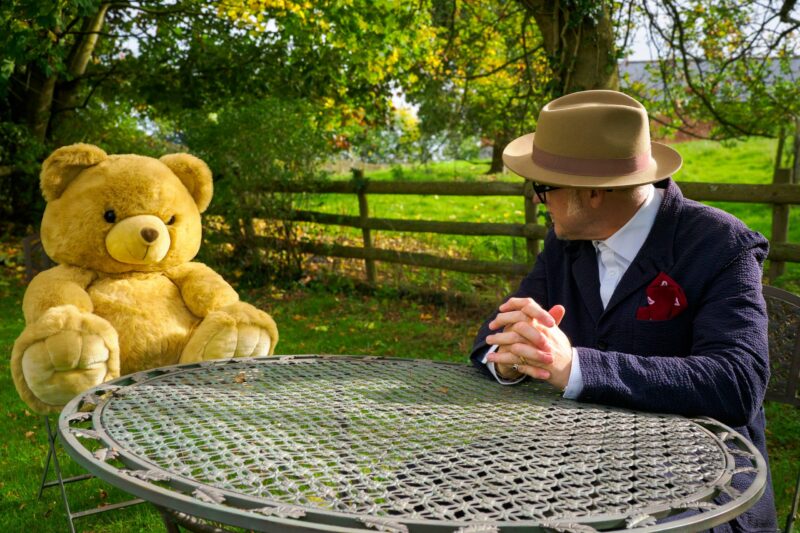
I think I’ve made just from a purely artistic and creative point of view, one of the strongest records I’ve ever made, whether it be solo, or with Lou, or going back to my former band days. Working with a partner, and that partner being your wife, has its own challenges, and it also involves a certain amount of compromise, and I didn’t want to compromise in any way with regard to this record. This record had to be exactly how I was feeling and exactly how I wanted to express it. Not just the songs about Bebe, but also where I was kind of at in my early 60s, and my view of life and everything. I didn’t really want to share that with anybody, or as I say, compromise that vision with anybody. I think it’s worked. It’s worked out well for me personally, and I know it will for Lou as well. I’ve heard the new songs that she’s written for her album, and they’re incredibly strong, incredibly powerful, and they are all written by her own hands without me interfering. Sometimes you just need that simple clarity of thought, and not have anybody else’s input, for better or worse, really. But I do think it has been for the better, for sure.
I’ve heard the album, I’ve spoken to people who’ve listened to the album, and the consensus is that it is your best album.
That’s nice, thanks.
The new album seems to exist above genres. Was this because the spirit of the songs is the most important thing? Is that how you saw it?
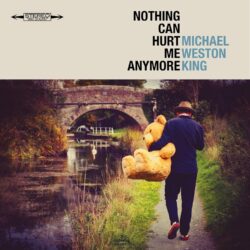 Well, maybe that’s because it is very varied, and maybe that’s kind of what adds to its strength. Certainly, with my last album, I set out to make an album with specific instruments, this is how I want it to sound, and we put every song into the same process. Whereas this has been very different. I think that was because two or three of the songs had already begun life, and we’re going to be on the new My Darling Clementine record. There were songs that I rediscovered, two or three, and they certainly weren’t about what happened in Southport, just older songs. When I Grow Old is one, and Mother’s Pride, I wrote that after the loss of my mum, and that’s getting on for 20 years now. Songs that I just seemed to feel were appropriate for this album. Certain songs wouldn’t have fitted onto a My Darling Clementine record. So, yeah, there are little bits of me from the last 20 years, and the different influences of other artists are there, which has made for quite a mixed record. Plus, three of the songs were recorded with a full band in Sheffield, and the others were recorded with Clovis Phillips, who I work a lot with in Mid Wales, where I live now. Even though Colin Elliott mixed the whole thing, it’s not like we’ve used the same lineup for every track. So, again, I think that adds to the variety. Having Erin Moran, AKA A Girl Called Eddie, sing on one track is another voice added to it. So, yeah, I’m very pleased about the variety on the album, and, hopefully, that’s what adds to it and makes it a more varied listen for people, as opposed to maybe my last solo record.
There is quite a musical community in mid-Wales, and you worked with Clovis Phillips on part of the album. Did the rural environment of mid-Wales help with the grieving process?
Well, just being there helped, to be honest. We’ve been living there for about two and a half years now. I moved just because I love the area, but there are a few friends there, and I’ve got more friends there now, and a lot of creatives down there, a lot of musicians, a lot of artists. Over the years, a lot of people have headed for the hills for creative respite, and I’m just another of that list, I guess, but the peace and tranquillity of where we live now has been a great help concerning what happened. It has been something of a bolt hole. So, yeah. We were living in the city, Manchester, before we moved to Mid Wales, and before that, in the middle of Birmingham. We’ve always been city people, or I have since I left Southport, and the timing was good with regards to what happened that we ended up where we have in this lovely, rural environment. It’s been good for the heart and the soul, both, spiritually and creatively as well.
Clovis Phillips seems to be building quite a name for himself these days.
I got to know Clovis through my old friend Jeb Loy Nicols. Jeb lives in the area, and he’s worked quite a lot with Clovis. I mean, he’s an amazing talent, multi-instrumentalist, as well as a, you know, a fine recording engineer, and hopefully through his work with Jeb, and now my records, and other people he’s working with, more people will find their way to his door. He certainly deserves the work. He’s a lovely guy, as well as being a great talent. So, yeah, I’m very fortunate to have him on my doorstep. Another plus, another thumbs up for the area.
‘La Bamba In The Rain’ has a great video that features scenes in Southport. What did making that feel like?
Well, to be fair, I didn’t make the video, it was my son-in-law, who does live in Southport, but I do go back a lot because the family are there. I’ll be honest, I mean, I don’t have a huge affection for the place. I grew up there, but spent most of my formative years either in Liverpool or Manchester. It was always something of a cultural desert for me, apart from the occasion when Mud or Sweet came to the Floral Hall. There wasn’t a great art scene, really. I remember back in the 80s, going to watch people like Richard Thompson or Loudon Wainwright play what is now The Atkinson, it was the Southport Arts Centre back then. There’d be about 30 people in the audience for these great artists. So yeah, I have a mixed view of the town, and maybe that mixed view is personified in the video for La Bamba in the Rain. It always had, for me, that kind of Martin Parr thing about it. I just asked Alex to make a video in the style of Martin Parr. He also went over to New Brighton, which, of course, is where Martin did some of those iconic photos, and that went into the video as well. So I think he certainly achieved the remit that I gave him. When I started writing that song, it wasn’t about Southport, I was in Aldeburgh, in Suffolk. One would argue a kind of quainter, prettier seaside town than Southport, and my first verse was actually about there, but then I ended up writing the rest about Southport, and the pier that’s always closed, and Rossi’s ice cream, and all that kind of thing It just seemed to be an appropriate subject, obviously, after the events, and, also a sort of a slightly wearied, jaundiced, view by a former resident.
On ‘The Golden Hour’, you tackle the demonstrations that immediately followed the Southport tragedy. How hard were the violence and far-right politics on display to deal with?
I was absolutely appalled, not just about what happened in Southport or around the country, but it was just so symptomatic of Reform and people who support Reform that they would jump on a bandwagon to make a gain out of something without any thought for the pain that the families were going through. I was completely disgusted, and obviously, that’s reflected a little bit in that. It’s also tied into all this sort of flag-waving nonsense and everything that’s going on, so that’s referred to in that song. There are a couple of lines in there about people taking to the streets and everything. I was so angry with the situation because the police, who had been so stunned themselves by what had happened, and the suffering they were going through, and the shock. Then the next day, they were having to be on the streets, trying to deal with these lunatics. It was just a completely abhorrent situation. Again, it was hard for me not to put it into song in some way, especially as, unfortunately, the rise of the Right, or certainly the coverage of the Right, seems to be continuing at a great pace, and hopefully that will come to an end sooner rather than later.
We can only hope.
Yeah.
The songs on the album are not all dark, ‘Grow Old With Me’, which you mentioned earlier, is a simple love song.
I’ve had that song knocking around for a long time. It was written after we’d started My Darling Clementine, and there always was a thought that one day that might have made it onto the Clementine album. In the end, there were two or three songs which were just written about the contentment of a bit of a new life. I mean, it’s an old cliche, the artists getting it together in the country and all that nonsense, but there was a bit of that for us. We’ve found a new place, we’re happy here, and so that song is purely a straight-ahead love song. It is basically me saying how much I love living here. Lou had rather more reservations about living amongst the sheep and being half a mile up a dirt track with nobody else being around. So, that was me trying to reassure her in that song that it’s going to be alright. Likewise, the song, A Field of Our Own, they’re just songs about a newfound contentment, to some extent, in where we were living. And looking out your window and seeing something different than we’ve looked at for the last 25 years.
Have you changed as a songwriter?
Not really, I don’t think so. I mean, I’m such a musicologist, I’ve listened to so much, and I think on this record, there’s lots of different song styles or song influences. You could probably list them yourself. There’s a song that’s a bit Townes Van Zandt, there’s a song that’s a bit Springsteenish, there’s a song that’s a bit Squeeze, Costello, power pop, there’s a mixture, you know. What happened hasn’t changed my way of writing songs, though, obviously, the topic of some of those songs became focused on this. I’ve written a few more songs since this album, none of which are about what happened. Hopefully, I’ve kind of cleansed that, and I don’t, obviously, want to spend the rest of my life writing about that. This was the record for that, and now I’m just sort of back to writing about whatever I feel like writing about. I have my own style of writing, and I don’t think I will be making an R&B album, or an Acid House album, or anything like that.
That would be interesting.
You never know, maybe I should.
You’re touring with My Darling Clementine. How will you feature songs from “Nothing Can Hurt Me Anymore”?
We changed the show this year a little bit. We basically do two sets, we do an hour of My Darling Clementine’s songs, and then we do a set, which is like an old-fashioned kind of in-the-round, where Lou and I play individual songs, we swap backwards and forwards playing songs from our new records, some other solo things, and then we end with two or three Clementine songs to finish. So it’s like a mixture of a solo show and a My Darling Clementine show. And as the year progresses, and when Lou’s record comes out, there will be a time when, for a short period, we just do the new songs. We are still touring together, but there’ll be, like, solo shows, in a sense. And there will be shows later in the year with the musicians that I’ve used on the album. Lou’s gonna be making her record with the same guys who we worked with before, Colin, Shez, Dean, Richard, all these guys up in Sheffield. So, there’ll be shows together later in the year as well, to showcase these new solo albums.
How’s the tour going down in Italy at the moment?
Great, yeah, it’s great, I mean, we didn’t want to suddenly start going out solo. The Clementine name, I’ll be honest, sells more tickets than either of us individually, so it’s what we’ve been doing. We want to be on the road together as opposed to individually, but of course, we do take time to talk about what happened, share the new songs. Back home, most people know that situation anyway, as do proper hardcore fans, but people we’re playing to for the first time don’t, so we need to explain the songs, and why we’ve written them, and why we’re performing them. But, you know, it’s a tough part of the show for people to listen to, but at the same time, I think it’s the most satisfying and rewarding for them, because it’s quite a thing to be sharing with people on stage. We thought that was better than just ignoring it and doing our regular show and pretending it never happened. That’s not really our style, so we’re just embracing it, and it helps us every night when we play these songs, even though, at times, it’s a tough thing to do.
Finally, do you want to say anything to our readers?
It’s about this record, really. So I think we’ve touched on most of that. April 3rd is when the album comes out. Lou’s will be coming out probably, towards the end of summer. Over the next 12 months, both of us will be touring to spread the word about these records, both of which we’re very proud of, and obviously, which are very personal. I think there’s a good value to these records, and I hope people get out and hear them, because there’s a lot to be said about a lot of things, not just my own personal grief. There’s a lot in there, I think, on this record, musically and lyrically, for people to get their teeth into. I’ll say that the groundswell so far does feel that there is a lot of positivity for the record. I think we’ve got some good reviews in Uncut & Mojo coming up very soon as well. So, we’ll see once it’s out there, you’ve just got to hope it reaches as many people as possible. You try to do your best when you make a record, and I think I’ve made a good one this time, so hopefully, it’ll reach plenty of people’s ears and hearts.
It certainly deserves to.
Michael Weston King’s “Nothing Can Hurt Me Anymore” is released on 3rd April on Continental Record Services.
Michael Weston King and My Darling Clementine tour dates can be found here.


