
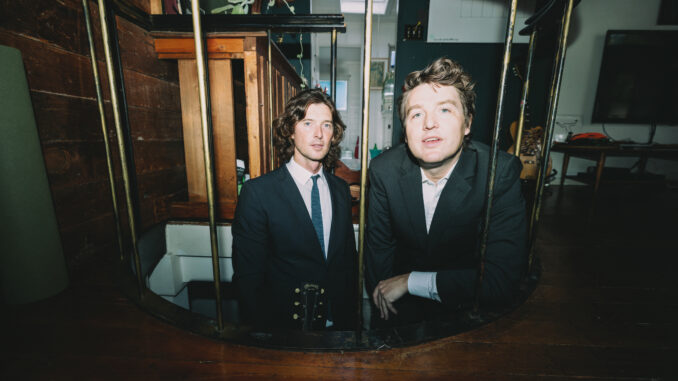
Joey Ryan and Kenneth Pattengale created their own take on sparse, acoustic indie folk when they formed the Milk Carton Kids in 2011 and found their own loyal audience. A lot can happen in fifteen years, and bands with a well-defined sound face the challenge of keeping their sound fresh while remaining true to what drew their audience in the first place. While their new album, Lost Cause Lover Fool, fits perfectly within their catalogue, it features subtle enhancements to their trademark sound. Americana UK’s Martin Johnson caught up with Joey Ryan at home in Los Angeles just after the completion of his family’s school run to discuss the new album and to see how the Milk Carton Kids are approaching their now long-term career. Joey explains why he thinks Lost Cause Lover Fool is their first album, where he and Kenneth feel they know themselves well enough not to feel the constraint of their original musical palette. Before fans hold their hands up in horror, he also confirms that the changes are subtle and are the culmination of changes over the last few albums, and that, whatever else is happening, the Milk Carton Kids don’t move fast. The band have a reputation for playing sad songs, and Joey shares his view that he doesn’t believe there are any sad songs because all songs are an act of hope. Whatever challenges there are in the brother-like relationship between Joey and Kenneth, Joey is quick to point out that musically, they are as one. Finally, he cites London as the best city in the world for Milk Carton Kids’ fans and how the Barbican Centre brings out the best in the band.
If you pardon the pun, you are no longer the new kids on the block. You’ve worked with Kenneth Pattengale for 15 years, and your new album, “Lost Cause Lover Fool”, is produced by him. How have the years changed the dynamics of the band?
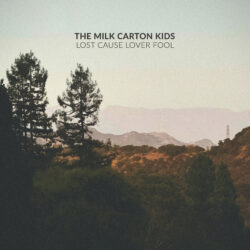 I feel like maybe this is the first album where we really feel like we’re not a new band. I know that that’s been true for a while, but it hasn’t felt that way. I think this is the first one where we really feel comfortable in our own skin. I think the way that translated onto the album is when we started, we really identified strongly with this constraint that we put on ourselves, that we were only going to use our two guitars and two voices, and see how much we could make of it with just those four tools. For a long time, we really clung to that, and felt defined by that, and honestly, it was very creatively liberating to know that was what our sound was. That was what our toolbox was, and we were going to do what we could with that limited palette. And I think, as you may know, for a couple of albums, the last one or two, we were experimenting a little with playing with other people, and using other instruments, and I think maybe this is the first album where we feel we know ourselves well enough that we can sound like ourselves without that constraint, I guess.
The new album maintains the intimacy of your earlier work but adds a little more texture.
Yeah. I hope so. Not too much. The world moves so fast, and we don’t; we definitely want to make sure and slow things down.
The world is very chaotic at the moment. Can the Milk Carton Kids’ music help calm it down?
I hope so. I mean, that’s what it does for us to make it, that’s what songwriting does for us, and that’s what making records does for us, and that’s what listening to music does for us. When we contribute to that sort of community, that’s definitely what we’re hoping, too. What we’re hoping to put into it is something that can make time feel like it stands still for a moment, you know, which is a hard thing to find. Create moments that feel like they last, that you can hang on to, that can linger, maybe feel like forever.
Lead song ‘A Friend Like You’ is about adult love. How do you manage to wrap adult and darker themes in such pleasant music?
Yeah, I think that the act of turning pain into art is the most inherently hopeful and human thing that we all do. I really enjoy the bit of irony in how much we’ve built our careers and even our brand and our jokes on the idea that we play sad songs, because in my heart, I actually believe that there are no sad songs. Every song is an act of hope. There’s also a mandolin. Nothing has more texture than a mandolin.
The banjo can be a marmite instrument to many. Why did you use it on ‘Blue Water’?
I fell in love with old-time banjo playing about almost 10 years ago now, when we were on tour with Sarah Jarosz. She and her sound engineer, who was the sound engineer for that tour, named Mark Richards, are both wonderful banjo players, and they taught me on that tour, just sitting in the back lounge of the bus. I fell in love with how hypnotic it can be to play clawhammer-style banjo in these old songs from North Carolina and Virginia, and elsewhere. There’ll be, like, 16 words in the whole song, but they contain centuries of pain and wisdom in there. And so I just fell in love with that. It took me about 7 or 8 years to get comfortable enough on the instrument where I felt like I could play it on stage. So for our last album, finally, I started writing songs on the banjo. When you write on a different instrument from your main instrument, it brings out different sides of you as a songwriter. I think that’s a pretty common experience, and so, I just love to play the banjo. I look for every chance I get. When Kenneth brings in one of his songs, I’m trying to think if I can turn it into a banjo song or play my accompaniment part on the banjo. We’re playing a show tomorrow in LA, just a little invite show to celebrate the record release, and we’re playing all 9 songs from the record, and I think on 5 of them, I’m playing the banjo. That’s the majority. That was my goal.
What other banjo players do you listen to, or do you just practice yourself?
I do, I do. So, we’ve always been kind of painted as a bluegrass kind of band because of the way that Kenneth plays guitar in a kind of flat-picking sort of way. But I’m really more attracted to clawhammer, old-time style banjo, rather than the bluegrass kind. I like Ola Belle Reed, and I like Tommy Jarrell, and I like listening to current contemporaries like Bruce Molsky, and I like to listen to Tim O’Brien. And then, still to this day, Sarah Jarosz, who taught me the banjo, is one of my favourite banjo players. She’s younger than me by a good amount. So, it’s not just for us old guys, you know, it’s for the kids. Banjos are for the kids.
That’s a nice idea.
Oh, there’s a really wonderful banjo player named Carling Berkhout. I think she’s from, like, Vermont or something, and she plays a real sad banjo. I love it, I love sad, slow banjo. That’s kind of what I’m drawn to.
You have two covers on the album: ‘Sad Song’ by Willie Watson and Morgan Nagler, and ‘Ribbon’ by Maya Elizabeth de Vitry. Why did you think these songs fit with the album?
Well, I picked those two for different reasons, honestly. Sad Song is a Willie Watson song that he wrote with Morgan Nagler, I believe, and it’s on his most recent album that Kenneth actually produced. The songs that we write are usually mid-tempo at best, mid-tempo to down-tempo, and we’ve usually tried to have a couple of songs with some pace to them on the album, and we just, over the years, have felt less and less connected to those songs as songwriters. So this time it was Kenneth’s idea to say, like, hey, if we’re gonna have a fast song on there, we don’t need to write it. He was like, let’s just do one of our friends’ songs, and Willie’s got this great song, which has a little bit of tempo to it. I also love the idea that it’s just called Sad Song, so the only, like, kind of fun-sounding song on the record is actually the saddest one. The other one, Ribbon, that’s just a song that our friend Maya Elizabeth de Vitry wrote, and is maybe on her most recent album, or one or two albums ago. That’s just a song that kind of broke our hearts when we heard it, and really felt like we could wrap ourselves around it and make it sound like one of ours. You know, just the idea that it’s one that we wish we wrote. She’s a wonderful, wonderful songwriter, but that’s not a song that’s made it into the mainstream, even in our community. So, hopefully, she’ll get some recognition for what a wonderful songwriter she is if people hear that.
The musical telepathy between you and Kenneth Pattengale seems to be the strongest it has ever been. How do you manage your musical differences?
Well, you’ve asked the question in a particular way that allows me to dodge it, I think, because the one thing that we don’t really have problems with each other about is the music. The musical decisions have always come, basically, easily. We have very, very compatible taste 95% of the time. If one of us likes something, the other one’s gonna like it too, and so, of all the sort of brotherly arguments and disagreements and fights and horrible blowouts that we’ve had over 15 years, none of them has been about what we should do musically with this song, or which direction we should go creatively with the band? That, I think, has mercifully been the one thing that has been easy for us. So, I’m sorry, I don’t have any more insight into how to handle creative differences, because, you know, that’s not been our issue.
How is your Los Angeles Folk Festival at the Bellwether doing?
That was great, but no, the Los Angeles Folk Festival is not developing as we expected. We’re going to take this year off, but I think that we’ll do it again. We did it for 2 years, we did it the first year at the Ford, and the second year at the Bellwether, and both years were very, sort of, creatively fulfilling. I think beautiful nights of music, and at the same time, it’s so much harder to put on a festival than I thought, than we thought, especially a festival in a city like Los Angeles. I don’t know if this’ll be interesting, but it’s hard to do, and we ended up booking incredible bills. We basically got everyone we wanted, but it’s hard to get people to play a festival in, like, a major primary market, because if they’re touring for an album, they want to do their own headline tour, where they can play a headline show in LA, where they can play for an hour and a half, and do the show that they really want to do, and have an opener, and stuff like that. And so, they don’t want their headline show in LA to be at a festival. If they’re not touring for an album, then a lot of bands, we’ve found out, don’t really want to tour. You’re either on tour, or you’re not. So, I think there was something to putting on a festival in a major primary market that’s a big priority for people for their headline shows, which makes it difficult to book them for a festival, because it had to be people that weren’t exactly on a cycle for their album, but were still willing to come around and do, you know, do another show.
Then it’s very difficult to find the right venue. In my dreams, a folk festival is supposed to be on a lawn in a park somewhere with blankets, and almost everywhere in LA that you want to do that, they won’t let you sell alcohol, which is basically the way that anyone who was gonna put up the money for the festival was gonna justify their potential return. We ended up with really good venue partners, in the Ford, and then in the Bellwether, but, as great as those venues are, neither of them is a park with a grassy lawn, which is where we really want it to be. And then the other thing is that it became our headline show. I can tell you we’re announcing a tour today in LA, which includes us headlining the Fonda Theatre, and we realised we haven’t done a proper Milk Carton Kids headline show in LA in, like, 5 years, because we’ve been playing at our own festival every year, which was conflicting with any headline show we would have done.
So, that was a long answer, but we have been branching out in multiple ways, and that was one of them. The reason why we do all of it, and the best part about that festival was ever since COVID, we’ve felt really in touch with this idea. There’s a very cohesive community that has built up around folk and Americana music across the world, and we just are trying to really stay present with the idea that we want to participate in that community in as many different ways and from as many different angles as we can. So, putting on that festival was our effort at participating in a way where we’re hiring our friends, and we’re putting on an event for this community in LA, which we think is sort of the historic epicentre of folk music, even though it’s maybe not the first thing everyone thinks of when you think of LA. However, if you think about it for a little bit longer, you realise that’s obviously true. So, yeah, we’ll do it again.
You have Sad Song Summer Camp for aspiring writers. What do you get out of it?
That’s the same thing, you know, that came up by accident, but it ends up being the most rewarding thing we do all year, because anyone who has ever discovered the joy of teaching knows what a fulfilling endeavour it is. We get together in the Catskill Mountains in upstate New York with a group of anywhere between 50 and 70 like-minded songwriters that want to write sad songs, and we just do that together, and we pretend like we’re teaching them how to do it, but really, we’re all just participating together in common interests that we all have a love for. The way that’s structured is there are some master classes throughout the day, and a lot of free time built in. It’s more like a songwriting retreat than it is a series of classes, and then there are performances every night, including by the attendees, the campers, as we call them. Then, on the final night, the idea is that everybody there has written a song and performs it on the final night, ideally with accompaniment or harmony or something from other people at the camp. There are a lot of tears and a lot of lifelong friends made. It’s a very summer-campy kind of vibe, but for grown-ups. Actually, not just for grown-ups. We have some high school-aged kids, and definitely college-aged kids come. It’s not just for old folkies, even though that’s how we identify now.
What was it like for you playing the Ryman?
Yeah, at the end of our last album cycle, we played the Ryman. We’re announcing a tour today where we’re gonna go back to the Ryman. That was definitely a career highlight.
What did it feel like going on there, being on that stage?
We had been on the stage of the Ryman many times for, like, the Americana Music Awards, and we did the Opry at the Ryman, and we had opened for Gregory Alan Isakov there. So, it was this thing where, like on the one hand, we felt very at home there, because we’d been on the stage so many times, but it had also never been our turn. It really felt like an arriving. Do you know what I mean? That when we showed up at the Ryman that day, it was for our show, it was our turn. We’d always been a part of the community there, and so it felt really, really, what is that word? What is that word when it feels like you’ve arrived somewhere you’ve been waiting to get to for a long time? You’ve been very close, and then that was finally it.
It’s like an approval, isn’t it? An acceptance.
Yes.
You’ve not ended the journey so much as you’ve achieved a key part of it.
I think that’s right, and you know, it comes back to the idea that we’re very cognisant of the fact that we exist within a community, a musical community with not just the musicians, but the fans, the writers. You know, promoters, festival promoters, stuff like that, and there is a feeling of approval, I think, that comes along with that, because you feel like they are your people, who you respect and admire and look up to. You know, they say, hey, good job. That’s what I have to say, and I was very in touch with that feeling on our first Grammy nomination. I tried to kind of downplay it. We were hanging around with T-Bone Burnett a lot at that time, and so he congratulated us, and I tried to downplay it and be faux modest about it, and he cut me right off, and he said, “Hey, don’t do that, it’s hard enough to get any kind of recognition or satisfaction in this world, especially from your own peers. He’s like, enjoy it, you know, allow yourself to enjoy it, and then move on, which I thought was wise.
Any plans to return to the UK?
Yeah, we’re gonna announce it today. We’ll be back in London, Glasgow, and I can’t remember where else. We’ll be at Celtic Connections, and we’ll be in London at the Barbican Centre again. London is our best city in the world. I don’t know if people know that, but in terms of concert attendance, London is number one for the Milk Carton Kids.
There are a couple of nice venues there that seem to suit you.
That’s right. Yeah, we’ve had two very, very special shows now at the Barbican, and we’re coming back for another one.
People will be looking forward to that. I’m about done, Joey. Is there anything else you wanted to say to our readers?
No, not at all. I appreciate the time and what you guys are doing at Americana UK to keep the communities over there and over here connected. It feels very much like one big family, so we appreciate it.
That’s the aim and hope.
Yeah, alright, it was a good discussion. Thank you very much.


