
The tricky mid-life album gets bogged down in its own misery.
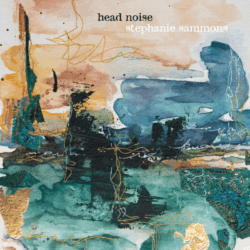 There’s no shortage of material for a songwriter to explore in the complicated middle chapters of life, and Stephanie Sammons’ Head Noise sets out to tackle plenty of it. Ageing parents, grown children, addiction, marriage and regret all feature in this deeply personal collection, recorded in Nashville with producer Mary Bragg. It’s an ambitious undertaking, although one that occasionally leaves the listener feeling more exhausted than enlightened.
The two previously released singles, Lone Coyote and Head Noise, are by far the album’s outstanding tracks. Both have more engaging melodies and a musicality that gives Sammons’ songwriting room to breathe. The title track, in particular, benefits from the full band, whose contribution adds welcome dynamics to the expression of her frustrations. When she sings, “Who am I to still have stars in my eyes? / I should walk the El Camino / Travel like my friends and drink fine wine”, there’s a convincing mixture of longing and resentment at life and the passing of time.
Elsewhere, however, the album struggles to find the same balance. Its explorations of inappropriate friendships, bad partners and troubled relationships with her own children too often result in a relentlessly downbeat collection, with insufficient melodic variety to let in some light. Kudos for tackling tough subjects, but the music seems as weighted down as her thoughts.
Marathon, for example, finds Sammons reminiscing about childhood, recalling an eight-year-old catching a rainbow trout on the Colorado River before returning to the solitude of adulthood, painting “abstract works of my longing / With the darkest colours”. The idea is presumably to show the contrast between youthful freedom and middle-aged depression, but the storytelling never becomes particularly dramatic, while the melody doesn’t provide enough of a hook to draw the listener in.
By the closing stages, the cumulative effect is rather wearing. “I live by the sound of devils in flight / I travel alone, in the cold / In the dead of the deep dark night”, she sings over a mournful piano. It’s a suitably bleak image, but another dose of introspection without much musical relief.
The more forceful approach of Head Noise suggests what might have been achieved across the album. Sammons clearly has stories worth telling, but they need melodies and arrangements capable of carrying them somewhere more compelling. Head Noise has its moments, yet too often leaves its emotional weight hanging in the air, with little to lighten the load.

