
Balancing towering indie-rock dynamics with noir-ish americana touches, Devlin & The Harm’s debut explores what remains after faith, relationships and certainty begin to fracture.
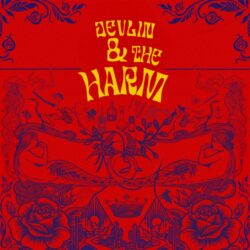 Devlin & The Harm sits in an intriguing place somewhere between widescreen indie rock and shadowed americana. There are moments here that feel vast; songs opening into towering choruses, drums crashing, powerful guitars, melodies that make you think of open skies, but the emotional landscape beneath them is far darker and more intimate. Across these eleven tracks, the band returns repeatedly to themes of collapse, inheritance, addiction, memory, and the uneasy possibility of redemption. It is an album concerned less with escape than with what remains after illusions fail.
The opening track, Kingdom Comes, immediately establishes the album’s central tensions. Built around a slow-burning atmosphere with some wonderfully noir-ish country touches, the song explores the erosion of faith, both spiritual and personal. “Faith alone won’t survive this” becomes a kind of thesis statement for the record, while the repeated plea “Won’t you stay inside for me” turns anxiety into something claustrophobic and tender at once. Musically, the track carries real menace and power, while its beautifully evocative guitar solo feels less indulgent than necessary, as though the song can only express its emotional weight instrumentally.
No Havana, built on a powerful drum and bass pattern, expands the record’s sense of dislocation. The Havana of the title becomes less a real destination than an imagined elsewhere, somewhere permanently out of reach. “It’d be a lie to tell you everything will be okay”, which becomes a musical anthem, undercuts any temptation towards romanticism. The song’s shimmering night-drive imagery, roads closing, headlights like “rubies and diamonds”, evokes a world that remains strangely beautiful even in decline. There is a recurring fascination throughout the album with the stories people construct to survive, and here the line “watch your mind construct this all” captures that instability directly.
That instability deepens on Dirt Used to Be Gold, one of the album’s emotional high points. The song begins in grief and disillusionment, lingering around images of headstones, bridges and buried secrets, but gradually shifts towards something more hopeful. The transformation of the refrain from “all this dirt used to be gold” to “all this dirt it will be gold” subtly reframes shame and loss as the possibility of renewal. It is one of several moments where the album resists surrendering entirely to darkness. Yet the darkness and the threat persist in the music: a seemingly benign, soft drum is overlaid by bass, the lower notes of a piano, and, at times, a guitar that grates like metal on metal.
Heyday briefly pulls the curtain back on something warmer. And again the music captures the tone: slower in tempo, acoustic guitar in evidence, top notes on the piano adding some shine and all elements blending together in the finale. At its heart, it is a song about recognising happiness too late, built around the quietly devastating refrain “Wish we’d know it before it’s done”. Yet even here, there are shadows gathering at the edge of the frame. The unsettling image “wind chimes of bone will shake” is a reminder that comfort rarely comes without a hint of fragility.
The middle section of the record becomes increasingly psychologically dense. Stress Dreams drifts through fragmented images and submerged anxieties, its dream logic filled with washed-up bodies, sleeplessness and unstable identity. There is a disorientating quality to lines such as “You think you’re only everybody in your dreams”, as though the self itself is beginning to fracture. Bad Actors redirects that unease outward, taking aim at performance, dishonesty and social masks. “Nobody tells the truth” becomes the song’s emotional centre, while the repeated references to crowns, crackdowns and bad actors hint at wider systems of power and manipulation. Musically, this is also one of the strongest tracks. The powerful voice is more to the front, the tempo is slowed, perhaps ironically adding to the force of the song, and strings add real emotion.
One of the album’s best moments arrives with Fadeaway, a song that transforms devotion into an act of resistance. The repeated insistence “I won’t let you fadeaway” feels simultaneously protective and desperate, carrying echoes of addiction, grief and memory without ever reducing itself to a single interpretation. Musically, the band balances restraint and scale particularly well here, allowing the emotional crescendo to emerge gradually rather than forcing it. At one point, the refrain of “fadeaway” is carried only by acoustic guitar before percussion, a great bassline, guitars and aching backing vocals gradually enter around it.
Relationships throughout the album are rarely stable refuges. On Come On Through, a relatively simple ballad, love becomes inseparable from mutual damage. “Your life falls apart / Then mine does too” captures the song’s co-dependent pull with painful simplicity. Yet there is genuine compassion beneath the exhaustion, particularly in the closing promise “If your line gets twisted / I’d cut mine off for you”. The song walks a fine line between romantic loyalty and self-destruction, without ever fully deciding where one becomes the other.
The album’s darkest material arrives late. Wish Away addresses addiction with a stark domestic intimacy: the hidden pills and recurring chills grounding the song’s pain in everyday detail. Its repeated refrain, “Wish away, but it won’t go”, captures the futility of denial with brutal clarity. Atascadero then widens the lens into something almost gothic in scope, tracing inherited trauma across generations through references to mental illness, violence and institutionalisation. The imagery of the “porcelain room” and “1000 little eyes” lingers long after the song ends, but the closing line “Be the one to change” offers perhaps the album’s clearest statement of hard-won hope. The reintroduction of noir country sounds is a wonderful musical capture of the song, as does the lead vocal, sounding like it is another room.
Closing track, Greenpoint Dryout, brings the record back down to human scale. After so much emotional and psychological intensity, its desire simply to “dry out on your couch for a while” feels quietly profound. There is no grand resolution here, only temporary shelter, companionship and the possibility of surviving long enough to keep going.
What makes Devlin & The Harm so compelling is the contrast between the music’s scale and the emotional vulnerability at its core. There are traces of americana throughout, in the imagery of highways, coastlines, rivers and small-town ghosts, but the album feels closer in spirit to emotionally expansive indie rock acts unafraid of darkness. At times epic, at times deeply intimate, this is a debut that understands that survival is rarely triumphant. More often, it is simply the decision to keep carrying the fire forward.

