
If you listen to the social histories of British rock & roll musicians of the late fifties and early sixties, you’ll hear that they were influenced by the popularity of cowboy TV series and films. These brought jeans, bootlace ties, and pointed-toed boots and shoes to the teenagers of the time, just look at early pictures of the Beatles. The concept of the cowboy gunslinger was adapted to the guitar hero phenomenon of the late ‘60s, again, particularly from a UK perspective. In this UK-based cultural appropriation, the cowboy’s nemesis, the Indians, didn’t get too much of a look-in unless you count that great Lancashire drummer Keef Harley who used to perform in full Indian regalia in the clubs of the UK. However, back in continental North America, native Americans have always been big fans of country music, and have contributed significantly to the development of rock & roll and American roots music, just think of Link Wray who was of Shawnee descent, The Band’s Robbie Robertson, who was of Mohawk descent, and the great Tulsa sound guitarist Jesse Ed Davis who was a citizen of the Kiowa India Tribe of Oklahoma.
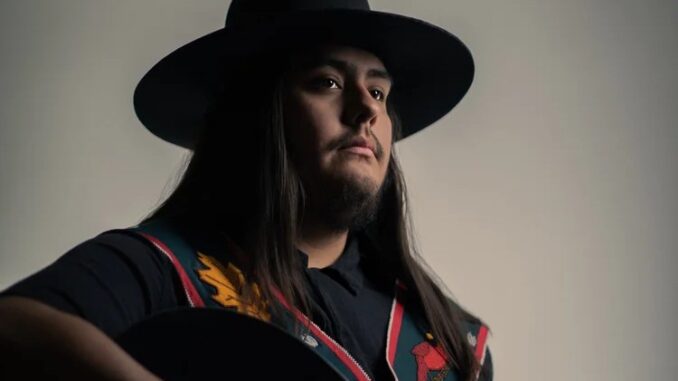
One of the newer artists keeping that native American tradition going is Agalisiga “Chuj” Mackey, who was brought up in a small traditional Cherokee community in Kenwood, Oklahoma. His music mixes classic country and blues, with specific influences from R.L. Burnside, Jimmie Rodgers and traditional ceremonial Cherokee songs. His 2024 debut album on Tulsa’s Horton Records, Nasgino Inagei Nidayulenvi, is sung entirely in the Cherokee native language, which is currently under threat with only 1,500 speakers left. His father is a Cherokee language activist, and it was through him that Agalisiga got a song he wrote and recorded onto a Cherokee compilation released by Horton Records, which led to his recording his debut album for the label. He combines his recording career with his work at a Cherokee language and culture immersion school.
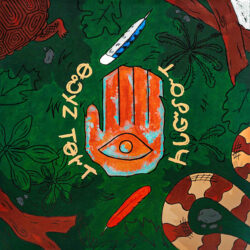 Agalisiga included a Jimmie Rodgers cover and a Dylan cover on his debut album. Both I’m So Lonesome I Could Cry and I Shall Be Released are translated into Cherokee as Akisodane Yigatloyiga and Dvkiyohiselvi, respectively, explaining that his grandparents were big fans of old western singers like Rodgers, Bob Wills, and Ernest Tubb because that music reflected what Native Americans were experiencing at the time. The Dylan cover evidently caused him a lot of anguish as the Cherokee language is very precise in its meanings, something that Dylan’s lyrics certainly are not. The songs on the album cover the Cherokee respect for and admiration of nature, as in Tsitsutsa Tsigesv. Country music and the murder ballad have always gone hand in glove, and on Gatlohiha he invokes the spirit and sound of Jimmie Rodgers on a tale of a man who kills his cheating wife and runs to Mexico. The blues get an outing on Ahyvdawalohi about a man called Thunder who is driven mad and murderous. He includes a love song to his wife, Ginaliyosv, which he had to write first in English because the Cherokee language doesn’t have a word for love, because love is something that is demonstrated by actions, not words.
Native Americans face a difficult fight trying to maintain their culture in the modern world, as preserving the past comes up against the demands and trends of the modern age. Agalisiga “Chui” Mackey is doing it his way, looking back to the Cherokee culture and language, but using a medium that is as American as it comes, roots American music. Give him a listen.


