
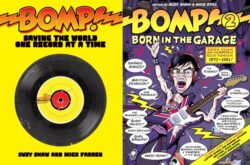
 This is a beautiful, coffee-table-sized book which is a time capsule, bottling a crucial period in rock ‘n’ roll history. Its format is its strength: a compilation of reprints, facsimiles, and archival material from Greg Shaw’s pioneering fanzines. Starting with ‘Mojo Navigator And Rock ‘n Roll News’ (1966) and continuing through to ‘Who Put The Bomp’ (1970-1979). Why does ‘Bomp!’ matter to an americana website? Because the independent, DIY ethos that americana picked up from punk and indie culture all leads back to Greg Shaw.
The book’s appeal lies in its authenticity. It’s less a history than an immersion into that DIY aesthetic. The reproduced pages from most issues of the magazines, often raw and pasted up in true fanzine style, instantly connect us to the underground world Shaw created. This visual history highlights a revolutionary attitude: the firm belief that if the mainstream press was missing the best music, a handful of devoted enthusiasts could —and must —tell the story themselves. The inclusion of new commentary from Suzy Shaw and others, such as Lenny Kaye and Peter Case, provides often touching and frequently candid context. Greg Shaw’s tireless, sometimes financially perilous, obsession with genuine rock ‘n’ roll was supported by Suzy, who started as a life partner before shifting to taking on the business more than the man. It captures the spirit of a community that believed in music as a way of life, and in doing so, forged a blueprint for independent media.
‘Bomp!’ was the definitive voice of the music underground. The voice that was also heard on Lenny Kaye’s ‘Nuggets’ compilation. Greg Shaw had a huge knowledge and understanding of rock’s history, and the magazine’s USP was its ability to connect the dots between the raw intensity of 1960s garage rock and the explosive energy of 1970s punk. Late in the magazine’s life, Shaw was reacting against the increasing corporateness of punk and was talking more about early rock and roll and Rockabilly, and looking back to sixties bands like The Seeds. By featuring early interviews with bands like The Doors alongside coverage of proto-punk and the New York scene, ‘Bomp!‘ showed that these movements were part of the same lineage, a rebellion against that polished, corporate rock.
Shaw’s publications were often training grounds for some of the most influential writers in music, including Lester Bangs and Greil Marcus. This generation of critics wrote with a distinctive, highly partisan, and passionate style, rejecting journalistic objectivity in favour of enthusiastic advocacy. Their writing defined the language used to discuss genres like power pop, a term Shaw and his writers championed as a distinct, vital sound, and set the blueprint for the future of music criticism. ‘Bomp!’ was a key influence on the fanzines which flourished in the punk world, validating the idea that a high-quality publication could be run entirely outside the major publishing world. This “for the fans, by the fans” approach proved that passion could overcome marketing budgets, directly inspiring countless amateur music magazines and zines for decades to come.
Suzy Shaw also talks about the process of running Bomp! Records, which was formed in 1974, It was the jumping off point for several defining musical movements. It became instrumental in the US punk scene with early releases from Iggy and The Stooges. The Germs and Stiv Bators. It gave a home to the beginnings of the power pop scene, with crucial records by bands like Shoes, The Romantics, and 20/20, and there are influences from power pop on plenty of bands featured in AUK. Greg Shaw was also a vital curator of the past through the legendary ‘Pebbles‘ compilation series, which unearthed and reissued dozens of forgotten ’60s garage-punk “nuggets.” These compilations were critical for establishing the canon of underground music and ensuring that the raw, aggressive sounds of the past could inform the punk and psychedelia movements of the late seventies and eighties.
While magazine and label never achieved massive commercial success, it survived for 10 years and set trends which we are still feeling the ripples from now. It operated on a philosophy where the music’s artistic merit was the sole driving factor, a complete rejection of the major label machine. If that sounds like some of the labels which have promoted americana, like Glitterhouse and Blue Rose, then you could well be right. This commitment to artistically significant, non-commercial acts firmed up Bomp!’s reputation as a trustworthy, fiercely independent brand whose taste dictated quality, influencing countless other musical entrepreneurs who followed.
Bomp! provided the blueprint for the entire modern independent music ecosystem: a self-sustaining cycle where enthusiastic journalism discovered, championed, and ultimately released the music it believed in, saving the world one great, non-mainstream record at a time.
There is a sequel, a less essential but still fascinating, ‘Bomp! 2’ subtitled ‘Greg Shaw and the roots of rock fandom.’ It covers some of the same ground but also adds complete (better printed) articles which scrape away at the surface of pop archaeology.


