
A sumptuous and poetic love letter to The Black Country.
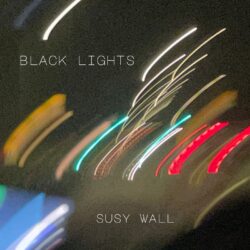 This is Susy Wall’s second album after 2024’s “The Spaces in Between”. Wall has lived in the Black Country for 25 years, and the album, funded by an Arts Council grant and Crowdfunder, was conceived as “a celebration of the creativity, landscapes and people of the Black Country”. It has to be said that it does this so well – the album is incredibly evocative of that part of the country and its heritage.
It is folk music, centred on Wall’s strong, beautiful vocals. Many tracks have folk guitar picking or strumming at the forefront, while others are led by piano. However, Wall and producer Chris Pepper, who she pays tribute to, have arranged the songs with low-key instruments such as the mellotron, pedal steel, Hammond organ and clarinet filling in behind to give a fuller sound, which works very well. It is a delight to listen to. Wall plays the guitar and piano, while various woodwind instruments are provided by Gustav Ljunggren. John Parker is on double bass, and Aaron Catlow plays fiddle. Pepper seems to be a talented multi-instrumentalist, playing a huge range of instruments on the album.
The Black Country stamp is seen most clearly on two spoken interludes. In the atmospheric autumnal opening track, ‘Black Lights’, poet Martin Kennedy Yates recites his poem ‘A Black Country Psalm’ in a gentle local accent. It starts with “Out of the dark light can come dawning, yet we fear the blackness will overwhelm us” and uses the idea of dawn after night and sun after rainstorms to make a plea to be strong in dark times because there are better times ahead. The accent is heard again in ‘Blue’, where poet Claire Tedstone recites her poem to musical backing. Here she is alive to the colours of a Black Country industrial landscape; the poem starts with “Below the bridge the canal cuts a ribbon of impossible blue through the grey” and later there is “Then, bursting through towpath cracks you spot the resilient blue of forget-me-not”.
The second track, ‘Glasshouse Bridge’, was inspired by local poet Liz Berry and is about love and loss. However, the title has a link to the glass industry, which was at the heart of the local economy in earlier times. This industry also later influences ‘Trick Of The Light’. It is followed by the evocative ‘Last Meadow’ about a local beauty spot under threat. Here, there is the sensuous delight in nature that you can get in roots music, and which is a thread through the album: “Feel the earth beneath my feet/ Ancient turf, so dark and sweet/ Hawthorns Jewel hiding there/ Dandelions laced through my hair”.
Local characters influence some songs. ‘Home Child’ is about children from the area sent to live in Canada in the first part of the twentieth century. The waltz-lullaby ‘Cosy, Warm and Lovely’ recalls the words said to Walls’ Black Country husband by his mum when she tucked him up. You can just imagine it.
Things get more personal on the traditional folk, with fiddle, of ‘Dereliction’, about a passionate love, and on ‘Leaving’, which seems to be about the sadness of a daughter leaving home. Interestingly, ‘Dereliction’ uses guitar tuning commonly used by local heroes Led Zep, for example, on their track ‘Kashmir’. The album finishes very well on a positive note with the stirring ‘Let The Light In’ with its words “be grateful for the life that we live today”.
The words, which convey the Black Country so lovingly, strongly and vividly, and the beautiful music and singing make this a powerful and memorable record.

