
By most metrics, it is apparent readers enjoy lists: from the top 10 obscure americana songs to the 10 most annoying Neil Young songs about personal gripes to the ten best ways to avoid paying taxes. I rarely think of making lists of songs or albums or anything except the top 10 bills to pay on any given month. Actually, the last list that comes to mind was when I was on a golf course on a sunny day, poking around a lake for a ball that had decided to go for a swim when a drooling alligator surfaced and demanded to see the wine list to go with dinner.
Believe it or not, lists are hard work and take more of a writer’s valuable time than dashing off album reviews. They force you to split hairs between those that are on the cut line once you decide on the first 5 or 6. How can you determine if one viable contender is “better” than another, especially if your tried-and-true method of rating a song is, it’s either “good” or “bad.” You either store a song in the recesses of your brain and hope that it doesn’t run out of hard drive space or RAM, or you slide it into the recycle bin (empty trash when full). There is no Mr. In-between.
The problem therein is that my entire collection is filed alphabetically, except for jazz and classical, which have their own space. So, the only choice is to flip through each and every CD and LP to ascertain the contenders because, well … my brain isn’t all that reliable. There are many, a significant number, a whole lot of faves. Choosing ten songs was like choosing your ten favorite children if you hadn’t stopped making babies at that round number and the last three were triplets. Any way you slice it, choices produce anxiety that one important (song or baby) will be left out, but let’s just breathe into a paper bag and not feel guilty about leaving one gem stranded as if stood up by a blind date. After all, guilt is a wasted emotion.
So, here is the list with the caveat that I chose all these songs without having to dig alphabetically further than the letter “E” for Eagles.
Number 10. Counting Crows ‘Omaha’ from “August and Everything After” (1993)
This song refers to flyover country in an oblique way as somewhere in the heart of Middle America. It is a device for wasting your life on monotonous everyday drudgery of working a job in a mill or factory, essentially being a cog in the machine. The cycle of production is a metaphor for a mundane existence, making the same choices over and over. When he sings, “Start turning the wool across the wire, roll a new life over”, he is just repeating history expecting things will change.
In the song, the entire album and in works to come, Adam Durvitz puts forth the attributes of his characters like Saint Lucy always appearing with her eyes on a plate. He focuses on their foibles, warts and fears, showing a lack of connection between them and society, a detachment that is evidenced in the chorus: “turn your ticket in and get your money back at the door”. At the end, he concedes his fight with life and his conflicts, and accepts his fate, his ordeal, not realizing that the key is to move on and leave the past behind.
Number 9. Dion ‘The Wanderer’ from “Runaround Sue” (1961)
A wanderer with “two fists of iron but I’m going nowhere” calls into focus an exaggeration of aggressive tenderness. That was the persona of the young Dion DiMucci, a guy who “roamed from town to town” to find a girl worth falling for. Yeah, this character may be a little obsessed with the fairer sex, the thought of what pleasures might be found in the next town becoming a compulsion to “hop right into that car of mine and ride around the world”. This was the stuff of an adolescent boy’s dream, having one girl on each arm and dating another one later that night. Even then, when asked which one he loves best, “I tear open my shirt and show her Rosie on my chest”.
The guitar, bass and drums indicated we were entering a post-pop phase in songs that would become radio staples. It is hard to believe this song came out of the ‘50s, as it easily could have been recorded today and no one would blink an eye or call it retro. On the same album, he took a turn with ‘Ruby Baby’, ‘Runaround Sue’ and a couple other chicks. There was no such thing as toxic masculinity or exploring your feelings. Dating was actually fun.
Number 8. The Allman Brothers ‘Midnight Rider’ from “Idlewild South” (1970)
Here we have traditional blues themes of loneliness and desperation, which you can hear in Gregg Allman’s plaintive vocals. The raw sound of Duane Allman on guitar elevates this song from really good to excellent. It’s the ultimate lonesome cowboy song as if it was the theme for a Sam Peckinpah or John Ford western. “Well, I’ve got to run to keep from hiding, And I’m bound to keep on riding”.
The recurring reference to that one more silver dollar is perhaps hope within desperation, holding onto it like the last buck in your pocket after losing your bankroll at a casino. You muster the means for survival even when all looks bleak. In the Italian section of the city where I grew up, many of the men kept a dollar in their wallet at all times as a matter of pride when the household money ran out. With inflation, I keep a $100 bill.
Number 7. Dave Alvin ‘Border Radio’ from “King of California” (1994)
Imagine when you listened to that late-night DJ spinning a series of tunes for an hour before taking a commercial break. How soothing that was for insomniacs and those too troubled to sleep. Think Clint Eastwood taking calls from an unhinged listener whose repeated request was to play ‘Misty’ for me. Those were the only times worth listening to the radio. This is a paean to the mid-20th century years when stations proudly boasted that you could tune in across state lines. “Fifty thousand watts out of Mexico” could reach past Texas into America’s heartland.
Alvin sings about a woman hurting from heartbreak and love, a fatherless child, desperation and hope. She listens to the radio to take her mind off what’s wrong in her life. Tuning into the late-night radio dial and searching for a song you used to sing in whispers to a former lover, thinking, hoping that maybe, just maybe, far, far away, the lost lover is listening too. “This song comes from nineteen sixty-two, dedicated to a man who’s gone”. Good luck with that on Sirius XM Radio.
Number 6. The Eagles ‘Lyin’ Eyes’ from “One of These Nights” (1975)
The early Eagles’ music had the gift of making sad songs happier than they really were, whatever really were means. This one was sung by Glenn Frey, co-written with Don Henley. They weren’t the first to introduce country music to rock audiences (RIP Gram Parsons), but the band was surely the most successful at expanding the ears of those raised on the Beatles, Stones, Janis Joplin and the San Francisco bands.
Frey and Henley wrote the song after a night drinking at a L.A. bar. As young men out of the town will do, they observed that there were many beautiful women at this bar. In an interview years later, Frey remembered: “I spotted this stunning young woman; two steps behind her was a much older, fat, rich guy. We all started laughing and one of the other guys commented, ‘Look at her, she can’t even hide those lyin’ eyes!'” And a hit tune was born.
Number 5. The Blues Magoos ‘Never Goin’ Back to Georgia’ from “Never Goin’ Back to Georgia” (1969)
Well, I had my top 10 selected and ready to roll when along came a category 5 brain hurricane that reminded me of one that absolutely could not be left off. This is the title song to an album that was so good that hardly anyone bought it. But I did and have since made copies for friends who wished they had paid attention back in ’69. Used copies go for $200 on eBay. The original band’s biggest hit was ‘We Ain’t Got Nothin’ Yet,’ which reached #5 on the Billboard charts in 1967. Two years later singer and co-songwriter Emil “Peppy” Thielhelm a.k.a. “Peppy” Castro formed an entirely new band with Eric Justin Kaz and three others, signing with ABC Records and keeping the Blues Magoos name.
Joe Cuba, who was a Puerto Rican musician and the originator of the Boogaloo dance, co-wrote the song, which probably accounts for the ‘Oye Como Va’ reference during the instrumental break. The title is taken from a chant used in the ‘60s warning people to stay away from the state of Georgia because of racial tensions. An alternate meaning was simply the song referred to a bad gig. While the music is amazingly complex, the lyrics are simple and direct, repeating the refrain of “Never goin’ back to Georgia, I’ll never go back no more”. One is left to interpret just what the lyrics might mean. Why? Castro and Kaz never cleared that up.
Number 4. Dawes ‘When My Time Comes’ from “North Hills” (2009)
Finally, one from this century. Let’s face it. No one, especially the younger generation, is ever fully satisfied with their current situation. But in this case, someone who has given of himself to help others at the expense of his own happiness finds there is a downside in the form of unattained desires. It’s like tossing pebbles at a window hoping that someone sees you for who you are. “I thought that one quick moment that was noble or brave, Would be worth the most of my life”.
I once thought this song was an examination of religion, a turning away. “So I pointed my fingers, and shout a few quotes I knew, As if something that’s written should be taken as true”. Now, I think ‘When My Time Comes’ is about a selfless protagonist wanting to just be done with saving people. He can’t be happy but isn’t exactly unhappy, just waiting for his time in the sun. He understands life isn’t about one’s own happiness, but rather about helping others. It’s a very zen concept. “I took what I wanted and put it out of my reach, I wanted to pay for my successes with all my defeats”. That correlates with notions of Buddhism – that need to kill desire through self-denial and that we have karmic debt to pay for with good deeds. Very cool how Taylor Goldsmith incorporates the Nietzsche quote: “When you stare into the abyss long enough, the abyss stares back at you.”
Number 3. Cowboy Junkies ‘Cause Cheap Is How I Feel’ from “The Caution Horses” (1990)
As with many Cowboy Junkies’ songs, you get the impression that Margo Timmins kicked off her shoes, poured a stiff drink and let her hair down before getting on with it. Her understated, ethereal vocals combined with brother Michael Timmins minimalist but precise guitar fills, not to mention an outstanding lyricism, are reasons why their songs resonate so profoundly and connect with the audience on a personal level. Alternative country music often explores difficult and complicated emotions, and none do it better than the Timmins siblings.
Cheap is another expression of lack of self-esteem or worth. The unspoken admonishment of the woman almost seems appealing. The song’s message is one of diminished expectations and being haunted by the past. “The sound of clinking bottles is the one sure thing I’ll always drag with me from my past”. The anxiety, the resignation, the desperation in “find a pair of eyes to fall into and maybe strike a deal”. Offering your affection for some small gift while actually letting go of something much larger. “Your body for my soul, fair swap”. When the soul has no intrinsic value, how can you feel anything else but cheap?
Number 2. Bob Dylan ‘Not Dark Yet’ from “Time Out of Mind” (1997)
When you are old and gray and nodding off by the fireplace, put on this record. Unfortunately if you are wanting to hear about a sweeter, cleaner life when old age is a comfortable place where clocks dissolve, death is an honest end, and the afterlife abounds with perks, this is not that song. ‘Not Dark Yet’ basically describes endings in four parts. In the first verse, it’s the ending of a day: “Shadows are fallin’ and I’ve been here all day, It’s too hot to sleep and time is runnin’ away”. The ending of love is characterized in the second section: “She put down in writin’ what was in her mind”. Believing in the good of mankind is discounted next: “I’ve been down on the bottom of the world full of lies”. Finally, the end of life is at hand: “I can’t even remember what it was I came here to get away from”.
One answer to that is critics. After Dylan had the audacity to play shows in China, he was taken to task by many, including in a NY Times article written by Maureen Dowd, who chastised him for selling out. Dylan had always insisted that he wrote songs, not protest songs, and that he wasn’t out to change the world. The line in the first verse: “I’ve still got the scars that the sun didn’t heal” could be taken as the Son of God couldn’t heal all his scars and perhaps, he was bitter about that. Maybe for the first time in his life, Dylan feels a real sense of his mortality and it’s frightening: “Don’t even hear the murmur of a prayer, It’s not dark yet, but it’s gettin’ there”.
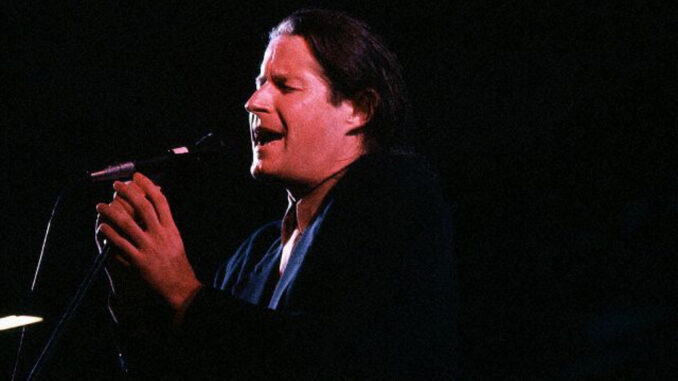
Number 1. Don Henley ‘The Heart of the Matter’ from “The End of the Innocence” (1989)
Henley delineates with exactitude the truth of his character’s sadness and troubles while offering an olive branch of forgiveness, “even if you don’t love me anymore”. It’s the ultimate reconciliation. We hurt each other; we love each other, life goes on. Hate dies; love lives forever. There is a break-up of a long-time marriage or relationship. After a time, you hear that your ex has found another. “I got the call today, I didn’t wanna hear, But I knew that it would come”. Does that make you a little sad or happy for the person you once loved? Eventually it comes down to forgiveness for the bad times, acceptance and moving on. “I thought of all the bad luck, and the struggles we went through, And how I lost me and you lost you”.
On the “Hell Freezes Over” DVD, Henley says the song “took 42 years to write and 4 minutes to sing.” Sure, it’s probably about Henley’s divorce but he may have been inspired by more than that, for example, the breakup of the Eagles, friendships. “These times are so uncertain, There’s a yearning undefined, …people filled with rage, We all need a little tenderness, How can love survive in such a graceless age?” One other thing to consider is that this conversation with a friend who called with the news is continued in ‘My Thanksgiving’ from the “Inside Job” album. “For every moment of joy every hour of fear, For every winding road that brought me here, This is my thanksgiving”. On this week of the Thanksgiving holiday, we could all stand to put aside divisive socio-political arguments and offer each other forgiveness and thanks for being part of our existence. That is getting down to the heart of the matter.


Dean, some great choices. Eagles must be thereabout. “Too Many Hands” instead of Lyin’ Eyes? Henley’s cover of Your not Drinking enough… impossible task. But you’re done.
So you did not get past the letter “E”, but this is still a glorious selection! Someday, if you have the fortitude and time, work your way through “F” to “Z” and see what other “Top 10” lists you can create. I’ll wait.
Border Radio is such a sad song. Nearly as sad as his song Abilene.
“In a Texas bar there’s a man sittin’ alone
Thinkin’ of a girl he swore he’d wait there for
But he’s drinkin’ beers and he’s feelin’ old
Remembering’ every lie he’s told
‘Til he changes his mind and he leaves.”
Dave Alvin had so many great songs and he’s a great live show.