
A new year and a new batch of folk albums to listen to and review. A small confession, some of these have been awaiting review for a short while, so this is also something of a clearing of the decks for 2026, so a few of the reviews may be even more capsule than usual. Or maybe not. We’ll see.
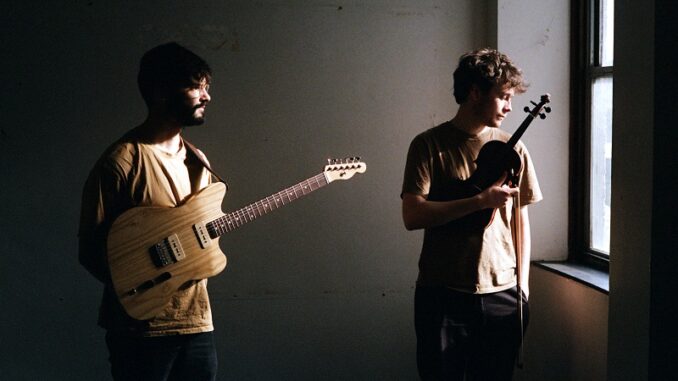
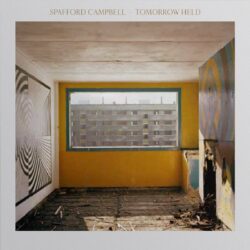 First out of the bag is “Tomorrow Held” (Real World Records) from Spafford & Campbell, who are fiddle player Owen Spafford and guitarist Louis Campbell. The duo first met as teenage members of the National Youth Folk Ensemble, and began playing live as a separate duo in 2018. Campbell has also been a sideman for Sam Lee, Sam Sweeney and Martin Simpson. With that background, it’s not too surprising to find that “Tomorrow Held” is a collection of instrumentals (apart from ‘All Your Tiny Bones’ which features Louis Campbell on vocals) and that the pieces are complex and explorative – and open to interpretation. For example, according to the sleeve notes, ‘MacGill‘ is a homage to the creative partnership of Jimmy Webb and Glen Campbell, well ok, but it could also sound like a manifestation of the lowlands of Scotland, since some claim that MacGill derives from “Mac a Ghoill”, meaning “son of the lowlander.” Whatever the case, the eight tracks on the album are never less than intriguing, mostly dwell in quieter regions but occasionally break through to the semi-raucous. (7/10)
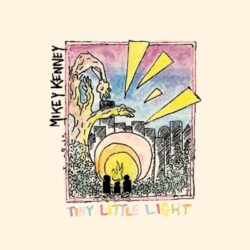 “Tiny Little Light” is Mikey Kenney‘s fourth studio album of original material, and it finds him at the top of his playing and inventiveness. A fine traditional fiddle player, Mikey Kenney matched this with a revelling psych-folk, making his mark from the off with ‘Scarecrow Festival‘ which will surely bring to mind the likes of Lal & Mike Waterson. The wild americana-roots meets freak-out of ‘The Doing Of The Bee‘ is likely to point the listener’s mind joyfully in the direction of The Incredible String Band; it’s an unrestrained sound that’s certainly been missing in the folk world. There’s a more obviously serious intent to songs like ‘Desperate Anthem‘ which treads a line between accepting all that the 21st century can offer whilst wanting to cling to older technologies and ways of living: “I’m finding it hard to embrace the new ways / I’m a man who likes to put a pen to a page” encapsulates what is almost a new clarion call for a return to simpler, more fulfilling, ways. A 21st-century hippy? Well, maybe – but this is a beguiling album nonetheless. And amongst a selection of releases that are particularly strong, it just nudges as the album of the month. (8/10)
 Merlyn Driver‘s debut album “It Was Also Sometimes Daylight” was recorded partly in London with the help of David Gray and partly in a converted barn in rural Finland, and is shaped as much by acoustic folk and contemporary influences as by the rhythms and textures of the natural world. That comes shining through on the wonderfully elegant ‘Simmerdim‘ which blends in bird song whilst capturing the atmosphere of the almost endless Summer days on Driver’s Orkney homeland. Driver also has an obsession with the buzz of African instruments and, on ‘Parachutes‘, uses cigarette paper under guitar strings to mimic the talingalo spider egg sac membranes used to create the buzz on the balafon. These blends of sounds give the album a distinctness that lifts “It Was Also Sometimes Daylight” above many other guitar-driven, nicely sung modern folk song collections. (8/10)
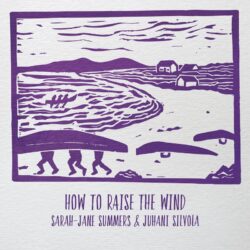 “How To Raise The Wind” (Eighth Nerve Audio) is the latest album from Sarah-Jane Summers & Juhani Silvola, a Norway-based Scottish/Finnish duo who have been playing together for 15 years. They have four albums to their name, and can name almost a dozen more as solo artists. They describe “How To Raise The Wind” as their second album of chamber-folk, with Sarah-Jane Summers providing fiddle, Juhani Silvola adding acoustic & electric guitars, all with the support of a five-member string section. The album’s inspiration is drawn from folk tales from both Scandinavia and Scotland, which are interpreted through a series of instrumental pieces which do border on the classical in arrangement – but at the same time they are not some prettified form of folk, they impact powerfully, especially on the driving ‘Polkadots & Moonshine‘ where guitars and fiddle via to be the strongest in the mix. ‘Let Me Stay till I Dance this Reel‘ captures an endless evening of dance, whilst the title track – running to over 10 minutes – is the most experimental piece of the album, fading away and then blowing discordantly. It’s impressive playing – it’s also impressive composition, there’s so much to like about the rich offerings of this album. (7/10)
 Eva Goodman & SERA were inspired by the “Spell Songs Project” of Julie Fowlis, Karine Polwart and others to create an album that explored the tales and wild spirit of Wales – naturally, the result, “Natur” (Recordiau Anian Records), is a Welsh language album. It is also a varied set of folk songs – ‘Bendith‘ is a drone-heavy number that is also a lovely duet, with the two vocals subtly intertwining on a Celtic blessing, whilst ‘Tymhorau‘ brings in a bit of a Floyd-esque feel, like a folkier ‘Us and Them.’ ‘Anian‘ takes the burnout inherent in modern life’s hustle and bustle and pins it to a folk-pop arrangement that drags the listener to the indie-folk disco. We’re deep into the natural world with the sparse arrangement of ‘Gaeafgwsg‘, which is an end-of-the-year reflection on nature’s hiding away and hibernation across the colder months, with faith in the promise of renewal in a new season. “Natur” makes a strong case for Welsh-language folk to be given the same respect as music in Scottish and Irish Gaelic. (7/10).
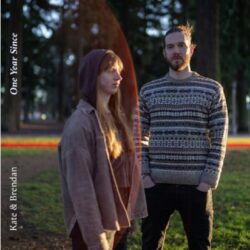 Kate Gregory and Brendan Hearn have produced their debut release, “One Year Since” (Adhyâropa Records), it’s a long EP rather than a full album, consisting of four instrumental tracks and a couple of songs, with Kate contributing fiddle and Brendan supplying cello and guitar. They pull mostly on English and Irish folk roots, taken through the focusing lens of American Old Timey to create new sounds that could have originated on an Appalachian porch more than a hundred years ago. ‘Goodbye Ruby‘ is a sprightly dance tune that’s named for the demise of Kate Gregory’s faithful old Subaru, whilst ‘Little Bird‘, sung by Gregory, is a gorgeous song of the potential for love featuring memorable imagery and scuffling foot percussion.
It may be a short outing for this duo, but every tune and song is memorable, giving hope that they’ll be another addition to the ongoing breakout from the Old Timey Revival. (8/10)
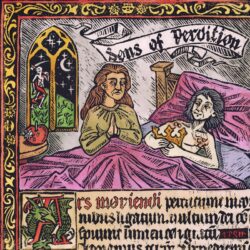 “Ars Moriendi” is the new album from Sons of Perdition, and takes the form of a narrative about how people in the Middle Ages dealt with mortality during the Black Death – a sort of musical version of the Spreuerbrücke in Lucerne. There’s a certain suspension of disbelief required when Glasgow-based Sons of Perdition state that for this all-acoustic album, the band has been pared back to Simon Broke on double bass and the band’s patriarch Zebulon Whatley (of, we guess, the accursed Dunwich branch of the Whatleys) on all other instrumentation and vocals. What has been created, though, is a series of cautionary tales on the shortness of life that run to the pseudo-medieval as on ‘The Three Living And The Prodigious Dead‘ which tells of cursed Crusaders, to the discordant ‘Dance Macabre‘ which casts Death as a plague bearing troubadour in a musical version of “The Masque of the Red Death” visiting disease on the poor and the princes alike. At times, Sons of Perdition are reminiscent of The Doomed Bird of Paradise with vocals that grate like barnacles – but here the themes are less historical and more metaphysical – and on occasion, Whatley creates a distorted blend of an ancient theme with an almost spaghetti Western musicality. Varied, yes, unusual, yes, a spellbinding listen – yes, indeed, yes. (8/10)
