
Rich storytelling, humour, and sharp political observation.
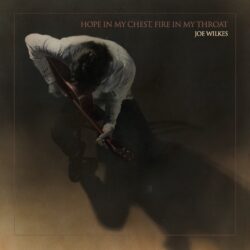 On his fifth album, Joe Wilkes delivers a powerful statement of intent. ‘Hope In My Chest, Fire In My Throat’ finds the folk troubadour at his most focused, combining intricate finger-picking guitar with traditionally delivered songs rich in storytelling, humour, and sharp political observation.
The album was conceived in the shadow of accident, illness, death, and personal upheaval, and stands as a testament to Wilkes’ determination to succeed at all costs. Rather than retreat inward, he leans into the rawness of experience, producing a record that feels lived-in and urgent.
The opening track, Seven Gypsies immediately surprises. Beginning with the sound of a Sarangi — a nod to the Middle East – it sets an unexpected tone before Wilkes’ guitar style comes to the fore. The song tells the tale of a young wife who abandons domestic life to run away with the gypsies, establishing the album’s themes of escape and rebellion. The Lowlands of Holland follows, a nautical ballad of a sinking ship. Its haunting atmosphere and strong bass line make it one of the record’s most affecting moments.
On Traditional Style, Wilkes turns inward, telling the story of his grandfather and painting a vivid portrait of working-class life with warmth and honesty. Wilkes describes Love Is Pleasin on the other hand as an English blues song, tipping his hat to the early British guitarists who carried American blues into the folk tradition. Hares on the Mountainside’ written during the COVID lockdown, is among the album’s most personal tracks. During this period, Wilkes’ mother fell ill and passed away, and the song reflects the strange, suspended atmosphere of that time with quiet grace. Social commentary returns with Hard Times of Old England, a pointed reflection on modern England. Wilkes addresses working-class people and ex-servicemen struggling to find work, urging them to stand their ground and turn the world around. It is one of the album’s clearest statements of intent.
Themes of confinement and conflict emerge on The Old Triangle, a song of incarceration, while We Don’t Talk About the Weather looks outward to the Middle East, questioning who controls truth in times of war. The album closes with The House Carpenter, a haunting duet with Caroline Something, once again infused with an Eastern feel that echoes the record’s opening moments.
Wilkes has stated that he believes folk music has become sanitised and increasingly performed for the well-off. What he wants instead is blood and rebellion. Hope In My Chest, Fire In My Throat delivers exactly that — a fierce, uncompromising take on modern folk music that refuses to look away.