
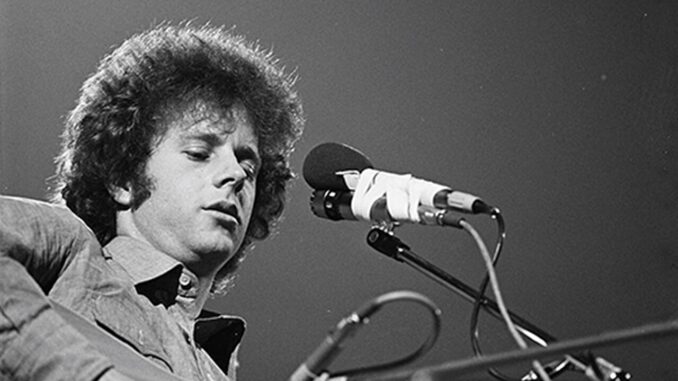
There can be no doubt about the fact that Chris Hillman is one of the founding fathers of country rock, based on his time with the Byrds, the Flying Burrito Brothers, the Desert Rose Band and others. If there was any lingering doubt, then he has numerous awards and nominations to prove it, including a Lifetime Achievement Award from the Americana Music Association. What is sometimes forgotten is that after Stephen Stills’ Manassas fell apart due to Stills being pulled towards a CSN reunion in the ’70s, Hillman struggled to establish a solo career. It was such a struggle that he came close to leaving the music business, and at the start of the ’80s, he found himself on a small independent label. However, this state of affairs proved to be the making of him, and he used the platform to build a successful career and consolidate his legendary reputation.
Hillman was always viewed as a junior partner to Roger McGuinn, David Crosby, and Gene Clark in the Byrds, but he did write some of their signature songs, including So You Want To Be A Rock’n’Roll Star and Have You Seen Her Face amongst others, and he had suggested the Byrds record their first country cover of Porter Wagoner’s hit Satisfied Mind. He also played a material part in the recording of Sweetheart of the Rodeo when he helped introduce Gram Parsons to the band. The mythology that now surrounds Gram Parsons means that the Flying Burrito Brothers are often seen as his backing band, but this view overlooks Chris Hillman’s significant contribution as singer and songwriter, sharing co-writer credits with Parsons on classic songs such as Sin City, Wheels, and Christine’s Tune, as he moved from bass guitar to rhythm guitar and mandolin. Also, nobody should forget that Hillman sacked Parsons after his behaviour and fascination with the Rolling Stones started impacting the quality of the Burrito records and performances. Hillman managed to steady the Burrito ship with their third album, The Flying Burrito Brothers, which improved on Burrito Deluxe and Last of the Red Hot Burrito Brothers, and which showed the band had finally become a consistent and exciting live attraction.
While Hillman had brought stability and consistency to the Burritos, their financial position remained challenging. Fate played a hand when Stephen Stills had the idea to expand his band with Hillman and Al Perkins from the Burritos to form Manassas, with Hillman as his wingman. Manassas recorded one bona fide classic album and a much more lacklustre second album before Stills toured with a reformed CSNY, and Hillman recorded with the reformed Byrds before forming the Souther-Hillman-Furey Band at the behest of Asylum’s David Geffen, who was looking to repeat the success he was having with the Eagles with the originators of their sound. The Souther-Hillman-Furey Band enjoyed commercial success with their 1974 debut album, but the band were unable to build on this success and disbanded after their second album.
It was at this point in 1976 that Hillman released his debut solo album, Slippin’ Away, which he recorded with members of the Flying Burrito Brothers, Manassas, and musicians like Steve Cropper, Donald “Duck” Dunn, and George Terry. The album was a critical success as it looked back to the sound of Manassas, and included songs by Stephen Stills and an unpublished Gram Parsons Hillman co-write, as well as new Hillman songs. Unfortunately, the album didn’t sell any better than the Burritos’ The Flying Burrito Brothers, and came nowhere near matching the success of the debut Manassas album. Asylum was still looking to turn Chris Hillman’s fame as a musician into commercial gold, and for his second solo album, 1977’s Clear Sailin’, the sound was a lot closer to Loggins and Messina and Firefall, featuring members of both bands and a more pop-friendly sound. Again, the album experienced disappointing sales, but this time the Hillman sound could be described as bland country pop with a ’70s contemporary sheen that made it indistinguishable from similar offers at the time.
This marked the end of Hillman’s Asylum contract, and he then toured successfully with Roger McGuinn and Gene Clark as three individual acts. This led to them forming McGuinn, Clark & Hillman as a mirror to Crosby, Stills & Nash, so much so that Capitol Records insisted they use the producers of 1977’s CSN, who gave their Byrd-like harmonies a then-modern pop-disco sound on their debut album. The album proved commercially more successful than any of the band’s recent individual albums, but was not a critical success. The band’s second album suffered from a conflict between the producers and McGuinn and Hillman, who wanted a more organic sound that better reflected their live sound and had minimal involvement by Clark, and it wasn’t a commercial success. After a McGuinn/Hillman album in 1980, the adventure was over.
At the start of the ’70s, Chris Hillman had a great artist reputation, but he wasn’t enjoying a commercially successful career. This changed with Manassas, and for the rest of the decade, he was pushed by his major record labels to record albums with a contemporary sound rather than his own more organic sound that had inspired the country rock and soft rock boom of the ’70s. While there were occasional successes, each new band or solo setting had gradually chipped away at his artistic credibility while not really delivering any improved commercial success. Before he joined up with McGuinn and Clark, Hillman had evidently talked about giving up on rock’n’roll and becoming a producer or even going back to his pre-Byrds bluegrass days. When the band split, he ceased playing for about a year and was even thinking of retiring from the music business.
As often happens, fate took a hand when newly formed bluegrass label, Sugar Hill Records, was looking to re-release Chris Hillman’s The Hillmen album, recorded between 1963 and 1964 with Vern and Rex 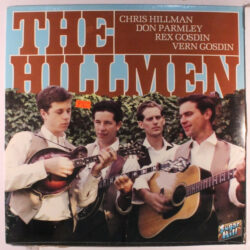 Gosdin, and Don Parmley. This led to him working with producer and former Byrds’ manager Jim Dickson to record Morning Sky for the label. The album was acoustic with covers of mainly then-contemporary folk and country songs with backing from Hillman’s longstanding musician friends. The fact that Sugar Hill was an independent label meant there was no undue pressure on Hillman to record an album to meet the current trends in music, and he was free to follow his own muse, which resulted in very positive reviews for Morning Sky. He released a companion album on Sugar Hill in 1984, Desert Rose, which was similar but was more of an electric country rock album, and received similarly positive reviews. Both albums provide the template for the Desert Rose Band, which Hillman formed with Herb Petersen, John Jorgensen, JayDee Maness, Steve Duncan and Bill Bryson, that finally enabled Hillman to take his vision of country rock and bluegrass to the bank in the late ’80s and early ’90s.
When the Desert Rose Band folded, Hillman continued to follow his own muse, releasing country rock and increasingly acoustic bluegrass-flavoured albums, more often than not involving Herb Pedersen, culminating with the Tom Petty-produced Bidin’ My Time in 2017. These albums saw Hillman consolidate his position as a leading figure in American roots music and allowed him to reconnect with his original love of Bakersfield country, bluegrass and the mandolin, occasionally reimagining songs recorded by the Byrds and Manassas.
Can’t Live With It: “Clear Sailin'” (1977)
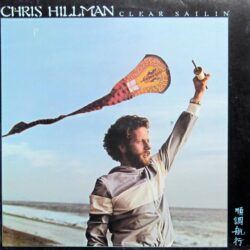
You can make a case for saying that Asylum Records was the label of the ’70s, and they did this largely by taking the Byrds influence on subsequent artists to the bank. Two groups that had been influenced by Hillman in the Byrds, Flying Burrito Brothers, and Manassas and had found commercial success by moving the music in a more soft rock direction, were Loggins and Messina and Firefall, who include original Byrds drummer Michael Clarke and latter-day Burrito Brother Rick Roberts. This was the sound that Chris Hillman echoed on Clear Sailin’.
Throughout his career, Hillman had strove to be professional, but that isn’t always enough. The other challenge he had was that while his songwriting was coming on in leaps and bounds, he wasn’t in the same class as some of his earlier songwriting colleagues. At the time of Clear Sailin’, Hillman was writing a lot with Crawdaddy Editor and author, Peter Knobler, and one of the problems with Clear Sailin’ was that most of the songs didn’t stand out from the soft rock production. However, a cover of Danny O’Keefe’s Quits and Hillman’s own Rollin’ and Tumblin’ that was inspired by his then latest divorce, were really quality songs that received an appropriate vocal from him. There was nothing ostensibly wrong with Clear Sailin’ from a professional viewpoint, but except for the two songs mentioned, there is nothing to make the album stand out either. While Hillman moved on to McGuinn, Clark & Hillman after Clear Sailin’, his writing partnership with Peter Knobler continued and proved to have legs when other artists covered some of their songs, and Hillman continued to occasionally record co-writes with him.
Can’t Live Without It: Morning Sky (1982)
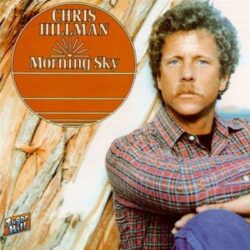
In the early ’80s, bluegrass music was going through one of its occasional popularity phases as younger musicians like Tony Rice, Jerry Douglas, David Grisman, Sam Bush, New Grass Revival, and the Seldom Scene were adding contemporary songwriters, and elements of jazz and rock’n’roll to the bluegrass of Bill Monroe and Flatt & Scruggs to create something that was called newgrass. One of the labels supporting this trend was Sugar Hill Records, founded in 1978 by Barry Poss and David Freeman. The interest generated in newgrass meant there was also an interest in the roots of the new genre, which stretched back to the folk revival of the 1950s and early ’60s. Hillman’s recordings with the nascent bluegrass bands of the West Coast, like the Scottsville Squirrel Barkers and the Hillmen,
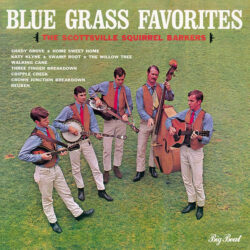
who played the same circuit as the legendary Kentucky Colonels, were part of this history, but were records more often heard of than heard. Jim Dickson still held the rights to the Hillmen’s only album, and Sugar Hill were interested in re-releasing this part of recent bluegrass history, something they did in 1981.
Jim Dickson had a major influence on the development of rock music in his role as the producer of the Byrds, and in his role as a producer for Elektra Records, he helped folk, country and bluegrass merge when he worked with the Dillards. He first met Hillman when the Scottsville Squirrel Barkers went into World Pacific Studios in Hollywood, California, to audition for him, and he was impressed with Hillman’s vocals and mandolin playing. His relationship with Dickson eventually led to him joining the Byrds, and the rest, as they say, is history. There was no label interference in the production of Morning Sky, and Hillman looked back to his pre-Byrds career with an acoustic country/bluegrass album of contemporary and early country bluegrass songs.
Joining him were Bernie Leadon (ex-Eagle and ex-Scottsville Squirrel Barker) on banjo, Kenny Wertz (ex-Scottsville Squirrel Barker, ex-Flying Burrito Brothers, and ex-Country Gazette) on guitar and harmony vocals, Al Perkins (ex-Flying Burrito Brothers, ex-Manassas, and ex-Souther-Hillman-Fury Band) on dobro, guitar and steel guitar, Byron Berline (ex-Dillards, ex-Flying Burrito Brothers, and ex-Country Gazette) on fiddle, Emory Gordy Jr. (ex-Elvis Presley’s TCB Band and ex-Emmylou Harris’s Hot Band) on bass. Last but far from least was Herb Pedersen (ex-Dillards, ex-Country Gazette, and ex-New Kentucky Colonels) on guitar, banjo, and harmony vocals, who subsequently worked with Chris Hillman for the rest of his career.
The opening track is a cover of one of Bob Dylan’s most covered songs, Tomorrow Is A Long Time, and Hillman brings his own take on country to the song. The Scottsville Squirrel Barkers were surprisingly influential, with band members going on to play with the Byrds, Flying Burrito Brothers, Country Gazette, and the Eagles, and they helped start a wave of change that reached Nashville at the start of the ’70s. Kris Kristofferson’s The Taker was recorded by Waylon Jennings as he was trying to shake off the constraints of the Nashville system. Here, Hillman ups the country-bluegrass sound and makes the song timeless with the help of Bernie Leadon on banjo. Written in 1946 by Wally Fowler, the gospel song Here Today & Gone Tomorrow was probably heard by Hillman when the Louvin Brothers released their version in 1958. Here, he does his heroes proud. The title track, Morning Sky, was written by Dan Fogelberg, who built a multi-platinum career on a country folk sound with a pop gloss, which is missing from Hillman’s version. The young Jerry Garcia was a big fan of the Kentucky Colonels, and the Grateful Dead’s Ripple and the country-bluegrass of the American Beauty album were clearly influenced by those earlier times. It is hardly surprising that many Deadheads think Hillman’s is the best cover version of the song.
Danny O’Keefe had the only hit in his own career with ‘Good Time Charlie’s Got The Blues’ despite various artists recording many of his songs. That song has become something of a standard, and Hillman’s version looks back to O’Keefe’s own country folk roots. Don’t Let Our Sweet Love Die was written in 1940 and became something of a bluegrass standard, and Hillman’s version sits perfectly in that tradition. While the Souther-Hillman-Furay Band didn’t gel as a band, they did record some good songs. Here, Hillman gives Souther’s Mexico a much more organic arrangement. At the start of the ’80s, John Prine moved towards a more country-influenced sound, and Hillman’s cover of his then-contemporary It’s Happening To You just confirmed this shift. Chris Hillman’s and Gram Parsons’ careers are inextricably linked, and the album closes with a version of Parsons’ signature song, Hickory Wind, that is all country with not a hint of rock.
On the one hand, Morning Sky is not a remarkable album. It doesn’t break new ground so much as celebrate Hillman’s musical past; it doesn’t contain any Hillman songs, only covers, and has a runtime of under thirty minutes, but what it does do is let the real Chris Hillman shine as a complete performer. Hillman may be a member of the Rock & Roll Hall of Fame, but he has always been happier as a country and bluegrass performer. During his time as a band member, he was never considered a great vocalist, but the vocals on Morning Sky are the first time on record that the vocal promise first heard by Jim Dickson was consistently there for all to hear. It was the first album where Hillman demonstrated the depth of his skills as a mandolinist as a mature artist. The acoustic sound was captured perfectly by Jim Dickson, and because the musicians were all familiar with each other, they are all relaxed but are as tight as hell at the same time.


