
With springtime now upon us, it is time to delve into some of the recent folk and roots music embracing these warmer, albeit not always drier, times. A plethora of new releases landed in the inbox this month. Usually, we would thin these down to about five, but they are all worthy of mention, so we have seven splendid volumes to listen to and talk about. There is traditional folk from Lady Maisery and friends, a platter of Nu-Folk from Edinburgh’s Anna McLuckie and some Appalachian old-time roots-infused music from Old Spot. Interspersed with some other gems, settle in, less of the jibber jabber and on with the music.
 Edinburgh-born Nu-Folk singer and clàrsach player Anna McLuckie is first up with her new album The Little Winters on Hudson Records. The title is an American term for a cold snap or late frost that occurs after spring has sprung. There is nothing frosty about McLuckie, who has a magnificent voice. We were blessed with the stunning vocals of Claire Vine last month; McLuckie hits the vocal top spot this time with this set. You only need to hear the opening line of the collection, “I’m waiting for a blackberry winter, oh how embarrassing, love has stained all my fingertips red at the tip again“, and you will be drawn in by McLuckie’s enthralling vocal delivery and storytelling. If you want a comparison, then a reference point could be the brilliant Flo Perlin, whose album Clay was given 10/10 almost two years ago by AUK’s David Jarman. The clàrsach harp playing is mesmeric throughout The Little Winters, ably assisted by friends and long-time collaborators George Burrage on bass and Awen Blandford on cello and vocals. Sean Rogan adds banjo along with production duties. Winterlude is a brooding introduction to the following tune, Jay Bird, as McLuckie’s youngest sister delights us with how she thinks it would feel like to be a bird. The segway from this spoken word into Jay Bird is magical, where the pace increases, and McLuckie’s voice takes over. The music takes you on a flight with that most elusive of woodland birds. A Man With No Tide has a distinctly Scottish vibe, and the sound is exquisite and almost spooky, growing until McLuckie’s harp joins. The voice takes centre stage and will hold you in rapture. It is simple, beautiful and lyrically spectacular. “A burden without knowing, your charm is quite disarming, a jug that’s overflowing, with thoughts from wells so shallow, shallow”. You may feel emotionally spent as she wrings emotion out of every line and musical movement, but she has enough spirited moments to enjoy. The soaring instrumental, New Northern Lullaby, is an excellent example of how McLuckie blends the music’s drama with playful vocal noises. All in all, a fabulous record and an early contender for folk album of the year. (8/10)
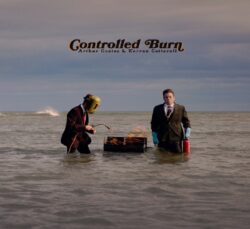
Progressive folk duo Arthur Coates & Kerran Cotterell return with what they describe as their boldest and most expansive recording yet, called Controlled Burn. The cover has them knee-deep in the sea, with a burning barbecue. Homage to the single The Great BBQ in the Sea released in November 2025. Coates and Cotterell met at Sidmouth Folk Week back in 2018. Coates plays the fiddle while Cotterell adds guitar. Finding common interests, they work well together. It is a difficult collection to define, and really, there is no need to. It has something of everything: thumping bass, quiet and reflective moments, almost heavy rock and Scottish reels. Coates and Cotterell leave nothing out, and lyrically, there are many striking moments. The collection ends with a wonderful yet chilling ecological warning, “Nothing but Wisdom,” written by Vermont’s own Pete Sutherland. The second single from the record, Wallbreaker, is a driving rock song with Coates choppy fiddle throughout. Excellent harmonies throughout and a wonderful bass line which holds it all together. Big Bass Stuff is exactly as its title suggests. It is a dazzling instrumental piece in which the bass takes centre stage, accompanied by Coates’ fiddle. The Right To Roam organisation in the UK would love the sentiments of The Land, a protest against environmental mismanagement and a reminder that the land belongs to us all, and should be there for everyone to enjoy. Song of Choice is where you can truly understand the progressive folk tag. It has a wonderful Prog-rock feel, with a driving rhythm and a dose of social commentary that reminds us, as Woody Guthrie did and AUK does every week, to “Fight the fascists“. The fiddle takes flight again in a spectacular fashion. Controlled Burn would make a marvellous addition to anyone’s folk catalogue, and don’t worry about the heat, check out the cover, these guys are professionals. (7/10)
Dominion of Spells 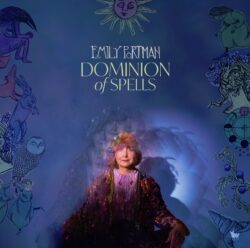 is the 4th studio album of original songs from Emily Portman. An album released last year titled Orca was not, as some fans believed, a Portman release but rather an AI-generated collection styled around her voice and style. Scary stuff, and that was the second release using her name. This set, released on Hudson Records, is the real deal. Opening with the spellbinding Turn Again, led by Portman’s beautiful piano playing, you will straight away get a sense that this is going to be a wonderful journey. Portman draws from the traditional to produce something new. Included are songs inspired by folklore, and the suite takes a refreshing feminist stance. Portman expresses how women were and still are treated as adornments. She explores the old fairy-tale ending, reimaging it without self-sacrifice. Mary Hampton supplies backing vocals for the project, and you may recognise celebrated guitarist Martin Simpson. He plays some delicious slide guitar on East of the Sun, along with a host of other fabulous musicians. There is a change of pace on Moon Dark, which was written whilst Portman was suffering an intense migraine triggered by monthly hormonal shifts. Portman sings “Don’t come too close / But hold my hand / If I ask you to / Please understand“. The intensity of the music and the staccato violin fit perfectly with the mood, “At moon dark / I get a little prickly“. Portman has a gift for melding modern times with traditional folk ideals. Dreamless Sleep investigates our relationship with our phones and tablets. Our sleep patterns are no doubt affected by late-night scrolling and clickbait articles. The harmonies on Three Magic Notes with Lucy Farrell and Lucy Hampton are exceptional, as Finnish folklore is revisited in an attempt to discover those magic words. Waiting Room is beautiful and moving. Musically, the simplest but remarkable tune using only piano and Portman’s striking vocals, exploring pregnancy loss and a desire for the waiting room to transform into Fairyland so that the Queen can tend to women in grief. Owl Light addresses women’s safety in the evening, outside the home. Portman wrote this after she was violently verbally abused by a group of men when out running in the twilight. Ending her runs and finding herself staying in, this is a call to reclaim the “owl light” for all. Incredible and powerful words which end with the title track Dominion of Spells, a phrase coined by William Harvey, physician to King James I. He dismissed women’s mental health disorders as a case of them being “under the dominion of spells“, with the only cure to calm them, pregnancy. You would hope we have evolved from the early 1600’s; however, there is still work to do and attitudes to change. Portman has given food for thought as well as a terrific set of songs. (7/10)
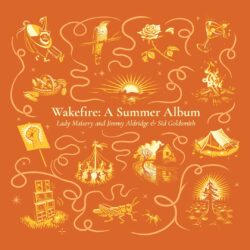
Folk supergroup Lady Maisery and Jimmy Aldridge & Sid Goldsmith have joined forces again to produce a collection for the summer. After the success of their Awake Arise project, celebrating winter, this is a natural progression. This is a double-length album released on Hudson Records. Weighing in at 27 tracks, there is a lot to take in, including songs, poetry, music and monologues from the band members. There is a mixture of reimagined traditional songs mixed with the new, and all in all, it is a magical package we come to expect from such gifted artists. Birdsong abounds, welcoming you aboard as Hannah James takes Anne Briggs Summer’s In and adds her own spin. Sid Goldsmith recalls his first May Day celebration at the Padstow “Obby” Oss Festival with the reading of On May Morning. This morphs seamlessly into Following the Old Oss, a Tony Deane song celebrating the Padstow festival, and it is only fitting that it is followed by Padstow May Song, calling all to unite. The disturbing May Day includes an old newsreel recording from a post-World War II May Day rally in Trafalgar Square. A disparaging view from the commentator as he pronounces it all, “What a waste of a lovely spring day“. Rowan Rheingans’ written words ask, “Which side are you on?” It is potent and ultimately topical with recent world events and the increased police powers regarding protests. The traditional Swedish herding song Limu is included and sung beautifully, and has a mystical quality. The words wishing safety and ease to young women heading high into the hills to graze sheep in summer. Jimmy Aldridge recounts a rave in the passage Free Party. Initially, this feels out of place in a folk album, but these impromptu meetings are just a modern summer celebration. The way Aldridge uses the musical “drop” after the pounding beat to bring in the magnificent fiddle is dazzling, capturing the excitement brilliantly, “because summer won’t last forever“. There are many special moments within the record, one of which is Hazel Askew’s stunning River Came Back. There are many hidden rivers and canals that flow below the streets of London, such as the Fleet and Tyburn. These appear lost forever, however, “One day the river came back / The tarmac cracked and broke and crumbled away”, breath-taking imagery. Aftermath has an Americana feel with driving banjo. A song written by Aldridge after seeing a forest near his then home in Bannau Brycheiniog, Wales and a lone tree holding the nest of a goshawk and her chicks. Listen out for the gorgeous harmonies that weave around the words. There is a vocally impressive cover of Bela Fleck’s What’cha Gonna Do? Sounding like a chain gang at work. A call for environmental change and a warning in these times of ecological crisis. The record is bookended at the beginning by the May festival and at the end by the harvest one. Harvest Festival and Harvest Song lead us towards the end of another summer. Do we still have that spirit? Is the spectre of those times somewhere within us? There is something natural and almost ancestral about the whole record and the way it is performed. It’s a celebration and will help you regain some of that past and improve the future for all. “We’ll all stand up together“.(8/10)
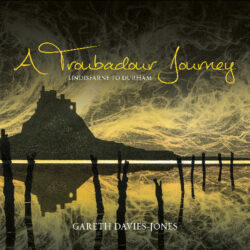
The story and the drama that goes with this release from singer-songwriter Gareth Davies-Jones is as interesting as the music itself. Davies-Jones walked from the Holy Island of Lindisfarne to Durham Cathedral. A pilgrimage of over 140 miles along the St Oswald’s Way and The Way of Light. Absorbing the landscape, the weather and the people as he sang for his supper, performing concerts at the stopping points along the way. The result is this intriguing collection he named A Troubadour Journey: Lindisfarne to Durham. The physical CD album comes in an incredible package showing stunning photographs of the landscape. The inner photograph shows Davies-Jones with his small guitar on his back, with “Faith” written on the bag, setting out on a journey of discovery. The accompanying 32-page booklet includes further exquisite photography, lyrics, and knowledge passed on by people he meets on the walk. All that before we even get to the music. Davies-Jones completed the expedition in June 2025. The track list is chronological and captures the feeling of the rugged, expansive but beautiful Northumberland coast. Green and Blue soars above the ocean with the lyric, “This place will stay with me, no matter where I go”, proving what one local told him, that “this place will change you“. The simple guitar gives you a feeling of the warm sun and sea breeze on your face. There is something mystical, wild and untamed about this coast and area of our island. It is this mysticism that drew many pilgrims to set out along the trails. Davie-Jones realises what it is like to be a wayfarer in the song We Are All Pilgrims; he realises that “We are all pilgrims / We are all travelling along / We are all looking for somewhere to belong”.
Follow The Wind explores the true feeling of putting one foot in front of the other, “Walking like a troubadour,” like an old-time minstrel. As Davies-Jones reaches the moorland with the end in sight, you can feel the elation in the telling. Wonderful acoustic guitar throughout, and lyrically impressive, it is a journey well worth taking. The set concludes with an immersive, delightful track of natural sounds, including birdsong, footsteps, the opening of gates, the sound of crashing waves, the cries of gulls and seabirds, and the unmistakable song of the skylark. A fitting and marvellous conclusion to the journey. (7/10)
Joe Danks and Rowan Piggott are the duo Old Spot. Their second album, Old Spot II, released on Scribe Records and recorded at Heriot Toun Studios in the Borders, includes a mixture of reworked traditional songs and originals. Piggot plays the fiddle and viola, and Danks plays the banjos, including the traditional gourd banjo. This gives the record a distinctly Appalachian feel. Opening with their version of the old song Tom Dooley, the narrative pans out over a plaintive banjo before a brooding violin joins in. This traditional murder ballad, made new, sets the tone for what is to come. Although firmly set in transatlantic territory, there are nods to English folk and beyond. Am I Born To Die has an Eastern European, Russian feeling to it. The violin excels as it rises to a crescendo, then falls to a stunning dead stop, after which the music restarts. It’s breath-taking stuff. Piggott’s fiddle gets a further workout on Don’t Spare The Horses. Ben Nicholls provides bass on the song, and incidentally provides bass on Emily Portman’s album above; he’s definitely keeping busy. The traditional tune The Silk Merchant’s Daughter, originally collected by John Cohen in 1965, is beautifully sung. The duo chose to sing a cappella, as did North Carolina’s Dellie Norton in her version discovered by Cohen. A style passed down by English and Scottish settlers in the Southern Appalachians. It’s a gorgeous adaptation and a fitting tribute to Norton’s memory. Rabbit In A Log has some impressive picking as the tune starts as if the duo are tuning their instruments before slowly and surely building to this traditional song. The mournful fiddle adds to the ambience that feels like a firelit one. Completing the suite is the beautiful Square and Compass. Co-written by Danks and Piggott around a fire at the hostelry of the same name. It is fitting as the band is all about jam sessions with musicians playing with and off each other, producing magical moments. This is not an Appalachian tribute album but a transatlantic joy ride. Enjoy a night below the stars, around a fire with this playing and don’t turn it off too early, something hidden this way comes. (7/10)
 Finally, onto the Songs of the Folk. This is the second full-length album release from the Western North Carolina folk duo. Lauren Cason and A.T. Cason spent several years touring, mainly in the UK, playing historic folk clubs including Cambridge, Colchester, Norwich, and Gateshead. The songs were recorded in England, partly in an old barn in Malden, Essex, and the rest in the first church of England parish chapel, St. Michael the Archangel, in Woodham Walter. The result is a dazzling melting pot that blends Appalachian folk with the herbs and flavours of English music. There is an almost Simon and Garfunkel feeling to many of the songs without lamenting railway stations in Widnes. There is an underlying joy, despite some of the subject matter, in how Songs of the Folk viewed their time over the pond. We are going to break from AUK protocol here. As the duo share the same surname, we will refer to them by their first names to distinguish them. The Orphan begins the set as the Casons share the vocals, one line at a time. It captures the desperation to belong and find a connection with someone, with the anguish of feeling alone. There is a harmonica, and harmonies abound throughout; as an opening, it will leave you looking forward with anticipation to what comes next. The guitar on Before The Dawn is stunning and takes centre stage before A.T takes vocal lead. Gather Round is a call to leave the modern world behind and just sing. The “Hallelujah” section is uplifting over a simple banjo lead. Something Deep and Lonesome takes the pace down, and the sound of the fingers along the fretboard is a joy. A.T almost breathes the lyrics over a mournful accordion sound before Lauren joins in. Thank The Lord (I’m Finally Free) is pure gospel fun. This shows the band’s versatility, with some great harmonica and picked banjo. Louisiana Pantomime may bring to mind the fabulous, already-missed Show Ponies. A New Orleans ragtime piano plays as Lauren takes the vocal lead. This is sure to become a live favourite. Lauren again shows her vocal skills with the soulful Benediction Song, over a wonderful guitar, singing “There will / There will come a moment in time / When life won’t pass us by”. The overall feeling is that Songs of the Folk absorbed much from their time touring the UK without ever forgetting their roots. The result is an interesting journey into something with a foot in two worlds. (7/10)


