
Thin Lear’s tales of death and loss sweetened by delectable pop melodies.
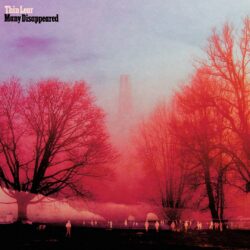 New York-based Matt Longo, aka Thin Lear, grew up writing short stories, and that narrative style pervades his Many Disappeared album. Longo says he is influenced by David Bowie and Karen Dalton, amongst others, and aspires to “build a sonic bridge” between the two.
Many Disappeared is his first album since Wooden Cave (2020). It was recorded with Matt Ross-Spang (Margo Price, Jason Isbell, John Prine) in Memphis with players including Ken Coomer (Wilco), Will Sexton (Alexa Rose), Rick Steff (Lucero), and Dave Smith (Al Green, Kris Kristofferson, Cat Power), among others. “These were guys I grew up listening to,” Longo says. “It was an honour to be in the same room.” He sought out Ross-Spang specifically for the lively bigness he brings to any record. “Walking in there the first day, people were emotional, and I knew I was on the right track.”
Ever on the lookout for inspiration, Longo collects stories and builds songs around them. The album opener, Silver Bridge, tells a story based on the collapse of the eponymous bridge spanning the West Virginia-Ohio border in the winter of 1967. The lyric touches upon the legend of the Mothman, who appeared to some beforehand and foretold the disaster which killed 46. There’s a mystical mournfulness to the song which Longo’s voice captures with its tremor.
The second song, Harmony and Gold, contrasts the sorrow at the end of a relationship with the memories of better times while reviewing those memories in the context of hindsight and eventually from a later, less emotional perspective. The piano and synthed strings swell with the feelings of the lyrics. Witness’s jaunty melody and accompaniment offset a traumatic tale of the 8-year-old Longo witnessing the death of a cat in the road. He frames a later human bereavement in the light of that earlier experience in a rather affecting way.
The descending tune of A Cherished Man introduces pen pictures of three apparently disparate characters: Andy, an alcoholic; Annie, a self-harmer; and Charlie, an eating-act in a travelling show. Their tales are linked by the chorus “They say, you’re only whole/You’re only true/ Long as someone dreams of you/ And if you’re just set up to fall /You find a way to feel at all” in which Longo strips away the observer’s judgment and emphasises the individuals.
Mattoon is loosely based around the Mattoon Mad Gasser panic, which gripped the S Illinois town in a two-week period in 1944. The song is set in a happy pop melody, at some odds with the dark lyric. The Haunt was driven by the death of Longo’s grandfather just before he began writing the album. Feelings were amplified by Longo and his partner thinking about starting a family, where his absence would be felt. The ethereal melody and plaintive vocal provide the setting for Longo’s expressions of loss.
Heavy Dreams is a piano and acoustic-led classic pop song redolent of the Pernice Brothers. It leads into Buddy, in which Longo addresses a friend in trouble against a backdrop of some resonant guitar from Sexton.
The final pair of songs are The Visit, set in a swirling organ as the percussion builds through the verse and chorus, joined by some nice honky tonk piano, and the album’s final track is Healing Alone. It’s one of only three tracks to break the 4-minute mark. Opening with an acoustic guitar figure soon joined by some delicate piano, Longo leads the listener through a conversation between the living and the dead: “Friend, can you hear the call? /From deep in my tomb /Oh, I see ’em now, the sad eyes /Fixed to the stone”
The ten songs making up Many Disappearances weigh in at 33 minutes, although with the harrowing nature of much of the content, despite the sweet pop melodies, that doesn’t feel like it’s too short.
nbsp;


