
Nordic americana with a slightly heavier tinge.
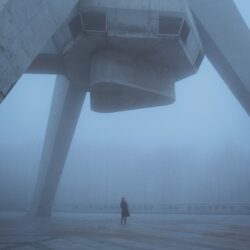 I’m Kingfisher is the alter ego of Swedish singer-songwriter Thomas Jonsson. Give Up Together is his sixth album under that guise and comes three years after his last release, Glue, which was far less structured and had a jazzier, looser feel to it.
It opens with the lead single Years of Depression, which is an emotional entry point and undoubtedly sets the tone for the tracks to come. It certainly has a heavier tone than his earlier work, but it still has that slow, thoughtful application that signifies Jonsson’s work. His writing is both deep and reflective, and in many ways can be seen as almost Leonard Cohen-like in its imagery.
“Here I am. White as f**k and privileged, but also an open wound. I go to the bathhouse to enjoy silence, with naked men with no bodies. Now I’m living in a small, small room watching people shove down poultry for days on end”. Deep stuff indeed. Most songs are delivered in this trademark high vocals, which often drifts into falsetto.
Your Dad’s Bad Days is one of the album’s most defining songs. It can be heard in its entirety in the critically acclaimed Swedish feature film The Quiet Beekeeper, which made a broad cinema premiere in April. It was also the opening movie of the Gothenburg Film Festival and includes a cameo by Thomas and a string of film-exclusive I’m Kingfisher songs.
The title track switches between the semi-spoken and more falsetto and is augmented by a delightfully wistful cornet played by jazz musician Bebe Risenfors. It again moves very much at its own pace, just like the rest of the album. The only slight exception to this is Winter 85/86, where he is joined in on the vocals by Alina Bjorken, which is marginally more upbeat.
Jonsson tells us he has slightly changed the way he approached this project: “And this time I’ve been keeping the songs open, being able to see them as whole in a way that I haven’t when working on the previous albums. I’ve been picking the songs up over and over, tweaking and changing, until the recording days really.”
He has, however, managed to keep that stripped-back, atmospheric folk music feel at its best. It is slow and subdued and never feels in a rush to get anywhere, and if you have enjoyed his earlier work and that vibe, this will be absolutely an album to check out. Has it been a huge leap forward? Probably not, but if you have a winning formula, why change it?
Jonsson has been described as “Sweden’s best kept secret“. This album may, however, help him step firmly into the spotlight.

