
Glowing collection of folk-pop gems spun with wit and wisdom.
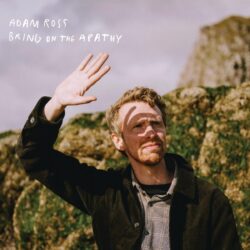 When an album opens with a track so uniquely wonderful in its form and presentation, the lyrics, melody, and arrangement all in perfect symmetry, one of two things might be happening: the album has been front-loaded with the best song, and things will begin to level out shortly thereafter, or it’s simply representative of the quality of songcraft contained within. In Ross’ case, it’s the latter. Recorded using traditional analogue techniques and featuring a stellar cast of supporting players, Bring On The Apathy features ten exquisitely delivered songs bursting with honesty, humour, and a sense of playfulness, often on the same track. The playing is excellent throughout, as are the vocal harmonies, which are simply sublime. Arranged by frequent collaborator Chris Duncan, the backing arrangements are unfailingly inventive and the harmonies striking.
Berkeley Street, the track in question, begins with some lovely, understated violin and an upbeat, lilting melody before Ross’ wonderfully expressive voice – as important an instrument as any other on the record – arrives to guide the song to its compelling chorus. Ross’ astute observations on the passage of time and ageing are brimming with his trademark insightful lyrics and witty wordplay. Certainly, it’s as strong a song as any artist would love to have to lead off an album. But happily, it doesn’t end there. The follow-up track, I Never Thought You Couldn’t Not, provides further proof of Ross’s lyrical prowess and wily observations as he sings: “You lack the charisma to be a cult leader / But you’re knocking it out of the park with your bad ideas”. A mid-tempo folk-rock number, it features some captivating violin and piano interplay that helps carry the song towards its soaring, devastatingly catchy chorus. It’s a template Ross revisits for large portions of the album, but it’s a winning formula that never falters. enters
Things slow down slightly with Unrequited where the band locks into a soulful groove, lifting the song without ever getting in the way. It features some exquisite piano along with some stirring, cleverly arranged harmonies that bring the song home on a joyful note. At the core of the song, as on all the others, is some inspired and creative ensemble playing that complements the songs in the best possible way, without ever detracting from Ross’ delivery. Deeper in the album, the title track, Bring on the Apathy, rolls out slowly on a bed of acoustic guitar and piano before morphing into a surging folk-rocker featuring a fluid bass line and some rollicking piano that verges on boogie-woogie as the song fades out. The genesis of the song came about as a reaction to the difficulties and demoralising aspects of promoting something creative like music that, in all likelihood, most people will not be motivated to seek it out, leading Ross to sing: “You’ve got disdain and I’ve got deflection / Trying out a new reflection / Bring on the apathy”. As Ross relates, “It’s about recognizing the abundance of apathy in the world and trying to inure myself to it and get some kind of control and power over it“.
There are far too many highlights on this album to name them all; however, Lost In The Daylight deserves honourable mention. It’s a piece of sunny folk-pop heaven that exudes pure bliss. Coming in at just under two minutes, it feels all too brief, much like a Scottish summer, but in similar manner, it makes the experience all the more enjoyable.
The album closes on a grand note with the resplendent ballad, Time, a natural bookend to an album that deals with the fleeting nature of time. It’s a thoughtful piece that, in contrast to the album’s opening number, reflects more on the nature of time and purpose and Ross, in a moment of existential clarity, or perhaps dread, asks: “What am I supposed to do with all this time that we call life?” The album’s most pensive track, it features lush accompaniment in the form of a gorgeous violin pattern, coupled with some luminous harp, adding just the right amount of pathos as the song fades gently into that good night. It’s a tender finish to a brilliant album that never disappoints.

