

It is difficult to underestimate the influence that Dave Edmunds has had as a guitar virtuoso, producer and recording artist on roots-based artists in the UK, Europe and America, and while he has had periods of popularity and commercial success, he was largely semi-retired from the 1990s until his official retirement statement in 2017. He first came to prominence with the Welsh trio Love Sculpture, who had a massive hit in 1969 with their take on Aram Khachaturian’s ‘Sabre Dance’, which received massive support from DJ John Peel. While Love Sculpture announced Edmunds as a new guitar virtuoso in the blues rock style of the time, this was more at the behest of the label, Parlophone, than the band’s decision, who were just glad to be able to get the experience of recording. What made Dave Edmunds stand out as a guitarist even at this early stage of his career was that he took inspiration from guitarists like Chet Atkins, James Burton, Jerry Reed, and Merle Travis rather than the black blues players who were influencing the second British blues boom of the late 1960s. Love Sculpture broke up in 1970 when they were touring America, and while Edmunds is a great live performer, he has always had an ambivalent attitude to the slog of long tours.
Edmunds returned to his Welsh homeland and invested some of his ‘Sabre Dance’ windfall in his friends Kingsley and Charles Ward’s Rockfield Studios, which they had built on the family farm in Monmouthshire in 1963, where Love Sculpture had recorded the demos that had landed them their Parlophone recording contract. It is doubtful that Dave Edmunds appreciated the significance that this would have for his evolving career at the time, but his investment gave him unlimited access to Rockfield Studios, provided there was no paying booking, and this enabled him to develop his skills as a producer and studio engineer. The first success of this arrangement came with Edmunds’ version of Smiley Lewis’s 1955 hit, ‘I Hear You Knocking’, which was a UK Christmas number one and eventually sold 3 million copies worldwide. The unexpected success of ‘I Hear You Knocking’ meant that Edmunds did not have any recorded material to build on the momentum nor did he have a band to tour with, and it wasn’t until 1972 that he released his first solo album, “Rockpile”, which was largely a one-man band recording, a format that would feature prominently in Edmunds’ recordings. Apart from ‘I Hear You Knocking’, “Rockpile” included covers of Dylan, Neil Young, Chuck Berry, and a couple of R&B covers, contemporary covers of Long John Baldry and The Move’s Trevor Burton, and an Edmunds original.
While “Rockpile” was a critical success and caught the interest of other musicians, it was not a commercial success despite offering a more roots-based music filtered through contemporary production values. However, it led to Edmunds being asked to produce other artists, including Brinsley Schwarz’s last studio album, 1974’s “The New Favourites of……..Brinsley Schwarz”, which marked the start of a working relationship with Nick Lowe. Edmunds’ “Subtle As A Flying Mallet” was his one-man band homage to the music of the 1950s and 1960s, particularly the sounds of producer Phil Spector. While some critics questioned why anyone would want to recreate these sounds, it was a lot of fun, and these refreshed sounds proved influential on punk and new wave musicians of a few years later. The album also included a couple of tracks from the 1975 film “Stardust” that gave Edmunds his first acting role as a member of David Essex’s backing band. Also included was a version of Nick Lowe’s ‘She’s My Baby’ that featured Lowe on bass, the Brinsley’s Bob Andrews on piano, and future Dire Straits member Pick Withers on drums, plus two live tracks where Edmunds was backed by Brinsley Schwarz. While the album was not a commercial success, it did include two tracks that were top ten singles in the UK and various other European countries.
Edmunds, by now, was making enough musical noise that he could count Robert Plant as a fan, which led to him being offered a deal on Led Zeppelin’s Swan Song label that gave him full artist control. The tracks that made up his first Swan Song release, 1977’s “Get It”, had already largely been recorded by Edmunds at Rockfield Studios before he got the deal, and they include several Nick Lowe tunes, including the first recording of his classic ‘I Knew The Bride’. Dave Edmunds was never a prolific songwriter, and he was impressed with Lowe’s ability to write songs quickly. The album included former Man drummer Terry Williams, who had also played with Love Sculpture at the end of their career, Lowe on bass for some tracks with fellow Brinsleys’ drummer Billy Rankin and Bob Andrews on piano, and Chilli Willi’s Paul Riley on bass. The songs were more contemporary than on Edmunds’ earlier releases, and while it was a very good album, it felt like a collection of great tracks rather than a complete album.
Peter Grant was keen for the new signing to the Swan Song label to tour America, and this meant that Edmunds needed a band. Nick Lowe was a natural given their already strong relationship, Terry Williams was available as Man had disbanded in 1976, and Edmunds had been impressed by guitarist Billy Bremner, whom they had seen on the pub rock circuit with Neil Innes’ Fatso, and who was also a very good songwriter. Edmunds named the band Rockpile after his first solo album and his production company. Rockpile proved very popular and influential as a live attraction in America, however, because Edmunds and Lowe were signed to different record labels and the animosity between Edmunds and Grant towards Lowe’s manager and label boss, Jake Riviera, Rockpile only recorded one album under their own name, 1980’s “Seconds Of Pleasure”, after Edmunds had left Swan Song and tensions between Edmunds and Lowe over their production styles meant the band was coming to an end at the time of the recording.
Rockpile’s true legacy is built on their live performances and the band’s recording of two Edmunds-produced solo albums, 1978’s “Tracks On Wax 4” and 1979’s “Repeat When Necessary”, and Lowe’s self-produced “Labour Of Lust” from 1979. All three albums are near-perfect albums and are highlights in Edmunds and Lowe’s solo catalogues. With Rockpile, Edmunds had found a band that could meet his exacting standards in the studio while avoiding the feeling of perfectionism that can mark some of his recordings, and with Lowe and Bremner, it gave him access to contemporary songs that had the spirit of early rock and roll.
At the start of the 1980s, Dave Edmunds’ stock hadn’t been higher. Swan Song released an album of Dave Edmunds outtakes, “Twangin…”, with backing mainly by Rockpile in 1981, and while this was an interesting album with some great individual tracks, it was not up to the high standard of his previous two albums. His profile as a producer was in the ascendancy for his work with The Stray Cats, The Everly Brothers, George Harrison, Robert Plant, Willie Nelson, Jeff Beck, Carl Perkins and The Fabulous Thunderbirds. He signed with major labels Arista for the UK and Columbia for America after his contract with Swan Song ended. As Rockpile had disbanded, Edmunds decided to use Geraint Watkins and the Dominators as his backing band for 1982’s “D.E. 7th“, which was a roots rock album that very nearly achieved the same peak as his best work with Rockpile. However, things were about to change with 1983’s “Information”, which included two tracks produced by ELO’s Jeff Lynne, and Edmunds’ prominent use of synthesisers. “Information” proved popular in America, and 1983’s “Riff Raff” featured even more of Jeff Lynne as songwriter and producer. Unfortunately, it didn’t repeat the success of its predecessor.
Edmunds continued his production activities in the 1980s, but apart from a live album in 1987, he didn’t release a new album until 1989’s “Closer to the Flame”, which was a return to a more traditional roots rock sound with an American backing band. However, it didn’t fare any better commercially than “Riff Raff”. 1994’s “Plugged In” returned to the one-man band approach of his earlier albums but had a roots rock-friendly sound rather than the more elaborate earlier productions that matched the well-chosen covers and originals. Despite the positive reviews, the album was not a commercial success, and Edmunds entered semi-retirement, releasing a live album recorded in Sweden in 1999, and an updated version of “Plugged In” called “… Again” in 2013. His final recording, 2015’s “On Guitar…Dave Edmunds: Rags & Classics”, was an instrumental album of some of his favourite songs with his guitar replacing the vocals. Edmunds recorded without the aid of loops, sequencers or quantising as he recreated the original backing tracks in his home studio.
Can’t Live With It: “Riff Raff” (1984).
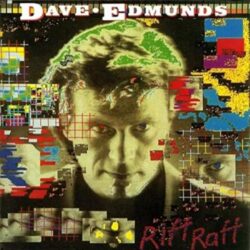 While Dave Edmunds, as a recording artist, was known for his love of pre-Beatles pop and rock & roll with a hefty dose of roots rock, Dave Edmunds the producer was always interested in the latest studio techniques. In the early 1980s, Dave Edmunds struck up a friendship with ELO’s Jeff Lynne after Edmunds became interested in the sounds Lynne was able to achieve, and this led to him writing one and producing two tracks on “Information”, which was successful enough for Lynne to produce 6 of “Riff Raff”’s ten tracks and write three of them. At the time, there was surprise that Edmunds had decided to work with Lynne, however, what nobody foresaw was Lynne’s work with The Traveling Wilburys and assorted Wilburys later in the decade. In fact, it was Edmunds who recommended that Lynne would be an ideal fit to work with Harrison when he wanted to record again.
The shock of the new 80s-style sound on “Information” was mitigated by the success of the tracks ‘Slipping Away’ and ‘Information’, which were added to Dave Edmunds’ live repertoire. While the musicians included Edmunds stalwarts Dave Charles, John David, and Geraint Watkins, and a guest appearance by Paul Jones, Dave Charles was playing D.M.X. digital drums, Edmunds himself played synthesiser as well as bass and guitar, and ELO’s keyboard player Richard Tandy also played synthesiser with Jeff Lynne. The Lynne/Edmunds relationship was strong at the time, as evidenced by the fact that Lynne, with Tandy, played on The Everly Brothers’ comeback album, 1984’s “ED 84”, which Edmunds produced.
Despite the mixed reception of “Information”, Dave Edmunds’ next album followed the same format but even more so. “Riff Raff” included John David from Edmunds’ band on bass with Terry Williams back on drums, Jeff Lynne and Richard Tandy, and Paul Jones appearing as a guest again. While Dave Edmunds was enjoying learning the new studio sounds from Jeff Lynne, the problem with “Information” and even more so with “Riff Raff”, was that the production was much more ELO than Traveling Wilburys. The album opens with an energetic take on the Four Tops ‘Something About You’ which allows the Dave Edmunds of old to exist in the 80s soundscape. However, the first of the three Jeff Lynne tracks, ‘Breaking Out’, confirms some of the worst fears about the suitability of the Edmunds/Lynne partnership. Dave Edmunds’ vocals sound heavily processed and are back in the overall mix, and his guitar is swamped by the synthesisers, and the electronic rhythms seem to suck the energy out of him. Things improve with the first of two Paul Brady more sympathetic covers, ‘Busted Loose’, which features a Jeff Lynne production more sympathetic to Edmunds’ strengths as a performer. We are back in synth-heavy territory with the Jeff Lynne written and produced ‘Far Away’. Welsh musician, producer, songwriter and bass player in the Dave Edmunds band wrote ‘Rules Of The Game’, which is definitely a tune that plays to Edmunds’ traditional strengths as a performer, but Edmunds’ production is too fussy, and his performance sounds restricted.
Edmunds’ production of Paul Brady’s ‘Steel Claw’ is more successful with his guitar to the fore for part of the song, and the fact that Tina issued her version around the same time that Edmunds released “Riff Raff” is an indicator of how much Brady’s songwriting star was rising at the time. Whatever the merits of Lynne’s songwriting and production of ‘S.O.S.’, there is very little evidence of Dave Edmunds, the roots musician and keeper of the rock & roll flame, in evidence. Lynne also produced ‘Hang On’, and while this is definitely a roots tune, the production means that it doesn’t bring out the best in Edmunds’ singing or guitar playing. John David’s country soul ballad with gospel overtones, ‘How Could I Be So Wrong’, is given a more sympathetic production by Edmunds. The album ends with the Edmunds written and produced ‘Can’t Get Enough’, and while it isn’t one of Dave Edmunds’ classic tracks, it is the most representative track on “Riff Raff”.
While there are some bright spots on “Riff Raff” amid the heavy-handed and often inappropriate production, the other problem with the album is the overall quality of the songs. One thing that normally characterises Edmunds’ albums is the quality of the songs that he covers, and while he is not a prolific songwriter, he has written a few gems himself throughout his career, but the overall song quality here tends towards the generic and bland. Edmunds’ song antenna is still working with the Four Tops and Paul Brady covers, but that is only three out of ten songs. Edmunds never revisited the sound of “Riff Raff”, and only released three more studio albums, four if you include his revisiting “Unplugged” with “…Again”. After the 1990s “Closer To The Flame”, he reverted to his one-man band approach but used all his production skills to avoid sounding stiff and mechanical.
Can’t Live Without It: “Tracks On Wax 4” (1978)
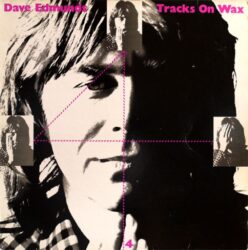 The seeds for Rockpile, the band, were sown with Dave Edmunds “Get It” in 1977, but the first real Rockpile album was “Tracks On Wax 4” in 1978. While Rockpile had two leaders in Dave Edmunds and Nick Lowe, Dave Edmunds was the soul of the band as he updated the sound of the ’50s and ’60s for a new audience in the late 70s. While Lowe, Bremner, and Williams brought their own ideas to the recording of “Tracks On Wax 4”, it is definitely Dave Edmunds’ album. It is the first Edmunds solo album he didn’t record at Rockfield, and instead of a lengthy pursuit of the perfect sound, it was recorded in 12 five-hour sessions, which gave the sound an immediacy that wasn’t always the case with Edmunds’ studio albums. One of the reasons the album could be recorded quickly was Billy Bremner’s guitar playing, which complemented that of Edmunds in real time, rather than Edmunds’ multi-tracking his own playing. It has a unity of sound and an impeccable selection of songs, characteristics it shares with 1979’s “Repeat When Necessary”, and as such, both albums are virtually perfect.
Why then select “Tracks On Wax 4” as the Dave Edmunds album I can’t live without? The reason that it just shaves it is that it includes only two covers, with the remaining nine tracks written by Rockpile members or close musical friends, and when the songwriters include Nick Lowe and Billy Bremner on a hot streak, it seemed to give Edmunds the confidence to up his own songwriting, and it gives the songs an added relevance. Mind you, in the real world, I couldn’t live without “Repeat When Necessary” either. While it is a British album that reflected the influence of London’s pub rock scene, it proved very influential in America on the emerging next generation of artists who ranged from future americana heavyweights Buddy Miller, Jim Lauderdale, and Dave Alvin, to bands like the Replacements. It was the retro stripped-back sound of Dave Edmunds’ production aligned to near-perfect retro-songs that proved so inspiring and influential at the time. The influence that Rockpile had on future musicians was all the more surprising when you realise that at the time of “Tracks On Wax 4”, Dave Edmunds had been a professional musician for ten years, Nick Lowe for eleven years, Terry Williams for nine years, and Billy Bremner for 12 years.
The opening Billy Bremner written track, ‘Trouble Boys’, leaves no doubt in any listener’s mind that the spirit of rock & roll was alive and well in 1978 England. There are strong echoes of the past in Nick Lowe and Rockpile’s homage to The Everly Brothers, ‘Never Been In Love’. The rock & roll adolescent spirit is maintained on the second Billy Bremner tune, ‘Not a Woman, Not a Child’. One of the reasons that Rockpile were such a great band was that they had fun making music together, and then disbanded when it was no longer fun. Lowe’s ‘Television’, originally recorded by the Kursaal Flyers, fits with this ethos, particularly with Edmunds’ Bakersfield-inspired arrangement. Edmunds and Lowe had always been fans of country music, and they both wrote the country tearjerker ‘What Looks Best On You’ which features Gerry Hogan on pedal steel guitar and Pete Kelly on piano.
Humour is at the centre of ‘Readers Wives’, written by Noel Brown, who recorded with Graham Parker, though it is fairly clear how much things have changed in the last fifty years. The songwriting synergy between Lowe and Edmunds also produced ‘Deborah’, which could lay claim to being one of the new wave’s best songs, and it still manages to invoke that era. I doubt many listeners will have heard of Ohio 60s duo Dean & Jean, but Dave Edmunds covered their ‘Thread Your Needle’, bringing a bit of country twang to this R&B tune again with the help of Greg Hogan. The Kursaal’s Will Burch had originally written the lyrics of ‘A1 On The Jukebox’ to an old Hank Williams tune, but Dave Edmunds rewrote the tune for “Tracks On Wax 4”. Chuck Berry recorded his B-side ‘It’s My Own Business’ in 1965, and Dave Edmunds brings plenty of new wave energy to his version. The first single released by Stiff Records in 1976 was Nick Lowe’s ‘So It Goes’, with ‘Heart Of The City’ as the B-side, and Lowe included a live version of ‘Heart Of The City’ recorded with Rockpile on his debut Album, “The Jesus Of Cool”. Dave Edmunds loved ‘Heart Of The City’ so much he simply took the Nick Lowe live track and replaced the vocal with his own, which is the only evidence of his perfectionist tendencies on “Tracks On Wax 4”.
Dave Edmunds has said he is really only interested in singles, not albums. This was certainly true when he was recording at Rockfield Studios with “Rockpile” and “Subtle as a Flying Mallet” being collections of great tracks rather than cohesive albums. His debut Swan Song Records album, “Get It”, was a similar mix of great tracks recorded over a period of time rather than tracks for a specific album, but with Rockpile, Edmunds had finally found a band that could record quickly, maintaining spontaneity while still meeting his exacting standards in the studio. Additionally, they provided access to great contemporary songs that suited Edmunds’ style and taste. While all of Edmunds’ albums have something for his fans to enjoy, “Tracks On Wax 4” is when the world first heard the best and most complete sound of Dave Edmunds, with no small thanks to Rockpile.



Apart from ‘I Hear You Knocking’ (the first single I bought with my own money), my favourite Dave Edmunds track is his cover of John Fogerty’s ‘Almost Saturday Night’. As a big JF fan I didn’t think his version could be improved, but Dave’s version certainly does.
That’s a good summary of Dave’s talents, Mark. He can take a great song by an established artist and still make it his own.
Well before the days of Ebay, I built up quite a collection of Dave Edmunds and Nick Lowe LP’s the hard way; via market stalls, charity shops, and second hand record shops. Not a dud amongst them. Time to revisit perhaps. Never did see Riff Raff though.
It may have been the hard way, Les, but it was more fun with more of a sense of discovery. I suspect that you didn’t come across any copies of Riff Raff on your travels was due to its lack of popularity, particularly in the UK.