
New York City, 16 October, 1992: It was an auspicious evening in a grand setting: “The 30th Anniversary Concert Celebration” of Bob Dylan’s recording career at Madison Square Garden, nicknamed “Bobfest” by Neil Young. The bill was packed with generations of famous Dylan admirers. Performers included The Band, The Clancy Brothers, George Harrison, Eric Clapton, Tom Petty and the Heartbreakers, Stevie Wonder, Willie Nelson, and John Mellencamp. Johnny Cash and June Carter Cash graced the stage. Even Lou Reed showed up. The house band, led by G. E. Smith, featured members of Booker T & the MGs (with Sheryl Crow on backing vocals). The atmosphere was reverent and celebratory.
Then, Kris Kristofferson took the stage to introduce Sinéad O’Connor, saying that her name had become “synonymous with courage and integrity”. Two weeks earlier, O’Connor had shocked a live national audience by tearing a picture of Pope John Paul II in half to protest the Church’s history of child sexual abuse. The audience responded with vitriol: the boos rained down from the rafters as O’Connor began to sing the Dylan cover she’d rehearsed, I Believe in You. Visibly shaken, she stopped the band, bowed her head, and stood in silence. The crowd’s rancour escalated.
Kristofferson returned to the stage, put his arm around O’Connor, and whispered in her ear, “Don’t let the bastards get you down“.
O’Connor rallied long enough to recite the lyrics to Bob Marley’s War a capella. For a few moments, she was defiant. She was fierce. Kristofferson met her as she walked offstage and enfolded her in his arms as the emotion finally overwhelmed the 25-year-old singer. Against a maelstrom of hate, he held her and protected her. It was a moment of grace, a human moment that revealed as much about Kristofferson’s character as the performance had O’Connor’s. The words he spoke to her that night, though she likely didn’t know it in the moment, were a reference to a song he’d recorded just a couple of years earlier.
Kris Kristofferson’s father was a U.S. Army Air Corps officer (eventually a Major General), so he moved around for most of his childhood and was expected to follow in his father’s footsteps. Harbouring dreams of being a novelist, he majored in English Literature in college, ultimately graduating summa cum laude. He was a star athlete in rugby and American Football. “He is also a Golden Gloves boxer, sports editor of the college paper, outstanding cadet in his ROTC battalion and a Rhodes scholar-elect,” according to a 1958 article in Sports Illustrated, at the height of the magazine’s popularity and influence. “At Oxford, he will study English literature to prepare for a writing career”. On the side, he wrote articles for The Atlantic.
In 1961, he enlisted. He completed U.S. Army Ranger School, earned his wings as a helicopter pilot, and ultimately ascended to the rank of Captain. In 1965, as the war in Vietnam intensified, he volunteered to fly helicopters In-Country. That same year, the United States drafted into service 230,991 young men, according to SelectiveService.gov, an official website of the United States Government. The army assigned him instead to teach English at West Point. He soured on a military career as a result and resigned his commission. His family disowned him.
Kristofferson remained forever proud of his service. Throughout his life, he identified with the young men fighting foreign wars, but was resolutely dubious of the decisions made by the politicians and warhawks who sent them. He penned Good Christian Soldier from the perspective of a young infantryman: “It’s gettin’ hard to tell what’s wrong from right/I can’t separate the winners from the losers anymore,” he wrote. “And I’m thinking of just giving up the fight/’Cause it’s hard to be a Christian soldier when you tote a gun/And it hurts to have to watch a grown man cry/But we’re playin’ cards writin’ home/Ain’t we havin’ fun/Turning on and learning how to die”.
After leaving the army, Kristofferson moved to Nashville, where he became a bartender and soon a janitor at Columbia Records. There, he famously talked his way into observing Bob Dylan’s Blonde on Blonde sessions surreptitiously from a corner in the studio. “He saw Dylan finish writing Sad Eyed Lady of the Lowlands alone at a piano in the dead of night,” according to a 2024 obituary in The Nation.
He wrote a bunch of songs, but, with family medical issues pressing on him, he moved to Lafayette, La., to work as a helicopter pilot ferrying men to and from offshore oil rigs in the Gulf of Mexico. It was during this period that Jerry Lee Lewis recorded Help Me Make It Through the Night and Roger Miller recorded Me and Bobby McGee. Kristofferson was becoming a successful Nashville Row songwriter. But he remained restless.
Hoping Johnny Cash would record his songs, Kristofferson landed a helicopter on The Man in Black’s front lawn to deliver a four-song demo tape. This made an impression. Cash became a fan and spread the word about Kristofferson to other songwriters, which led to Kristofferson recording his eponymous debut. Kristofferson wrote or co-wrote all the songs on the 1970 album, including the aforementioned classics and the legendary Sunday Morning Coming Down. The album’s opening salvo is the truly batshit anthem of generational and genre defiance, Blame It On the Stones. It was a statement of intent: here was an artist who would chart his own path, on his own terms, the Nashville establishment be damned. Many years later, he would join his former cheerleader, Cash, along with Willie Nelson and Waylon Jennings, to become The Highwaymen.
Kristofferson never shied away from writing about politics. On his debut album, he wrote about corrupt policing in The Law is for Protection of the People. “Oh, so thank your lucky stars you’ve got protection”, he sang. “Walk the line and never mind the cost/And don’t wonder who them lawmen was protectin’/When they nailed the Saviour to the cross” Three and a half decades later, on In the News, he warned about Global Warming, capitulation to authority, and unjust foreign wars. “Burning up the atmosphere and cutting down the trees”, he sang, “The billion dollar bombing of a nation on its knees/Anyone not marching to their tune they call it treason/Everyone says God is on his side”.
Don’t Let the Bastards Get You Down appeared on the 1990 album Third World Warrior. The album performed dismally; the second Highwaymen album had been released a week earlier, and the public had no appetite for Kristofferson’s Left-leaning anthems. Looking back, the song is eerily prescient. It’s a simple song, two verses and a chorus, but it tackles a lot. The first verse speaks to the empire and warns against reckless engagement in foreign crises at the risk of innocent lives.
“They’re killin’ babies in the name of freedom”, he begins. “We’ve been down that sorry road before/They let us hang around a little longer than they should’ve/It’s too late to fool us anymore”.
The second verse is chilling and could apply to scenes broadcast recently on television and ubiquitous on the internet of the inevitable result of mismanaged law enforcement in American cities. “We’ve seen the ones who kill the ones with vision”, Kristofferson continues. “Cold-blooded murder right before your eyes/Today, they hold the power and the money and the guns/It’s getting hard to listen to their lies”.
The chorus is a lament and a call to action: “I’ve just gotta wonder what my daddy would’ve done/If he’d seen the way they turned his dream around/I’ve gotta go by what he told me/Try to tell the truth and stand your ground/Don’t let the bastards get you down”.
It’s powerful stuff, and that night on the stage at MSG, it meant something to a young singer facing the backlash that so often comes to those who speak out. Kristofferson was, throughout his career, fearless.
Epilogue:
I don’t often resort to writing in the first person (I wrote a post on Medium a few years back headlined “The misuse of the first-person voice embodies a larger threat to journalism.”), but I’m making an exception here, for a couple of reasons: first, I couldn’t find a way to fit the following anecdote into this article without breaking my own rule, and second, because it gives me a chance to reflect on a person whose influence on my appreciation of Austin, Texas’ musical history resonates to this day, and on a moment that could only have happened in Austin, when he and I happened to be in the right place at the right time.
It’s a common question among those of us who’ve spent a lifetime devoted to the healing powers of live music, and a pretty dumb question, at that: “What’s the best gig you’ve ever seen?” Of course, there’s no way to answer that. Was it the 2:00 A.M. Prince aftershow in a club on a bayou in Jackson, Mississippi, on a July night so sweltering it overwhelmed (and blew out) the A/C? Was it any one of the nights I saw an unknown band for the first time, young and full of righteous promise? Was it, no. It was probably that Prince aftershow.
There’s one that lands somewhere right near the top of my list, however, and, like most of life’s best memories, it wasn’t planned. The stars just aligned, and what unfolded was magic.
I lived in Austin in the late 90s (and returned every year for a decade after to attend South By Southwest), and I was lucky enough early on to meet my dear friend Mike C. Mike lived Austin music, and in some ways engineered his life to live there for a while so he could immerse himself in the scene he loved. He introduced me to the LeRoi Brothers, the Flatlanders, the Texas Tornadoes, James McMurtry, even Rodney Crowell. He took me to my first shows at The Saxon Pub and Antone’s, and we spent countless evenings at the Continental Club over the years. I saw my first Joe Ely show with him when we snuck into an Austin City Limits taping between shifts teaching upstairs in UT’s Broadcast News sequence (it was the original ACL studio, two floors down from our newsroom, and the students knew well where we’d been when we returned with Shiner Bock on our breath and shit-eating grins on our faces). He’s the one who reached out to me when Joe died, and, just this weekend, gave me the heartbreaking news that we’d lost the great Jon Dee Graham (more on that in these pages soon). If Austin was to become my Paradiso, he was the Virgil to my pilgrim.
One late South By Saturday evening, when we’d already burned through two days sprinting from club to club from morning to closing time and sleeping hardly at all, we hit a wall and decided to miss the next gig we’d carefully planned on obsessively pored-over itineraries, and get dinner. Like, actually sit down, someplace cool and civilised where we could get a decent margarita with our Tex-Mex. In our bones, we just needed a minute. Refuelled and refreshed, we headed back down South Congress toward our next adventure. We loped along, enjoying the breeze and amiable conversation. I’d walked a good five feet alone before I noticed Mike had stopped cold behind me and was staring into the open door of a small club whose name I’ve lost to the years. It was a hole-in-the-wall spot, and Mike stood frozen on the sidewalk, transfixed. I walked the few steps back to him, and he just said, “We’re going in there now.” I don’t think he met my eye as he said it; it was a command, not a suggestion. I followed.
Inside, past the bar, 20 or so folks stood silently near a small stage where a man sat alone on a stool with an acoustic guitar and a harmonica. Nobody spoke. The reverent hush in the club reminded me of Mass.
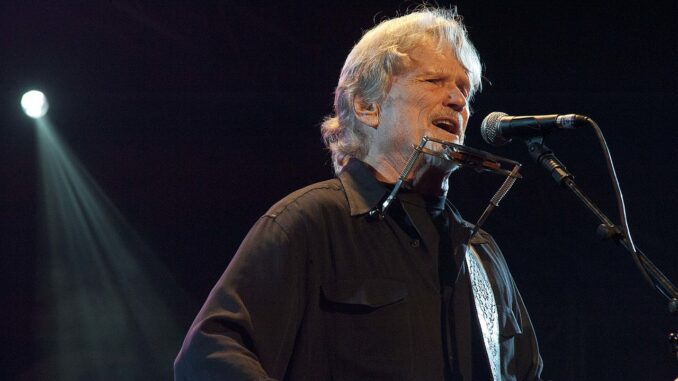
Of course, it was Kristofferson on the stage, and over the next 40-odd minutes, he graced us with songs, mostly deep cuts. He strummed, sang, told brief stories (but few jokes). He didn’t interact much with the assembled parishioners; it truly felt like he was playing for himself and hadn’t really noticed our presence. His manner was still, but a rage simmered behind his eyes and in the lyrics of the songs he chose. This would’ve been in the early 2000s, probably shortly after America had begun its war on Iraq, ostensibly to neutralise a chemical weapons capability that was never found, and justified by spurious connections to the terror attacks of 9/11. I think he played Sunday Morning Coming Down, but as for the “hits,” that was it. Kristofferson had something to get off his chest, and he did it, one political song after another, on the stage that night.
The “gig” appeared on no official schedule, had nothing to do with SXSW, and was never broadcast on the telephone-game network of rumoured “secret shows” tuned into by those hip enough to be savvy. Kristofferson wasn’t playing his own official shows, and to my knowledge, he appeared nowhere else that week. He simply exorcised his demons for the night and disappeared. It was strange. It was mesmerising. It was a little frightening.
The crowd slowly dispersed back on to South Congress, and Mike and I found our way down to the Continental, to other showcases, and beyond. I wish I could recall a setlist. I do recall that we exchanged not a word for some time after.

