
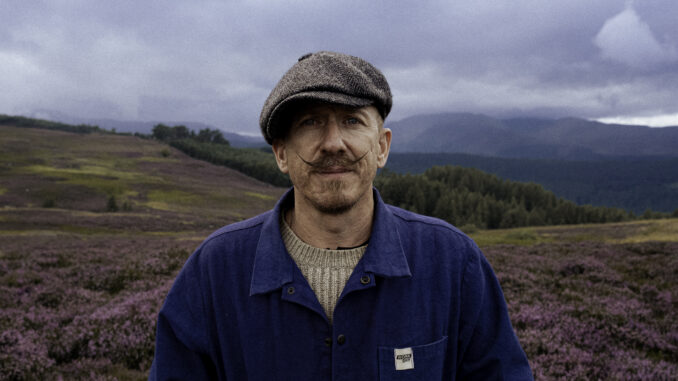
Few artists write with the kind of raw honesty and emotional depth that Foy Vance brings to his music. Across a career that has steadily unfolded over the last two decades, Vance has crafted songs that feel lived-in and hard-won, full of vulnerability, soul and a quietly powerful sense of humanity. His voice remains one of his greatest strengths: rich in texture and character, capable of both hushed intimacy and soaring intensity, always drawing the listener into the heart of the song.
His latest album, The Wake, is perhaps his most ambitious and revealing work yet. Produced by Ethan Johns, the record completes a deeply personal seven-album sequence that began in 1999, following the death of Vance’s father. What has emerged over the intervening years is a body of work that traces a long, reflective journey through grief, identity and self-understanding. The Wake captures that sense of movement and evolution, shifting between moments of experimental freedom and passages of stark, emotional clarity, where Vance’s gift for storytelling and evocative language comes to the fore.
The album’s songs range widely in tone and texture. Tracks such as AI stretch out into expansive, exploratory soundscapes, embracing improvisation and the interplay of musicians in the room, while others, including I Think I Preferred The Question and I’m the Preacher’s Son, are more inward-looking, shaped by reflection, memory and a willingness to confront difficult truths. Throughout, there is a striking sense of openness, as Vance leans into imperfection and embraces what he has described as “…the celebration of failure,” an idea that runs deeply through both the music and its accompanying visuals.
That same spirit of curiosity and creativity extends beyond the songs themselves. In recent releases, Vance has also turned his hand to filmmaking and visual art, creating atmospheric, often surreal videos that complement the emotional tone of his work. Like his songwriting, these pieces feel exploratory and instinctive, shaped as much by limitation as by intention, and adding further depth to an already rich artistic world.
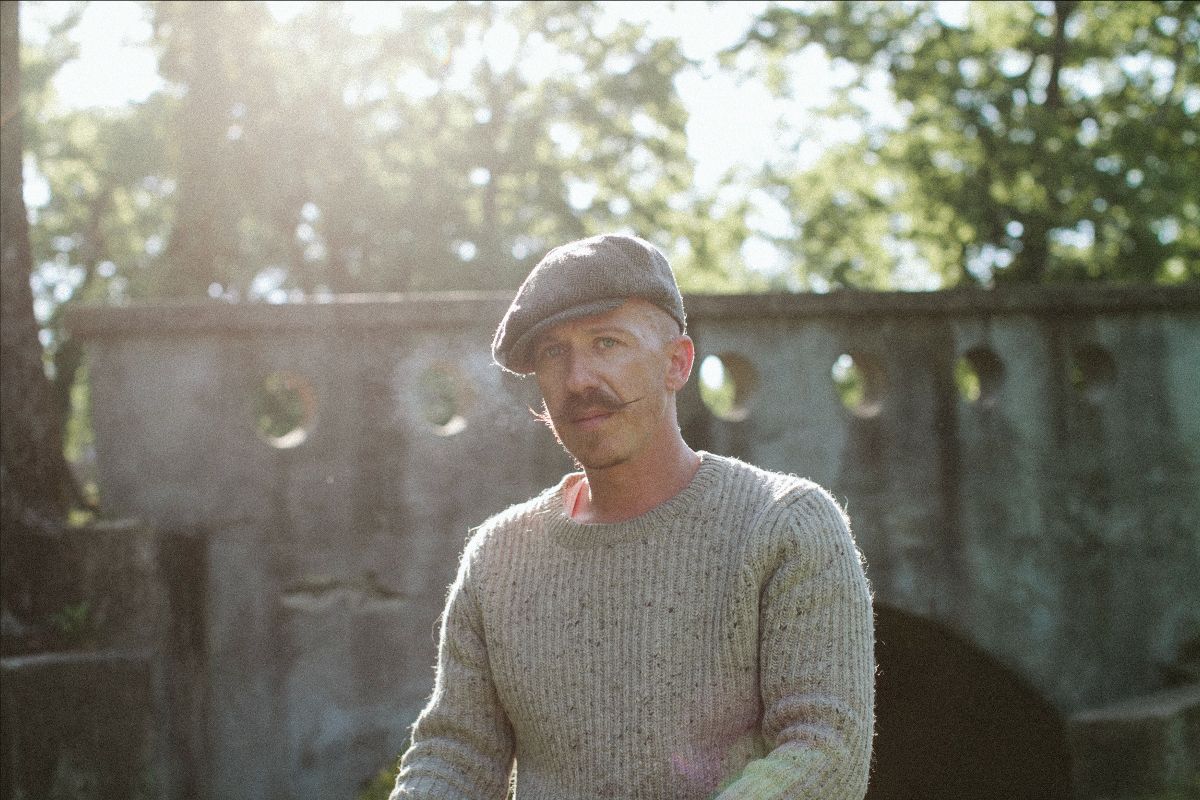
Following the completion of this remarkable seven-album arc, Andrew Frolish caught up with Foy Vance to talk about The Wake, the long journey behind it, and what comes next. Thoughtful, candid and often disarmingly open, Vance reflects on grief, creativity, collaboration and the importance of simply showing up, wherever the music might lead.
Thanks very much for doing this.
Oh, my pleasure, my pleasure.
Let’s start by talking about your new album, The Wake, which has been described as a journey. Can you explain to our readers what that means?
Hell, if I was to give you the coffee shop synopsis, on the 30th of January 1999, at 1:30 in the morning, I got a song. By the time I’d pulled the whole thing out and had it written by about nine o’clock that morning, it turned out my dad had died. And on that day, I thought, I’m going to make seven albums. At first, I thought it would take seven years. Then I thought it might take 70. Turns out it took 26. On the 30th of January 2025, I finished it, 26 years to the day. That’s strange, isn’t it?
Yeah, it is strange – to the day. Seven years, seven albums… it’s very specific. Why seven?
Well, one, I like numbers. Numbers are very pleasing. And my dad would always say, “Give me the boy to the age of seven, and I’ll give you the man.” I always liked that. I’ve always tried to be mindful of it with my own kids; those first seven years are integral. Everything they’re going to become is in there. And I guess in my mind, I don’t know. My dad had just died, and at the same time, I was writing this song. So it was this mix of deep, profound grief and also this kind of euphoria that I had a way of channelling it, a way of saying something about it. It was a strange balance to get my head around. It was like the greatest kick in the balls, but also the greatest blessing. And I was aware of that, and felt a bit bad about it. But I guess what I’m saying is, it felt like stepping through a portal that day. And something in my mind just reached for seven, something to cling to, something to begin and end with.
Yeah, people talk about stages of grief as well, don’t they? I’m not sure if there are seven stages, but that idea of something to cling to, a beginning and an end – that’s a nice way of looking at it. And of course, you had music.
Yeah, I guess that’s what I did.
And music, in a sense, can be like therapy. It’s helped you work through your feelings around that.
That is exactly what music is. It’s great that music can put a roof over my head and food in the cupboards, shoes on the kids, and all that – that’s great. But I’m not unaware of what it actually is that we’re dealing with here. I keep quoting this because it’s so poignant, when the Titanic was sinking, and those musicians started playing Amazing Grace, why did they do that? When you ask yourself that, the lack of an answer is as much of an answer in itself. It’s like, they had to. In that moment, that was the only thing that mattered. It brought something. To me, that’s music. That’s it right there.
Going back to that idea: “Give me the boy at seven years, and I’ll give you the man.” What was Foy Vance like at seven years old? Could you see the man back then that you’d become?
Yeah, in a way. I feel like I’m trying to reconnect with that kid a lot. I think he had a lot of things figured out. I genuinely think if you were to ask seven-year-olds what to do about the future, the future would look better. It’d be safer in their hands.
Yeah, I think there’s a lot in that. I work with children, and there’s definitely something in that. If we put the future in their hands, we’d probably do okay.
Yeah, like if we just became the administrators for their ideas. They’re still close enough to something… still in touch with that soul. Art helps you connect with that, your inner child. It’s just play, you know? Allowing yourself to play. I feel like a child, probably too much. I should probably try to feel like an adult more often.
I think we rush into adulthood and try too hard. If you can play, that’s probably where your best creativity comes from. So thinking about that, the writing on the new album feels musically quite experimental at times. Quite adventurous. The structures, the arrangements, the pauses… there are moments where the music comes in waves and movements, where songs grow and change. Was that something you consciously tried to do, or did it come naturally?
Naturally. With the songs and with the band, I chose to produce them. We talked about what we wanted in the room, and then the musicians were brought in based on that. As soon as I’d decided on Ethan Johns to produce the album, I mean, that’s safe hands, as far as I’m concerned. It was such a comfort to just feel like I don’t need to worry about how this is going to be captured, or who’s going to play what. That’s not my job here. My job is to show up, like the other musicians, and follow the producer. I was trying to get myself out of the way as much as possible on this record, just engage with what was happening. So when we’d do a take, and it went a bit left, everyone was up for it. Ethan’s a Deadhead – he loves improvisation, and he would improvise the whole album. And the players, Jeremy Stacey on drums, Rex, Neil, they’re all jazz guys, all artists in their own right. It’s just an explosion of sonic ideas. I was up for all of it. It was experimental and very enjoyable. I tried not to influence it too much, just respond to it.
You mentioned Neil Cowley on piano; there’s a beautiful fluency to his playing, and you can really hear that jazz influence coming through. One of the songs I keep coming back to is AI, which is obviously a long track, and probably the perfect example of how the music ebbs and flows. Tell me about that song – the writing of it. How did that unfold? It feels almost epic in scope.
The writing of that song started with this kind of, “We’re all on a chain gang, nothing but batteries for AI,” type idea, a sort of dystopian, end-of-the-world future. But as soon as the verses started coming, I realised it was more about the celebration of human failure. AI might be able to do things perfectly the first time, any job, any design, any speech. You can get exactly what you need straight away. And that’s great, but it’s also sort of boring. The quest is the thing. That’s what it’s all about. Failing, trying again – that’s where the feeling is. Like Samuel Beckett said: “Fail. Fail again. Fail better.” It’s about the quality of your failure and how much you’re willing to risk.
That’s what makes humanity, I suppose, and makes it accessible and universal. Musically, where did that song start? Was it an instrument, or just voice?
I just started singing it. It’s in the key of G, as it turns out. The guys started playing along, and we recorded a couple of versions. There was another version that nearly made the album; it’s pretty wild. We were just leaning into exploring our humanity, what kind of racket we could make.
That sounds like it needs to be a B-side at some point!
Yeah, we should do it. It was a lot of fun.
A number of the other songs on the album feel very different – more vulnerable, deeply personal. Songs like I’m the Preacher’s Son and I Think I Preferred the Question. What’s it like writing those kinds of songs? Is that more challenging?
No, they’re the same as any other. They all come whenever they come, in whatever way they come. Some are deeply enjoyable to write. Some are harder, like Call Me Anytime. That one was confronting. It made me realise there were times I genuinely wasn’t there the way I should have been for my children. And if you’re a parent, you know, even if you try to make up for it, you still ache from it. But essentially, no song is harder to write. They all come the same way. The Question was enjoyable to write. It still is the question I have. Answers are boring. Every answer is just a Trojan horse full of more questions anyway.
That sequence of songs, that vulnerability, is really striking. I’m the Preacher’s Son obviously speaks to your early life. What was it like revisiting that?
That song’s really about the inescapability of what your father does. You either become it, or you become the antithesis of it. But either way, it defines you. No matter what I’ve tried to do, or say, or teach my kids – fundamentally, I’m still just a kid trying to figure out who his dad is. Like we all are. That’s all the song’s really saying. Any song worth listening to has layers. There’s what it says on the surface, but there should be more underneath.
That definitely comes through in your work. The language is vivid, the storytelling really important. Do the lyrics tend to come first, or the music?
It’s usually a mixture, but more often the music comes first. You’re just sort of howling sounds, and certain sounds feel right. Then the words fall out of that. Sometimes, the words come first, but not as often. Then once they start coming, you get into the craft of it, tightening it, like a puzzle. Trying to say the most with the least words.

What’s it been like performing these new songs live?
At the minute I’m playing songs from across all the records. Last night, there were as many from older albums as from The Wake. But yeah, it’s been good. It feels more celebratory now. Something’s changed. It’s like a monkey’s off my back – completing that seven-album goal. I know I’m the only one who made it important, but it matters to me. It’s the only thing I’ve ever started and actually finished. You know, messy divorces, bad decisions, but this, I saw through from beginning to end. There’s a bit of self-validation in that.
Perseverance, resilience…
Consistency. It’s massively underrated. In any line of work.
And that probably feeds into your collaborations as well. You’ve worked with people like Elton John, Miranda Lambert, Bonnie Raitt and Rag’n’Bone Man. What do you take from those experiences?
There are loads of moments. One that comes to mind is working with David Holmes. I’d always wanted to work with him; he’d be DJing in Bangor one night, then scoring huge films, like Oceans 11 and Oceans 12, in LA the next, but still just excited about music. We did a record out here in LA called Melrose. Being in the studio with him was eye-opening. And then working with Elton, I remember sitting in his dressing room in Aberdeen with my two boys, listening to his verse on a song I’d written. He was so excited, “Have you heard it? Have you heard it?” We listened to it, and then he said, “Do you want to hear it again?” And I was so glad, because I was about to break. It was surreal. That voice I’d grown up with, on my song. And my boys were there. It was overwhelming.
And his passion is still undimmed.
That’s the takeaway. He’s nearly 80 and still completely in love with music. It’s incredibly infectious.
You’ve also just announced a world tour with around 60 dates. The list of dates is incredible. That’s an experience in itself and probably requires a lot of perseverance. What’s the touring life like for you?
This current run has been more of a promo tour – lots of interviews, sessions, then a gig at night. Full on. But a regular tour, I try to get into a routine – working out, long walks, staying quiet. I’ve tried to get into the routine of working out during the day; I’ve never been big into that, but I did it for the last couple of tours, and it just transformed my ability to get through the gigs. I’ve got to face the fact that I’m into my 50s now! It’s pretty boring, to be honest. The most exciting part of the day is being on stage. I try to save everything for that.
That sense of routine must help.
Yeah, total monotony. Get up, walk, read, eat at the same time, drink loads of water, go to the gig, repeat.
What are you reading at the moment?
I’m reading This Is Happiness by Niall Williams. Beautiful writer. Every line, you want to go back and read again.
I read his Four Letters of Love a few years ago. His writing is like poetry. That’ll keep you going and open up your mind creatively as well. And what are you listening to on the road?
Mostly podcasts, things like the Blindboy podcast. I got lost in those Telepathy Tapes about kids who were showing signs of communicating telepathically. Not much time for music at the minute.
You’re also a painter and filmmaker – how do you find the time and space for those as well, mentally?
Drawing happens anywhere, napkins, bits of paper. Painting was great during The Wake sessions, in between takes, because for me it’s like staying in a state of unknowing. I’m not a great painter, so I’m completely just at the mercy of my limitations. I’m just reacting. I just get lost in this world where there’s no thought. Filmmaking is not that! It’s full-on. You have to think about everything at once, even to direct something so much as 30 seconds long. I have a newfound admiration for anyone who’s ever done it. It’s intense, but rewarding.
I know you directed and put together some of your recent videos. Those are striking pieces of art in themselves. What was it like putting those together?
Crazy, really, really fun, and definitely similar to painting in that I was having to respond to my limitations. Leaning into it as an aesthetic. I was watching them back and realising that they were coming back quite surreal by comparison with how the songs sound! Makes sense to me! Painting the screen, so to speak, was fun. But things like the lighting and backing up, there were things I had to learn the hard way.
And finally, now the seven-album arc is complete, what comes next?
I’ve already been in the studio with a friend, Anderson East. We recorded 19 songs. Like I said earlier, nine out of ten songs that I write, nobody will ever hear. They are just songs that float around in the ether. But Anderson picked a few of those songs out and said they were good, and we should do something with them. I think I just want to keep doing that. Recording from the pool of songs I’ve written, just for the fun of it. Because at the end of the day, that’s what it is – music for the joy of it.
That feels like a perfect place to end. Thanks so much.
My pleasure.


