
Boston-based band’s second album aims high and falls just short.
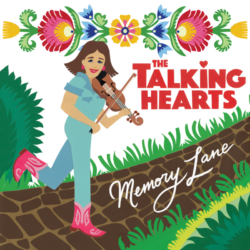 Boston-based The Talking Hearts describe their sound as “psychoanalytic country“, a blend of classic honky-tonk with a modern take on love, loss and the people who have done you wrong. Led by fiddler and songwriter Rachel Rosenberg, the six-piece draw heavily on the traditions of Loretta Lynn, Hank Williams and Johnny Cash, with a sound that wouldn’t be out of place in a smoky 1960s barroom, albeit with a cleaner sound within the reach of most bands.
The keenness to highlight the DIY aesthetic even reaches the artwork, which is, well, judge for yourself.
Memory Lane is the follow-up to 2023’s Over Your Spell, with ten tracks mainly observing relationships, either romantic, parental, or social. Produced by band member Zach Meyer, the album moves between bluegrass and classic country, with the band’s rich harmonies, use of pedal steel, and restrained Tele licks helping make the collection relatively timeless.
The album is at its best when the band picks up the pace. Opener and title track Memory Lane sets things off nicely, driven by a terrific fiddle riff and swooping pedal steel, with Rosenberg exploring that most familiar of country themes: good love gone bad. Single How Much Trouble? mixes spaghetti western sounds and tales of the border with sharp guitar licks and the sort of infectious energy that would get a room up on its feet.
Out of the Frying Pan (Into the Fire), sadly not a cover of Meat Loaf’s early ’90s banger, is a tale of a relationship moving at two different speeds. It’s another example of the band’s ability to wrap familiar country themes in engaging arrangements. Similarly, Sad Songs slows things down to good effect, mournful in all the right ways.
Not everything works quite as well. Lonesome Whistleblower Blues seems determined to bring together every cliché of the genre into one rather laboured pastiche, while Fake Friend for Real is just a little too obvious in its approach. Closer My Friend the Wine also struggles to leave a lasting impression, lacking some of the grit and energy that make the stronger songs so enjoyable, and failing to bring a fresh angle to a familiar theme. It’s a slightly underwhelming way to finish an album that has shown considerably more promise elsewhere.
There is more to like here than dislike, particularly when the band allows its considerable musical talent to shine through. The arrangements are consistently accomplished, and the interplay between fiddle, pedal steel and guitars gives the album much of its charm. The songwriting, though, doesn’t always quite match the quality of the playing, occasionally leaning too heavily on familiar country conventions rather than finding something new to say.
